Quick Answer
Entry-level Wi-Fi routers can be enough for esports for a single player on a quiet network, but they struggle once the household is busy. For reliable competitive play, step up to a Wi-Fi 6 router with QoS (around R1,500 to R2,800); it keeps esports ping in the 5 to 30ms range to local servers even when others stream or download.
Where Entry Routers Hold And Where They Fail
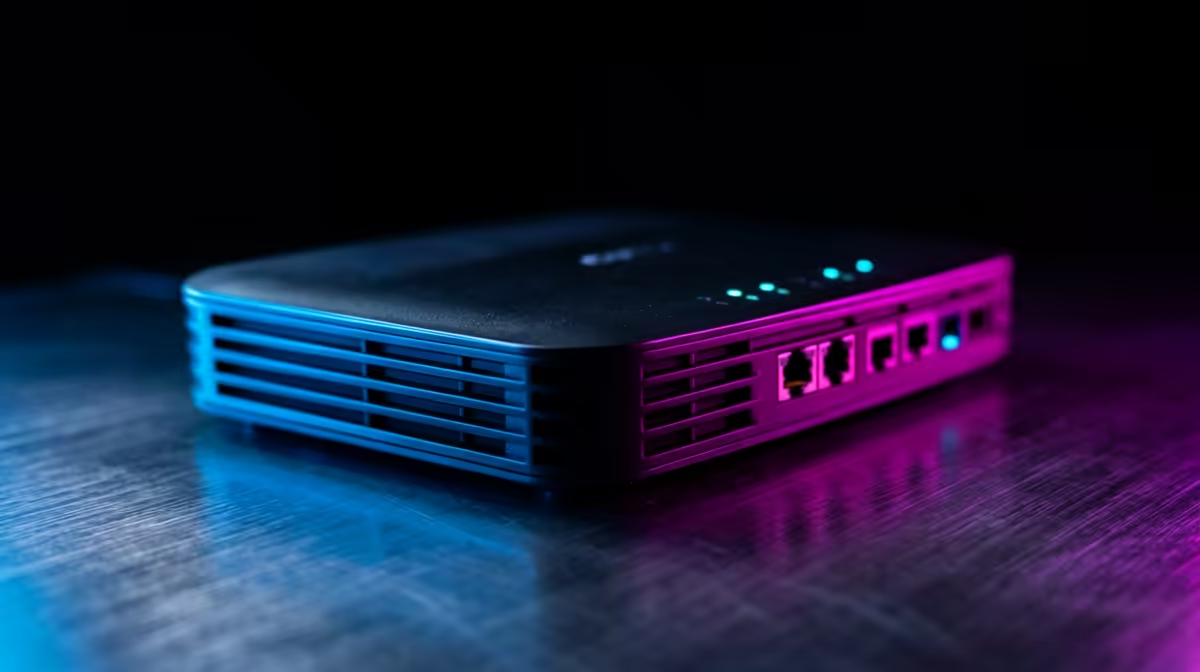
A sub-R800 entry router can run a single esports session fine on a calm network with a wired PC. The trouble starts when a flatmate streams 4K or downloads a game: the entry router lacks QoS to prioritise your packets, so your ping spikes and you lag at the worst moment. Entry units also have weaker processors that buckle under many connected devices, which is common in shared SA housing.
What A Step-Up Router Adds For Esports
A Wi-Fi 6 router with QoS prioritises your game traffic so streaming and downloads no longer cause lag spikes. A stronger processor handles a full house of phones, TVs and laptops without slowing. A 2.5GbE port future-proofs you for faster fibre. For competitive play where one lag spike loses a round, that stability is worth the step up from entry level.
FAQ
Is an entry router enough for solo esports?
On a quiet network with a wired PC, often yes. The problem appears when others share the connection, since entry routers lack QoS and lag-spike under load. A step-up router avoids that.
What does QoS do for gaming?
QoS prioritises your game traffic over streaming and downloads, so a busy household does not cause ping spikes. It is the single most useful router feature for competitive play.
Will Wi-Fi 6 help in a shared house?
Yes. Wi-Fi 6 handles many devices more efficiently and reduces congestion, keeping your connection steady when flatmates are all online at once.
If your household shares the connection, choose a Wi-Fi 6 router with QoS so streaming and downloads never spike your esports ping mid-match.