XMP and EXPO Memory Profiles: The Warranty Fine Print Explained
Quick Answer
XMP and EXPO load saved memory frequency, timing and voltage settings. They are convenient, tested profile formats, but Intel and AMD describe their use beyond published processor specifications as memory overclocking that can affect product warranty.
Do not rely on "the RAM was sold at that speed" as a full warranty answer. The memory kit, CPU memory controller, motherboard and complete-system seller can each have different terms.
If a prebuilt arrived with a profile enabled, save the invoice, BIOS screenshots and seller configuration. Ask the system warranty provider to confirm that supplied setting in writing.
The RAM Box and CPU Specification Differ
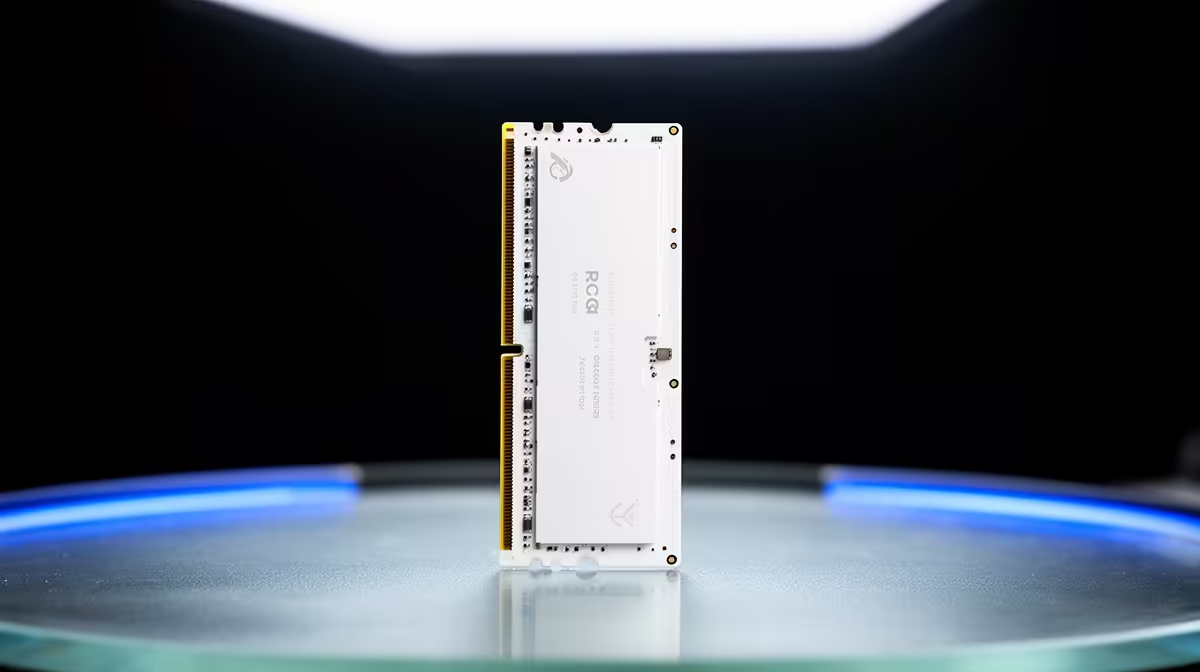
A DDR5 kit can advertise 6000 MT/s through XMP or EXPO while its base JEDEC profile runs slower. The processor publishes supported memory speeds under defined module and channel conditions.
Loading the kit profile can move frequency, timings and voltage beyond that baseline. The fact that one click applies it does not turn it into a stock processor setting.
Compatibility lists show that a kit was tested on selected platforms. They do not guarantee every CPU sample and motherboard will hold the profile.
Warranty Has Several Providers
The memory maker may warrant the module at its rated profile. Intel or AMD can treat operation outside processor specifications under its overclocking exclusion. The motherboard maker and system builder set their own express terms.
Applicable consumer law also remains relevant to a qualifying defect. A profile does not prove that it caused an unrelated failure, but damage or instability linked to out-of-spec operation can affect the claim.
Ask the party handling the RMA which component it says was damaged and what evidence connects the profile to that failure.
Test at Defaults First
When diagnosing crashes, disable XMP or EXPO and load stable defaults. Run a proper memory test and the workload that failed.
If errors disappear, the profile may be unstable even though the kit itself is healthy. Try a supported BIOS update only after reading the notes and using the exact board file.
Do not raise memory voltage or edit timings to force stability during a warranty investigation. Record the profile name, BIOS version and module slots.
Browse the DDR5 memory range and compare popular memory kits, then check the CPU specification, motherboard support list and written system cover for the exact pairing.
FAQ
Does enabling XMP or EXPO always void every warranty?
No single answer covers all providers. Intel and AMD warn that out-of-spec memory operation can affect their product warranty; other terms and applicable law need separate review.
Is EXPO safer than XMP on an AMD system?
EXPO provides AMD-oriented profiles and validation, but it remains an overclocking format. Stability and warranty terms still depend on the platform.
What should you do before an RMA?
Return the system to defaults, reproduce the fault and save evidence of any profile the system seller supplied.
Match the memory kit to the CPU and motherboard limits, save the supplied BIOS configuration, and test every fault at defaults before arguing about profile cover.