Heard the buzz about AI? From generating wild images with Stable Diffusion to getting coding help from a local LLM, the power is immense. But running these tools locally requires serious hardware. That's where the idea of an AI PC build in South Africa comes in. It’s not just about gaming anymore. It's about creating, innovating, and experimenting. This guide cuts through the noise with real community stories and expert tips to help you get started. 🚀
What Actually Defines an AI PC Build in South Africa?
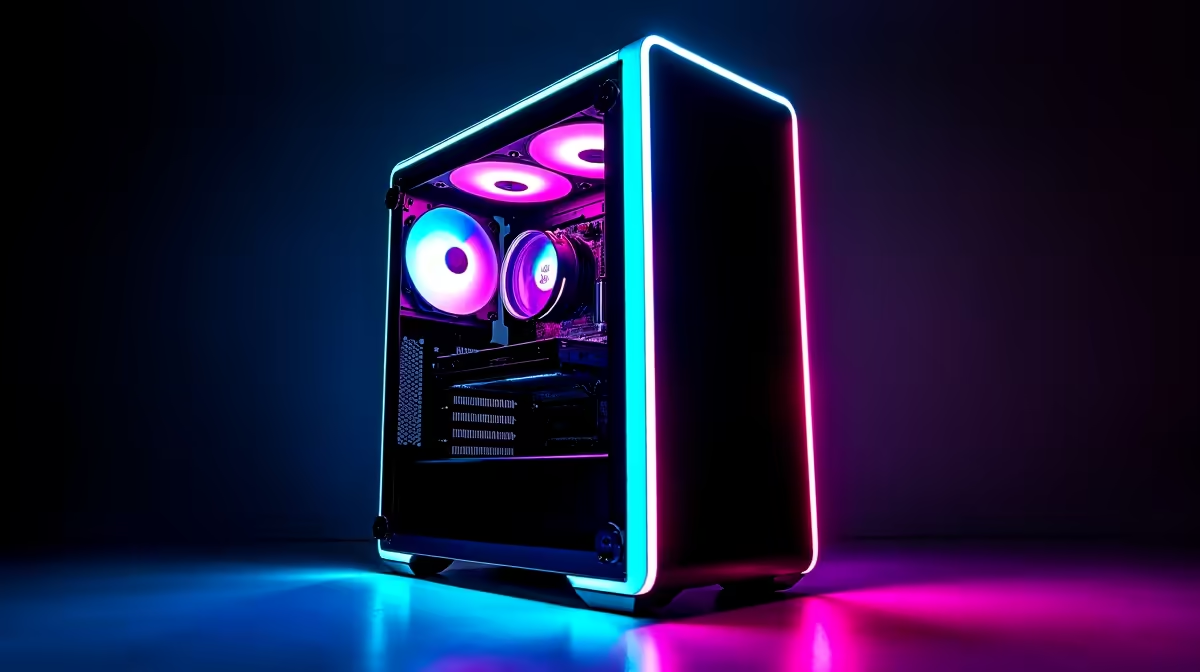
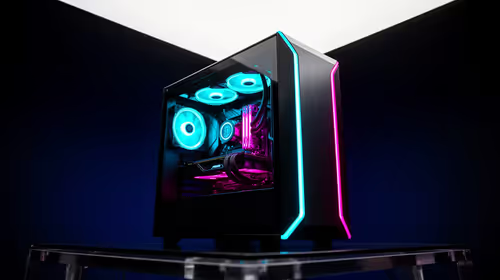
Forget flashy RGB for a moment (you can add that later). An AI PC prioritises three things: GPU VRAM, a multi-core CPU, and heaps of fast RAM. In South Africa, we also have to consider the 'an unexpected outage factor'—meaning a quality power supply is non-negotiable for long rendering or training tasks. An AI PC build is essentially a high-performance computer optimised for parallel processing tasks, making many of the best gaming PC deals a fantastic starting point for your journey.
Community Spotlight: How South Africans Are Building for AI
Theory is great, but seeing what your fellow Saffas are building is better. We checked in with a couple of local creators about their journey into building a custom AI computer.
Lethabo’s Creative Studio Rig in Jozi
Lethabo, a freelance graphic designer, needed a machine for Stable Diffusion and video work. "My old gaming PC just couldn't handle the VRAM requirements," she says. Her solution was a focused AI PC build around a GPU with plenty of memory. She found that many powerful NVIDIA GeForce gaming PCs offered the CUDA core advantage she needed for creative apps. By starting with a solid foundation from our range of budget gaming PCs, she could allocate more of her budget to the graphics card.
Riaan’s Developer & Gaming Beast in Cape Town
Riaan is a software developer who uses local AI models to help with coding and debugging. "I need a PC that can compile code, run a large language model, and still let me jump into a game of Apex Legends without a stutter." His build prioritised a CPU with a high core count, making one of the current AMD Ryzen PC deals the perfect choice. While NVIDIA is popular, he opted for a high-VRAM AMD card from the latest AMD Radeon gaming PCs to experiment with open-source AI frameworks that are less reliant on CUDA.
Expert Tips for Your First South African AI PC Build 🔧
Inspired? Here’s how to choose the right parts for your own build, whether you're starting from scratch or upgrading an existing rig.
Picking Your Core Components
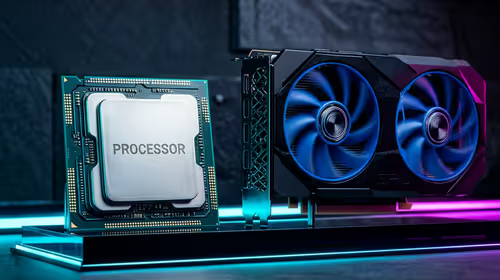
Graphics Card (GPU): This is the heart of your AI machine. For many AI tasks, Video RAM (VRAM) is more important than raw clock speed. 12GB is a good start, but 16GB or even 24GB is ideal for running larger, more complex models. Intel is also becoming a contender in this space with their new Intel Arc gaming PCs, offering great value for specific workloads.
Processor (CPU): While the GPU does the heavy lifting for AI, a strong CPU is vital for keeping the whole system responsive. A processor with 8 or more cores will ensure your operating system and background tasks don't bottleneck your AI workflow. Check out the latest Intel PC deals for some powerful options.
Memory (RAM): 32GB of fast DDR4 or DDR5 RAM should be your minimum. If you plan on training your own models or working with massive datasets, 64GB is a worthwhile investment.
Check Your VRAM Usage! ⚡
When running an AI model, use a tool like GPU-Z or the command nvidia-smi in your terminal to monitor VRAM usage. If you're constantly hitting your VRAM limit, it's a clear sign you need a GPU with more memory for the tasks you're running. This simple check can save you hours of troubleshooting slow performance.
Don't Forget the Foundation
A stable power supply unit (PSU) and a quality motherboard are crucial. AI workloads can run for hours or even days, putting a constant, heavy load on your components. Investing in a reliable foundation prevents crashes and protects your expensive parts. For maximum stability, it's worth looking at builds designed for sustained performance, like these professional workstation PCs.
Pre-Built vs. DIY: The Smart Choice for an AI PC
So, should you build it yourself or buy a pre-built machine? DIY offers total customisation, which is a huge plus. However, sourcing specific high-VRAM GPUs in South Africa can be tricky, and ensuring component compatibility takes research. ✨ For many, opting for one of our latest pre-built PC deals is the smarter move. You get a professionally assembled, tested system with a full warranty, saving you time and potential headaches.