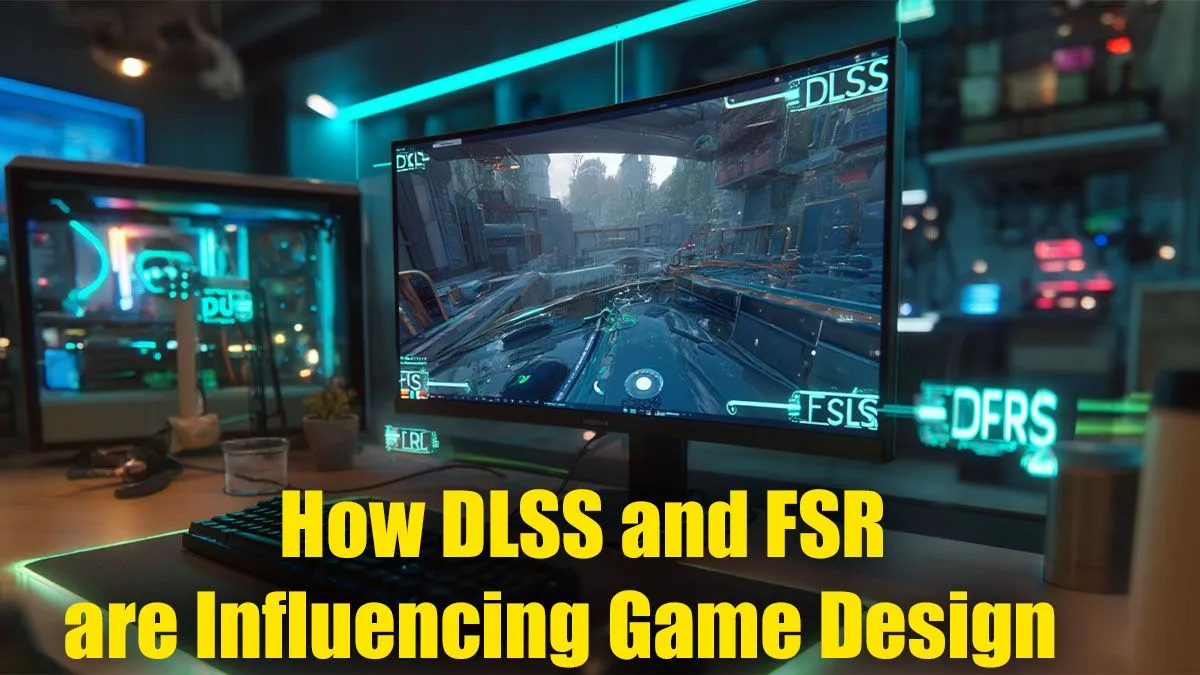
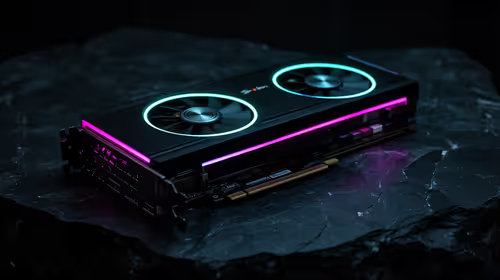
Ever felt that frustrating stutter in a massive boss fight? What if you could get silky-smooth frame rates at max settings, even on a modest rig? That’s not a dream... it’s the reality of AI-powered upscaling. In South Africa, the battle between NVIDIA’s DLSS and AMD’s FSR is heating up, and understanding how they influence game design is key to your next upgrade. Let’s dive in. ✨
What Are DLSS and FSR, Anyway?
At its core, AI upscaling is a clever trick with incredible results. Instead of making your graphics card render every single pixel at, say, 4K resolution (which is incredibly demanding), it renders the game at a lower resolution (like 1080p) and then uses sophisticated AI algorithms to intelligently "upscale" the image back to 4K.
The result? You get performance that feels like 1080p, with visuals that are incredibly close to native 4K.
- NVIDIA DLSS (Deep Learning Super Sampling): This is Team Green's solution, using dedicated AI hardware (Tensor Cores) on their RTX cards to produce stunningly sharp images.
- AMD FSR (FidelityFX Super Resolution): This is Team Red's open-source answer. It doesn't require specific hardware, meaning it can run on a much wider range of GPUs... even older NVIDIA ones!
Both technologies are shaping the future, making high-end gaming accessible without needing to spend a fortune on the absolute top-tier card. Exploring the best graphics card deals available in SA can show you just how much performance is within reach.
How DLSS and FSR Influence Game Design
This technology is more than just a performance booster; it's fundamentally changing how developers create games. The impact of DLSS and FSR game design is becoming a core part of the development process, not just an option tacked on at the end.
Pushing Visual Boundaries 🚀
Before upscaling, developers had to carefully balance visual fidelity with performance. Adding complex effects like real-time ray tracing could bring even powerful PCs to their knees. Now, they can design incredibly detailed worlds, knowing that players can enable DLSS or FSR to claw back performance and enjoy the game as intended. It allows for more ambitious lighting, textures, and geometric detail than ever before.
Making Games More Accessible
In the South African market, budget is a huge consideration. FSR and DLSS in gaming mean you don't necessarily need the latest and greatest R20,000+ GPU to play new AAA titles. A solid mid-range card can now provide a fantastic experience at 1080p or even 1440p by using a "Performance" or "Balanced" upscaling setting. This broadens the audience for graphically intense games and extends the useful life of your hardware. If you're on Team Red, the latest range of AMD Radeon graphics cards offers incredible value for money when paired with FSR.
Pro Gamer Tip ⚡
When you're in a game's settings, start with the "Quality" preset for DLSS or FSR. This offers the best image quality with a solid performance boost. If you need more frames, especially in fast-paced shooters, try switching to "Balanced" or "Performance". The visual difference is often minimal in the heat of battle, but the FPS gain can be massive!
The South African Gamer's Choice
So, which one is right for you?
The debate over which upscaler is superior is fierce. Generally, DLSS is praised for its slightly better image reconstruction, thanks to its AI training and dedicated hardware. It often handles fine details and motion with a bit more clarity.
However, FSR's open-source nature is its superpower. Its ability to run on almost any modern card makes it a hero for gamers on a tight budget or those running older hardware. Understanding this tech is vital, especially if you're thinking of upgrading from older NVIDIA GeForce graphics cards to a new RTX powerhouse.
The Future is Framed by AI
Ultimately, the rise of DLSS and FSR game design is a massive win for gamers. It allows for more beautiful, complex, and accessible games. Developers are no longer as constrained by raw hardware limitations, and players can achieve incredible performance without breaking the bank. As this AI-driven tech continues to evolve, the future of gaming looks smoother and more stunning than ever. 🔧