


Clean Gaming Keyboard: Guide for Dusty & Humid Conditions
Clean gaming keyboard quickly and safely in dusty or humid conditions with step-by-step tips, tool checklist, and maintenance routines to prevent corrosion and switch failure. 🧼💨
Read more1000W PSU decisions explained: learn when a 1000W PSU matters, how to calculate power draw, and when it's overkill so you save money and avoid compatibility mistakes. ⚡🔧
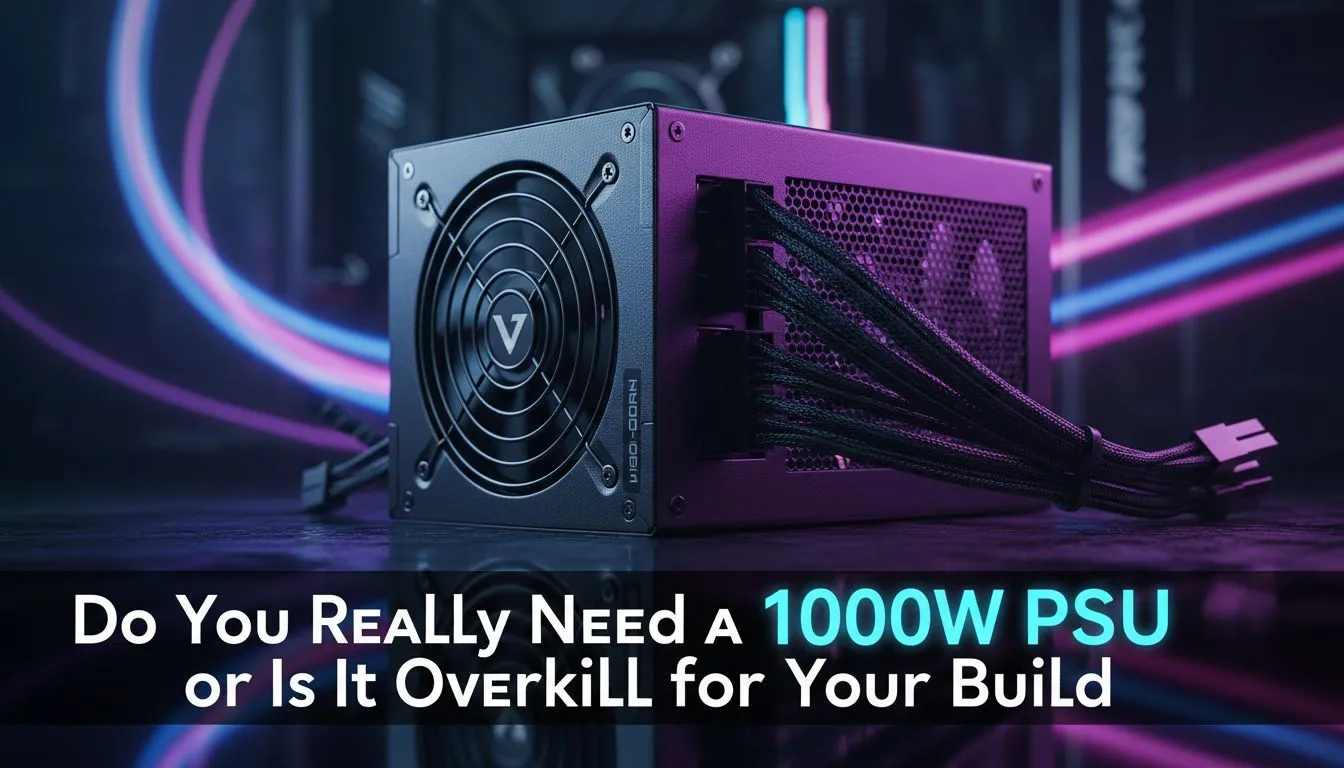
Building a high-end gaming PC in South Africa often feels like a complex puzzle. With power prices rising and loadshedding always a threat, efficiency is king. But do you really need a 1000W PSU for your PC build? It is easy to get caught up in the "bigger is better" mindset... but your wallet might disagree. 🔧
Most modern gaming rigs are surprisingly efficient. A mid-range build with an RTX 4070 rarely pulls more than 400W under load. Even with a high-end CPU, a 750W unit usually provides plenty of breathing room. However, choosing 80 PLUS certified units is essential to ensure you aren't wasting electricity as heat. This is especially important during our hot summer months.
So, why do people still buy massive power supplies? The answer usually lies in future-proofing and noise levels. A power supply is most efficient when running at roughly 50% of its maximum capacity. If your system draws 500W, a 1000W unit sits perfectly in that efficiency sweet spot. ⚡
High-wattage units also handle "transient spikes" better. These are tiny, microsecond-long bursts of power that high-end GPUs demand. If your PSU can't handle the spike, your PC might simply shut down. For those looking for reliability without breaking the bank, exploring GAMDIAS power supply options can provide a great balance of wattage and value for local builds.
Always check the 80 PLUS rating of your power supply. A Gold or Platinum rating means better energy conversion, which can save you a few Rands on your monthly electricity bill. It also means less heat inside your case, extending the lifespan of your expensive components.
In South Africa, the quality of your power matters more than the raw wattage. Our grid can be unpredictable. A 1000W unit from a generic brand is far more dangerous than a high-quality 650W unit from a reputable manufacturer. 🚀
Always look for Japanese capacitors and solid warranty support. If you are planning a build that includes an RTX 4090 or an i9 processor, then a 1000W unit is a sensible investment. For everyone else, it might be better to spend that extra cash on a faster SSD or better RAM. You can find the full range of Corsair power supplies at Evetech to help you decide which tier fits your specific hardware needs. ✨
Ready to Power Your Next Adventure? Finding the right balance between wattage and price is key to a successful build. Whether you need a massive 1000W beast or a reliable 650W unit, we have you covered. Explore our massive range of power supply specials and find the perfect unit to keep your rig running smoothly.
Most high-end rigs don't require a 1000W PSU unless you run dual GPUs or extreme overclocks. Use a PSU wattage calculator to confirm.
When total system draw plus 20–30% headroom approaches 800–900W, or for multi-GPU and workstation builds, a 1000 watt PSU is sensible.
Usually yes. A modern single-GPU gaming PC typically runs fine on 650–850W. A 1000W PSU can be overkill unless future upgrades demand it.
Add CPU, GPU, drives, and peripherals draw, then add 20–30% headroom. If the total nears 800–900W, a 1000W power supply fits.
Yes. Higher efficiency (80 Plus Gold/Platinum) reduces waste heat and can lower operating draw, making a 1000W PSU less necessary.
Not directly. Proper voltage regulation and build quality matter more. A quality 1000W PSU can improve stability under heavy loads.
Modular 1000W PSUs simplify cable management and airflow. Prioritize modularity with high efficiency and a strong warranty.
Clean gaming keyboard quickly and safely in dusty or humid conditions with step-by-step tips, tool checklist, and maintenance routines to prevent corrosion and switch failure. 🧼💨
Read more
Best gaming keyboard features to prioritize when building a high-end setup: mechanical switches, low latency, hot-swap, RGB, macros, durability and ergonomics 🎮⌨️
Read more
Custom actuation point keyboard setup guide: learn to set per-key actuation on your analog gaming keyboard for faster, precise inputs and better control 🎮⚙️
Read more
Cable management for home entertainment helps you eliminate cable clutter quickly and safely. Learn routing, concealment, and product picks to tidy your setup fast 📺🔌
Read more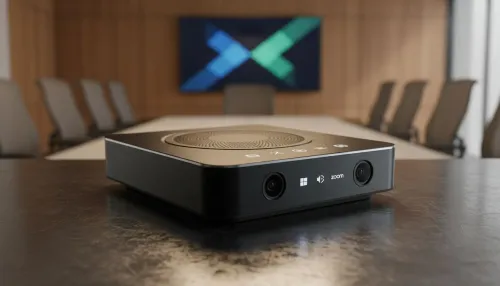
conference room setup Microsoft Teams Zoom: Upgrade AV, camera, mic, and network to ensure seamless meetings, clear audio, and crisp video 🎯🔧
Read more
• Audit setup • Link accounts • Configure ViewBoard • Test workflows Integrate Google Workspace with ViewSonic ViewBoard to enable secure SSO, calendar and Drive sync, and smooth collaborative whiteboarding 🔗📋
Read more
Discover webcams that automatically adjust light and color for crystal-clear video calls 🎥✨. Boost your streaming quality today!
Read more
Discover webcams that blend into your workflow 🎯 Capture moments while you work, stream, or create. Upgrade your setup with smart, multitasking tech!
Read more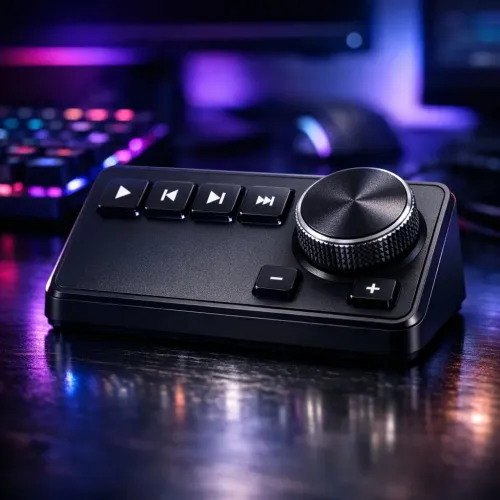
Dedicated media keys give streamers one-touch control to mute, switch scenes, clip highlights, and adjust audio — cutting task time and boosting consistency 🎛️⚡
Read more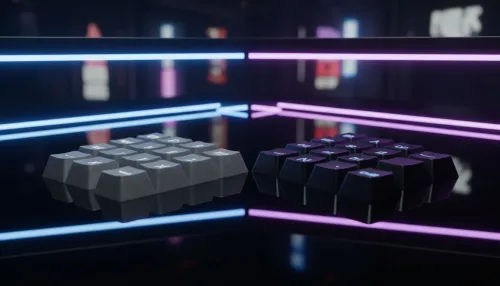
PBT vs ABS keycaps: Clear, local guide for South African gamers—compare feel, sound, durability and where to buy. Find the best material for your budget and playstyle 🎮🇿🇦
Read more
- Multi-Function Digital Dial: define benefits - Show gamer setups and macros - Offer buying and setup tips Multi-Function Digital Dial puts programmable control at your fingertips for faster actions and smoother streaming. 🎮⚙️
Read more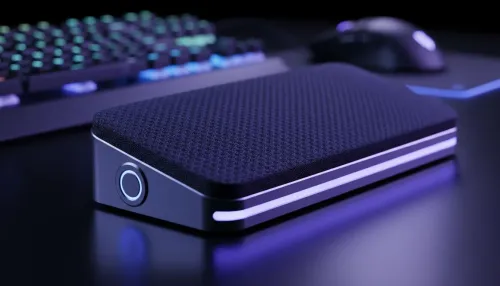
- Explain benefits; - Show the science; - Compare options; - Recommend picks. Magnetic wrist rest for gaming cuts wrist strain and boosts comfort during long sessions 🕹️✨
Read more