


Clean Gaming Keyboard: Guide for Dusty & Humid Conditions
Clean gaming keyboard quickly and safely in dusty or humid conditions with step-by-step tips, tool checklist, and maintenance routines to prevent corrosion and switch failure. 🧼💨
Read moreStruggling to decide between 120mm vs 140mm fans for your rig? 🌬️ We break down airflow, noise levels, and compatibility to help you maximize cooling in your mid-tower chassis. ❄️ Get the best performance balance today!

Building a new PC in South Africa means planning for the heat. You've picked your CPU and GPU, but now for a choice that can make or break your temps: the case fans. It’s the classic PC builder's debate—120mm vs 140mm fans. Does bigger automatically mean better for your rig? Or is there more to the story? Let's break down which size offers the best cooling for mid-tower PC builds.
When comparing 120mm vs 140mm fans, it's not just about the 20mm difference in size. It’s about physics. ⚙️
A 140mm fan has longer blades, allowing it to move a larger volume of air (measured in CFM - Cubic Feet per Minute) at a lower speed (RPM - Revolutions Per Minute) compared to a 120mm fan. The result? Generally quieter operation for the same amount of airflow.
A 120mm fan, however, can often achieve higher static pressure. Think of static pressure as the fan's "pushing power." This is crucial for forcing air through restrictive spaces like dense heatsink fins, radiators, or tight front panel mesh found in many modern computer cases.
While the quiet airflow of a 140mm fan is tempting, 120mm fans have specific advantages that make them the undisputed champion in certain scenarios.
Essentially, if you need to overcome resistance, a 120mm fan is your best bet.
Before you buy any fans, double-check your case's manual or product page on Evetech. It will clearly list the supported fan sizes (120mm, 140mm, or both) and mounting locations. Planning your fan layout before you purchase saves a lot of frustration... and a potential return trip!
So, if 120mm fans are the pressure specialists, where do 140mm fans shine? The answer is simple: moving massive amounts of air, quietly. ✨
If your primary goal is overall case ventilation and keeping noise to a minimum, loading up on 140mm fans is the way to go. Many premium Cooler Master cases are optimised for these larger fans.
Here’s the pro-level secret: for most South African gamers with a mid-tower PC, the 120mm vs 140mm fan debate isn't an either/or situation. The optimal solution is often a hybrid approach that plays to the strengths of both.
This balanced setup gives you the best of both worlds: quiet, high-volume case airflow from the 140s and powerful, focused cooling from the 120s where it matters most. Brands like Gamemax and the newer TRYX Gaming Cases often provide flexible mounting options to support these hybrid strategies. 🚀
The final choice depends on your specific build, but understanding the difference between pressure and airflow is the key to an ice-cold, whisper-quiet rig.
Ready to Build a Cooler PC? Whether you need high-pressure 120mm fans or whisper-quiet 140mm options, the right case is the foundation of any great build. Explore our massive range of PC cases and find the perfect chassis to conquer the heat.
Yes, generally 140mm fans move more air (CFM) at lower RPMs compared to 120mm fans, resulting in efficient cooling with less noise.
Not always. While most modern mid-towers support 140mm mounts, you must verify your specific case specifications to ensure proper clearance.
140mm fans are typically quieter because they push equivalent air volume at slower speeds, reducing the high-pitched whine often associated with fast 120mm fans.
Static pressure is ideal for radiators or restricted intakes. For general open airflow in a mid-tower, high airflow fans are usually the superior choice.
It depends on the radiator. A 240mm or 360mm radiator requires 120mm fans, whereas 280mm or 420mm radiators are designed strictly for 140mm fans.
For balanced pressure, aim for at least two intake fans and one exhaust. Using larger 140mm fans often allows you to use fewer fans for the same result.
Clean gaming keyboard quickly and safely in dusty or humid conditions with step-by-step tips, tool checklist, and maintenance routines to prevent corrosion and switch failure. 🧼💨
Read more
Best gaming keyboard features to prioritize when building a high-end setup: mechanical switches, low latency, hot-swap, RGB, macros, durability and ergonomics 🎮⌨️
Read more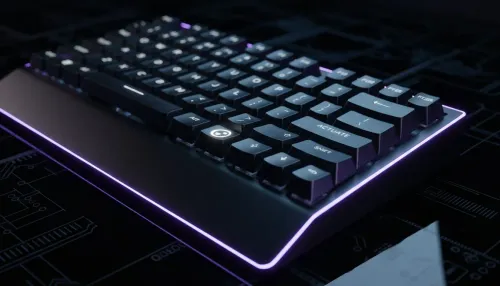
Custom actuation point keyboard setup guide: learn to set per-key actuation on your analog gaming keyboard for faster, precise inputs and better control 🎮⚙️
Read more
Cable management for home entertainment helps you eliminate cable clutter quickly and safely. Learn routing, concealment, and product picks to tidy your setup fast 📺🔌
Read more
conference room setup Microsoft Teams Zoom: Upgrade AV, camera, mic, and network to ensure seamless meetings, clear audio, and crisp video 🎯🔧
Read more
• Audit setup • Link accounts • Configure ViewBoard • Test workflows Integrate Google Workspace with ViewSonic ViewBoard to enable secure SSO, calendar and Drive sync, and smooth collaborative whiteboarding 🔗📋
Read more
Discover webcams that automatically adjust light and color for crystal-clear video calls 🎥✨. Boost your streaming quality today!
Read more
Discover webcams that blend into your workflow 🎯 Capture moments while you work, stream, or create. Upgrade your setup with smart, multitasking tech!
Read more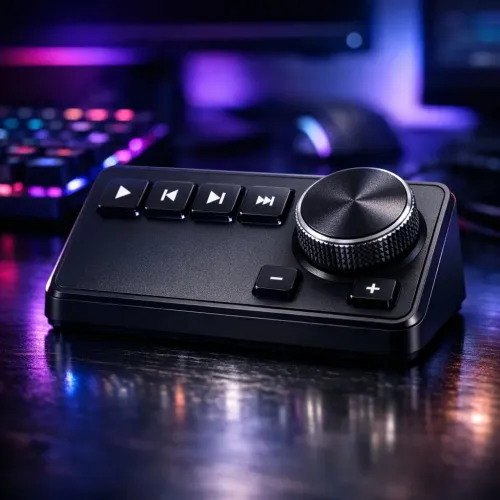
Dedicated media keys give streamers one-touch control to mute, switch scenes, clip highlights, and adjust audio — cutting task time and boosting consistency 🎛️⚡
Read more
PBT vs ABS keycaps: Clear, local guide for South African gamers—compare feel, sound, durability and where to buy. Find the best material for your budget and playstyle 🎮🇿🇦
Read more
- Multi-Function Digital Dial: define benefits - Show gamer setups and macros - Offer buying and setup tips Multi-Function Digital Dial puts programmable control at your fingertips for faster actions and smoother streaming. 🎮⚙️
Read more
- Explain benefits; - Show the science; - Compare options; - Recommend picks. Magnetic wrist rest for gaming cuts wrist strain and boosts comfort during long sessions 🕹️✨
Read more