Putting together a 165Hz 1080p machine for competitive esports on a R20,000 budget works best when each part is sized to the panel and the games you play, not picked off a generic list.
Quick Answer
For a 1080p 165Hz competitive esports setup at R20,000, build around an RTX 5070-class card (around R14,000) with a Ryzen 5 or Core i5, 16-32GB DDR5 and a fast NVMe to land 100-165fps at 1440p high. At 1080p 165Hz a mid GPU can actually feed the panel, so esports and fast titles can approach the full 165Hz. Match the GPU to the resolution first, then spend what is left on the panel and storage.
Building for competitive esports at R20,000
Competitive play rewards frames over eye-candy. Run titles like CS2, Valorant and Apex at low-to-medium settings so the 1080p panel earns its refresh, and prioritise 1% lows so aim stays consistent. A 240Hz or higher panel only helps if the GPU and CPU can feed it, which is why the GPU choice above is tuned to the resolution rather than the headline price.
Matching the 1080p 165Hz panel to the parts
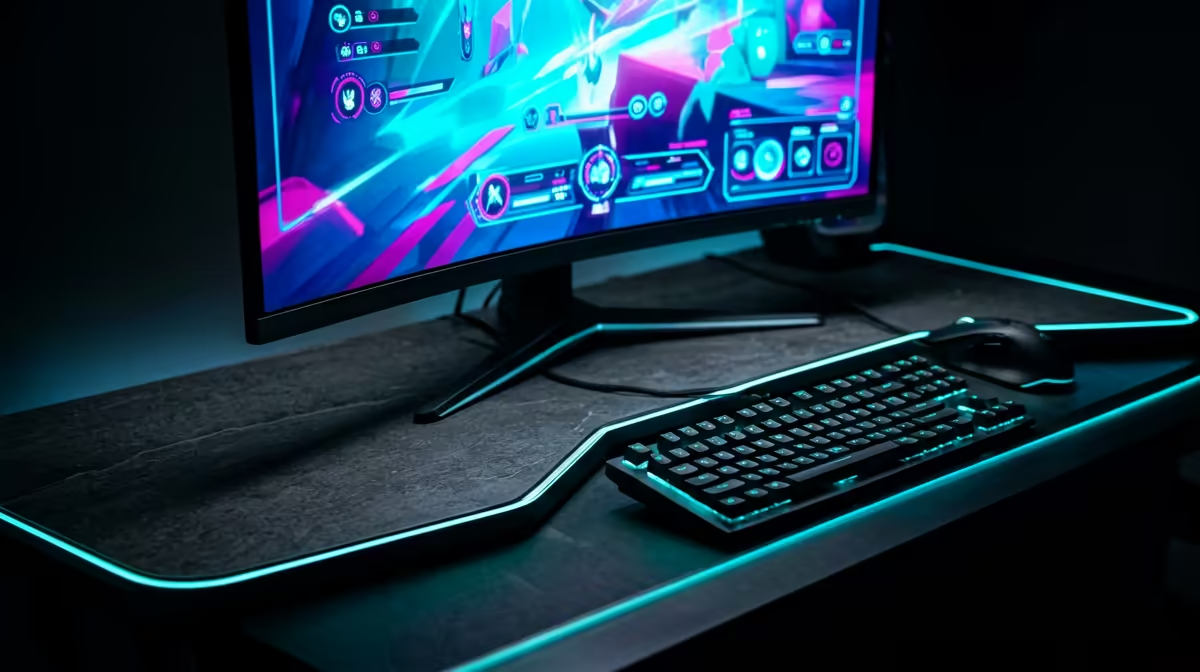
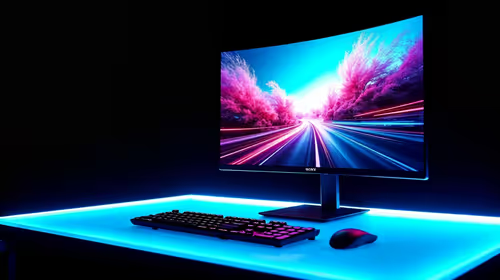
The panel and the GPU have to agree. A 165Hz 1080p monitor only shows its full speed if the GPU can push those frames, so at this budget the smart move is to size the GPU to the resolution first. Use DisplayPort for high-refresh, enable the adaptive-sync option (FreeSync or G-Sync compatible) to kill tearing, and confirm the cable is rated for the refresh you bought. At R20,000 a panel in the right tier costs roughly a quarter of the budget, with the rest going to the tower.
Spending the R20,000 wisely in SA
Order of priority at this budget: GPU, then CPU and RAM, then the panel, then storage and peripherals. A Durban gamer should buy a 16GB DDR5 kit minimum (32GB for editing, streaming or MMOs), a 1TB NVMe, and a quality 650W 80+ PSU that protects the parts and leaves room for a future GPU upgrade. Keep a little back for a surge-protected plug; clean power is cheap insurance for an expensive build.
FAQ
What FPS can I expect from a 1080p build at R20,000?
Expect 100-165fps at 1440p high in your main titles with this hardware. Competitive games run higher because they use lighter settings, while AAA games sit at the lower end with high visuals.
Is 165Hz worth it at 1080p?
Yes, if the GPU can feed it. A 165Hz 1080p panel feels noticeably smoother than 60Hz once your frame rate climbs past about 100fps, which this R20,000 budget targets. Pair it with adaptive sync for the cleanest result.
How much RAM do I need for competitive esports?
16GB DDR5 is the floor for pure gaming, but competitive esports benefits from 32GB so background tasks and large files do not cause stutter. A 32GB DDR5 6000 kit runs around R2,200 at SA retail.
Set the budget at R20,000, size the GPU to your 1080p panel first, then fill in the CPU, 32GB RAM and a 1TB NVMe. Shortlist matching parts at Evetech and confirm the monitor cable supports the full 165Hz before you check out.