import { TipBox, CALLTOACTION } from '@components/Mdx';
Feeling the AI buzz across South Africa? From generating incredible art with Midjourney to experimenting with local language models, artificial intelligence is no longer just for massive tech companies. But to truly harness this power, you need more than a standard PC. You need a machine built for the job. This step-by-step guide will walk you through your first AI workstation build, ensuring you pick the right parts to bring your silicon dreams to life. 🔧
The GPU: The Heart of Your AI Workstation Build
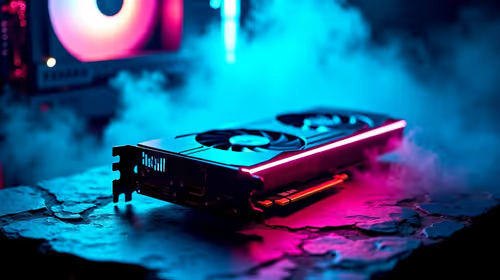
Let's be clear: when building a PC for AI, the Graphics Processing Unit (GPU) is the undisputed king. AI tasks like training neural networks rely on massively parallel processing, which is exactly what modern GPUs were designed for.
Why VRAM is Everything
For AI, the amount of video memory (VRAM) on your GPU is the single most important factor. It determines the size and complexity of the models and datasets you can work with. Running out of VRAM is a hard stop... your process will simply fail.
- 12GB VRAM: A good starting point for experimenting and learning.
- 16GB VRAM: The sweet spot for many enthusiasts and serious hobbyists.
- 24GB+ VRAM: Essential for professional use, training large models, or working with high-resolution data.
NVIDIA's CUDA platform is the industry standard for AI and machine learning, giving their cards a significant edge. Because of this, many of the best GPUs for AI are found in high-end NVIDIA GeForce gaming PCs, which pull double duty as incredible creative and AI machines.
CPU & Motherboard: The Command Centre
While the GPU does the heavy lifting, the Central Processing Unit (CPU) is still vital. It manages your operating system, prepares data for the GPU, and handles all the tasks that aren't parallelised. For an AI workstation build, you don't need the absolute top-of-the-line CPU, but you shouldn't skimp either.
Look for a CPU with a good balance of core count and clock speed. A modern processor with 8 or more cores is a solid choice. This ensures your GPU isn't left waiting for data (a bottleneck).
Your motherboard is the foundation that connects everything. Key features to look for are:
- PCIe 4.0/5.0 Support: For the fastest possible data transfer to your GPU and storage.
- Multiple M.2 Slots: For fast NVMe SSDs.
- Robust VRMs: To deliver clean, stable power to the CPU.
Software Setup Pro Tip ⚡
Before you even install your first AI library, consider using a tool like Conda or Docker. These create isolated software environments, preventing conflicts between different project dependencies (like specific versions of Python or TensorFlow). It's a lifesaver for keeping your AI workstation organised and your projects running smoothly.
RAM & Storage: Fueling the Machine
System RAM is different from your GPU's VRAM. It holds your operating system, applications, and the datasets you're actively working on before they get passed to the GPU.
- RAM: 32GB is a comfortable minimum for a modern AI workstation build. If you regularly work with massive datasets, 64GB or even 128GB is a worthwhile investment to prevent system slowdowns.
- Storage: Speed is critical. An NVMe SSD is non-negotiable for your operating system and primary applications. Datasets can be enormous, so having at least a 1TB NVMe drive is recommended, with a larger, secondary SSD or HDD for archiving.
While NVIDIA GPUs are often the focus for AI, the overall system balance is crucial. A powerful AMD Ryzen CPU, for example, can be the perfect core for your machine, offering excellent multi-threaded performance. Many powerful AMD-based systems provide a fantastic foundation for a versatile build.
Power Supply & Cooling: The Unsung Heroes
An AI workstation build puts immense, sustained stress on its components. A cheap power supply unit (PSU) is a recipe for disaster. Choose a high-quality, 80+ Gold rated PSU from a reputable brand. Ensure it has at least 20-30% more wattage than your components' estimated total power draw to handle power spikes.
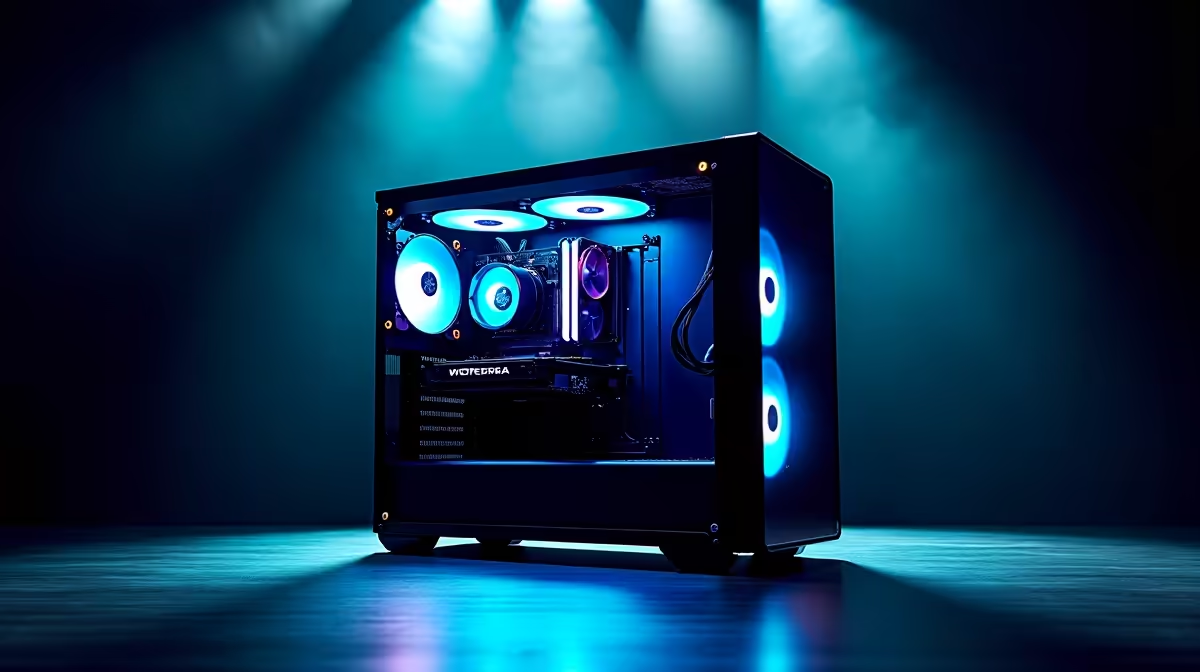
Likewise, cooling is not just for aesthetics. A GPU running at 100% for hours generates a serious amount of heat. Good case airflow, with multiple intake and exhaust fans, is essential. For high-end CPUs, an All-In-One (AIO) liquid cooler can provide superior and quieter performance than a standard air cooler. ✨
The Final Step: Build or Buy?
Following this guide gives you the blueprint for a powerful AI machine. The process of building your own PC is incredibly rewarding. However, it also requires time, patience, and careful research to ensure every part is compatible.
If your goal is to get to work on your AI projects as quickly as possible, bypassing the build process can be a smart move. Our range of professionally assembled workstation PCs are designed and tested by experts, ensuring perfect component synergy, stability, and performance right out of the box. You get a warranty on the entire system, not just individual parts.
Whichever path you choose, you're on your way to exploring the incredible world of AI. Happy building! 🚀
Ready to Power Your AI Dreams?
Building an AI workstation is a rewarding challenge, but if you'd rather jump straight into training models, our experts have you covered. We've done the hard work of balancing components for maximum performance. Explore our range of pre-built Workstation PCs and find the perfect machine to conquer your projects.