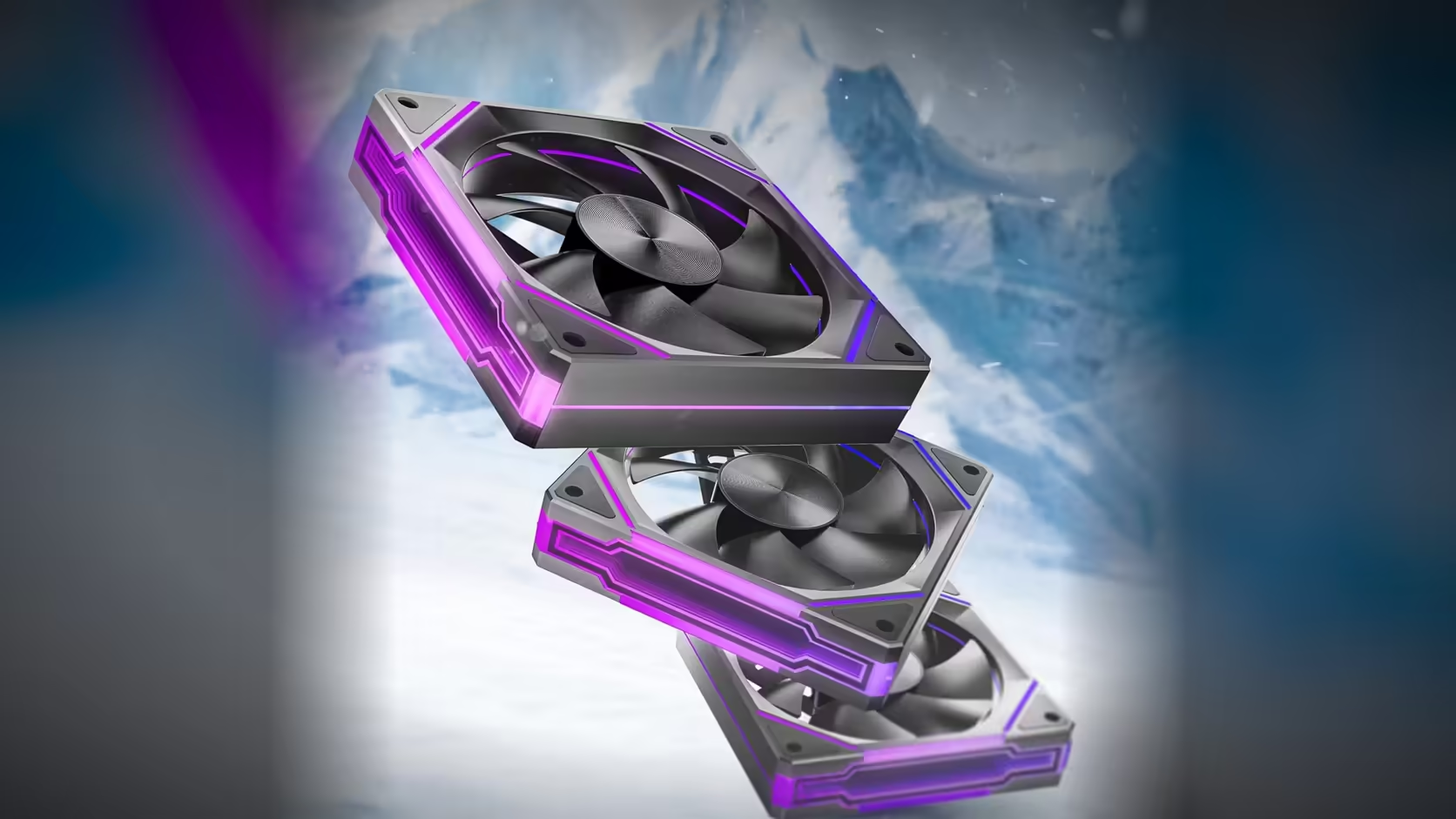
A mesh front panel does more to lighting than most builders expect before they see it in person. Fine perforations scatter and dim whatever sits behind them, and a thin lit ring loses far more to that scattering than a fully lit face would. Before mounting a row of Amici Pro fans behind mesh, it is worth checking what will actually show through.
Quick Answer
The Amici Pro 3-pack costs R399 (VAT-inclusive, prices move) and lights only a thin infinity mirror ring per fan - a design that survives a mesh front panel far less well than a fully lit blade face would. Test visibility before committing a whole front row to this look.
🕳️ Why mesh hurts a thin ring more
A ring is a narrow line of light, and diffusion spreads whatever light exists across a wider area, which weakens a thin source proportionally more than a broad one. A fully lit blade area has more total light to begin with, so the same diffusion leaves a visible pattern where a ring can fade to almost nothing. This is simple physics, not a fault with the fan - it applies to any thin-line lighting behind a mesh panel.
Judging it before you buy
Look at how any existing lighting in your case currently shows through that specific mesh panel. The same diffusion rules apply whatever light source sits behind it, so an existing component gives a reasonably reliable preview of how an Amici Pro ring would behave in the same position.
🪟 The side window is a different story
Fans mounted where a tempered glass side panel shows them directly keep their ring definition intact, since glass does not scatter light the way mesh does. If your case pairs a mesh front with a glass side, a side-mounted or top-mounted row may show the Amici Pro rings far more clearly than the same fans would in the front intake positions.
Panel colour changes it further
A dark-tinted mesh absorbs considerably more light than a lighter one, so the same three fans can read very differently behind two panels that otherwise look similar from the outside. There is no substitute for checking the specific panel on your own case rather than assuming all mesh behaves the same.
🔁 Alternative placements worth considering
Where the front row is mesh-obscured, consider moving the Amici Pro fans to a top row visible through glass, or a rear exhaust position seen from the side. Since orientation alone decides whether a forward-blade fan draws air in or pushes it out, relocating the pack costs you nothing on airflow flexibility. Browse the case fans range for other models if your case genuinely needs lighting visible through a mesh front, and case accessories for the extension cabling a relocated fan run sometimes needs.
A soft glow can still show behind mesh even with the definition reduced, which some builds prefer over nothing at all - the infinity mirror depth is what gets lost, not the light entirely.
Bearing type has nothing to do with visibility, but is worth knowing anyway
The Amici Pro runs on a hydro-dynamic bearing rated for the kind of continuous spinning a case fan does for as long as the machine is on, which is a separate consideration from how the ring shows through any given panel. Both black and white variants use the same bearing and PWM-controlled motor, so panel visibility is purely a lighting question and never affects how the fan itself performs behind mesh, glass, or anything else in front of it. Under 30 dBA at up to 61.5 CFM, the fan's noise and airflow figures hold steady whatever the front panel is made of - a mesh front that dims the ring has no bearing whatsoever on how quietly or effectively the fan actually cools.
Frequently Asked Questions
Why does a mesh front panel affect a ring more than a full face?
A ring has less total light to start with, so the same proportional loss from diffusion leaves less that remains visible.
Would a fully lit blade fan survive mesh better?
Generally yes, since a larger lit area has more light spread across a wider shape, which diffusion affects less severely.
How can I test this before buying?
Place an existing lit component behind the panel and compare how it looks with and without the panel in place.
Is the side window unaffected by this issue?
Largely yes - fans visible through tempered glass from the side keep their ring definition regardless of the front panel material.
Does the tint or colour of the mesh matter?
Yes, a darker mesh absorbs more light than a lighter one, so identical fans can look quite different behind different panels.
Should I move the fans to a different position instead?
It is worth considering - a top or side row visible through glass often shows the ring effect far more clearly than behind mesh.
Want to check if your case shows lighting clearly?
Browse Evetech's case fan selection and compare options suited to your panel type.