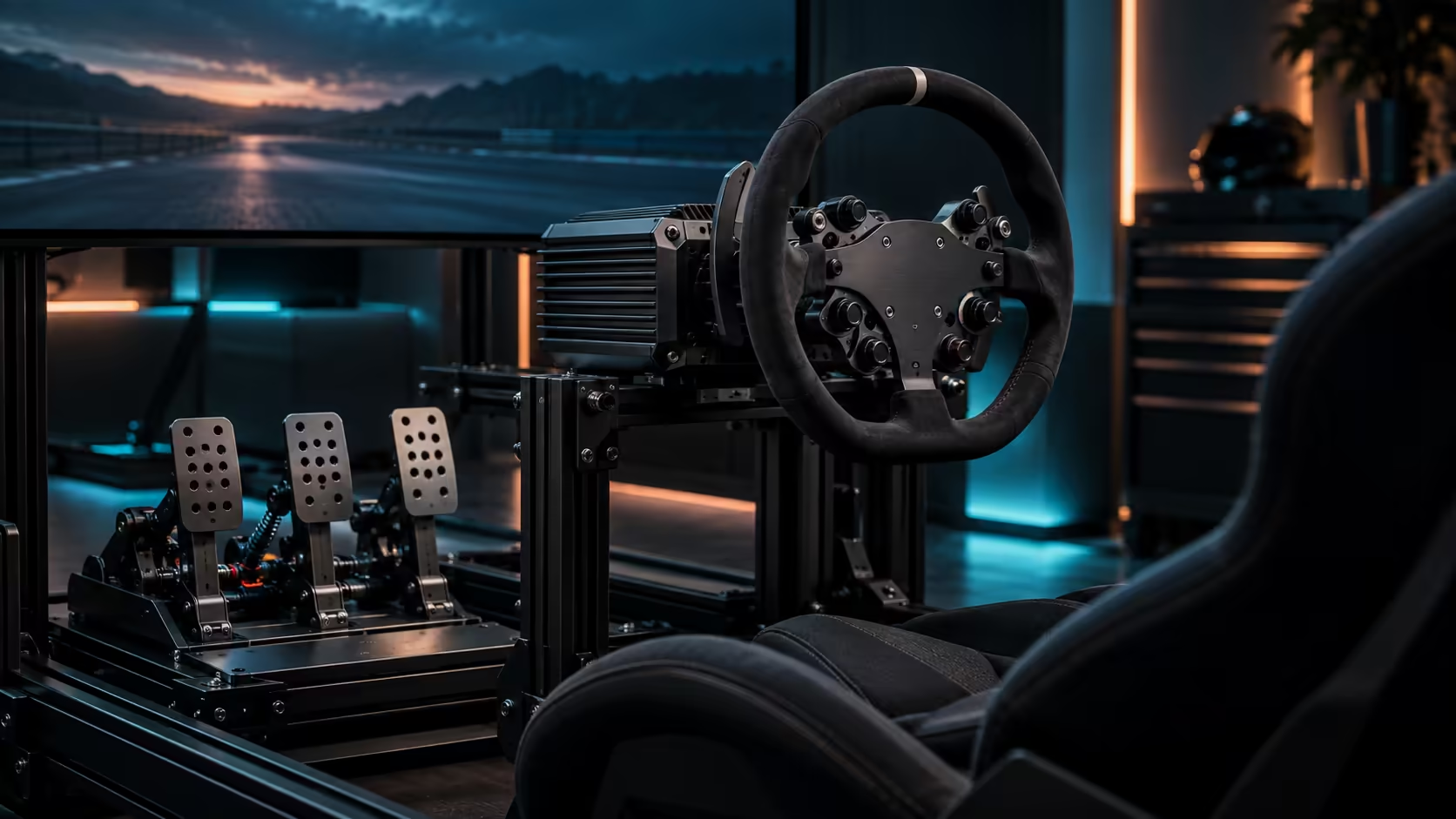
Buying the wheel is the easy part of this project, and it is also the part every guide focuses on. A direct drive sim racing setup built for a South African home has to answer three questions the spec sheet never mentions: what happens if the base needs a repair, what a dry inland winter does to exposed electronics, and whether your internet line can carry a race without the field feeling like it is skipping frames.
Quick Answer
Start with the R14,999 wheel package, then spend on the frame and seat that will actually hold it still, because a 9Nm base with nothing solid to bolt to underperforms regardless of price. From there, South African specifics take over: keep the base's paperwork for warranty purposes, plan for household dust through a dry Gauteng winter, and confirm your line handles online racing before you assume the hardware is the limiting factor.
🛠️ The build order, and why it is not the wheel first
Buy the wheel package before anything else, because everything downstream is sized around it: rig footprint, seat position, and desk clearance all depend on where the base and pedals sit. But do not install anything until the frame is in place. Mounting a 9Nm base to a temporary surface and then moving the whole rig once the real frame arrives means redoing cable routing and recalibrating pedal position twice for no reason.
A proper rig or a dedicated stand comes next, sized to the base and pedal set you already own rather than guessed at in advance. The racing simulation range lists mounting compatibility against each base, which is worth checking before a frame purchase rather than after a mismatch.
🛡️ Warranty on a heavy base is worth planning around
A direct drive base is precision motor engineering, not a plastic peripheral, and a fault in one takes real diagnostic time to sort out rather than a same-morning counter exchange. Register the product and keep proof of purchase somewhere you will actually find it 12 months later, because warranty claims on hardware this specialised move faster with documentation ready than with a search through old emails.
Buying locally rather than through a private import matters specifically here: a base that needs to travel overseas for a repair is a very different timeline to one that stays in the country, and a heavy, boxed motor assembly is also the last thing you want to be reshipping internationally at your own cost if something goes wrong outside a formal warranty path.
🌬️ Dust, dry winters and where the rig actually lives
Inland provinces run through 4 or 5 months of low humidity and wind-blown dust every year, and a rig that sits in a garage, a converted room, or anywhere near an open window collects it steadily on fan intakes, exposed connectors, and the base's cooling vents. None of that stops a wheel base from working, but it is worth a wipe-down of about 5 minutes each month rather than letting it build up, since dust trapped against a motor housing insulates heat rather than letting it escape, which matters on a base that already throttles itself under sustained load.
Siting the rig away from a floor vent and off bare concrete, where dust settles fastest, is a cheap habit that saves a proper clean-out later.
📶 The connection matters as much as the connection speed
A stable line matters more for close racing than a fast one. Wheel-to-wheel racing depends on your PC and everyone else's agreeing, several times a second, on where each car is in real time, and a line that drops packets occasionally does more damage to that than one running at 20Mbps but steady. Wired Ethernet into the router, rather than Wi-Fi shared with the rest of the household, removes most of the variability that turns a clean pass into a collision nobody saw coming.
If most of your racing is solo time attack or offline sessions against the game's own cars, none of this matters much. It becomes the deciding factor the moment you race other people, particularly on servers hosted overseas where every extra dropped packet compounds an already-present delay.
🪑 The seat is not an afterthought on this build
A hard press against a load cell brake shoves your torso rearward into the seat rather than loading just your foot, and a chair riding on castors will roll away under that force exactly when you most need to stay put. A fixed simulator chair or a seat mounted to the rig frame removes that variable, and it is worth budgeting for at the same time as the frame rather than treating it as a later upgrade. The wider simulation gear range covers the smaller mounting parts that hold everything, seat included, to the frame rather than the floor.
Frequently Asked Questions
Should I buy the wheel or the rig first?
Buy the wheel package first, but do not mount it until the frame arrives. Building the order around the frame you already own or plan to buy avoids remounting everything twice.
Does dust actually affect a wheel base?
It builds up on cooling vents and connectors over a dry season and can insulate heat on a base that already manages its own temperature under load. A monthly wipe-down is a cheap habit that avoids the issue.
Why does my internet connection matter for sim racing?
Consistency matters more than raw speed for close wheel-to-wheel racing, since your PC and other players' PCs need to agree on car positions in real time. A wired connection reduces the dropped packets that cause that disagreement.
Is a normal office chair fine for a load cell pedal set?
Not for hard braking. A chair on castors slides under the force a load cell brake requires, and a fixed seat or one mounted to the rig removes that movement.
Ready to build this properly instead of piecing it together twice?
Order the wheel package, plan the frame and seat around it, and sort the connection before race day.