Quick Answer
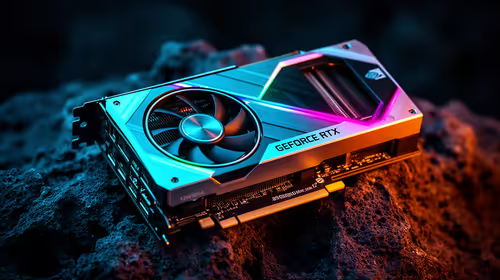
For Carletonville gamers weighing up competitive esports, the numbers matter more than the marketing. Competitive esports is about high, stable frame rates, not maxed visuals. A Ryzen 5 7600 with an RTX 5060 pushes 240-360 fps in CS2, Valorant and Apex at 1080p Competitive, and a setup like this runs about R18,000 at Evetech.
Frame rate and 1% lows win games
Esports titles are CPU and frame-rate bound, not GPU-heavy. CS2 and Valorant run 300+ fps on an RTX 5060, while Fortnite Performance mode clears 240 fps. The CPU matters most for 1% lows - a Ryzen 5 7600 or 7600X keeps frame pacing tight. 16GB DDR5 is plenty here.
The monitor is the real upgrade
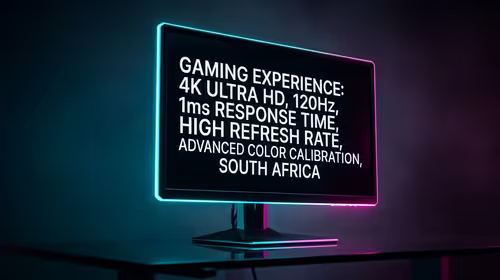
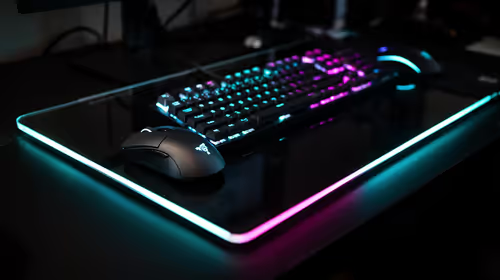
A high-refresh panel turns frames into wins. A 1080p 180Hz IPS (around R3,500) is the entry esports screen; 240Hz (about R6,000) suits serious ranked play. Pair with an SSD so map loads and respawns are instant - a 1TB Gen4 NVMe from R1,100 is fine.
Where your rand goes furthest
For competitive esports, the smart Carletonville buy spends on the part that drives the result - the GPU - and keeps the rest balanced. Vumatel and openserve fibre have reached the central suburbs, with rain 5g filling outlying gaps, and Evetech ships to Carletonville in 1-3 working days via the N12 from the Johannesburg warehouse, with full warranty support. Match a 240-360 fps at 1080p target to your budget and you avoid both over- and under-spending.
FAQ
What fps do I need for competitive esports?
Aim to match your monitor: 180+ fps for a 180Hz panel, 240+ for 240Hz. An RTX 5060 with a Ryzen 5 7600 clears these easily in CS2, Valorant and Apex at 1080p Competitive.
Does the GPU or CPU matter more for esports?
The CPU drives 1% lows and frame consistency in CS2 and Valorant. A Ryzen 5 7600-class chip is the priority; a mid-range RTX 5060 is more than enough GPU at 1080p.
Is a 240Hz monitor worth it?
For ranked CS2/Valorant players, yes - the lower frame time sharpens flick accuracy. Casual players see most of the benefit jumping from 60Hz to 144/180Hz first.
Pro Tip
Turn off in-game V-Sync and cap fps a few frames under your refresh, then enable your monitor's low-latency mode - it trims input lag where esports is won.