Quick Answer
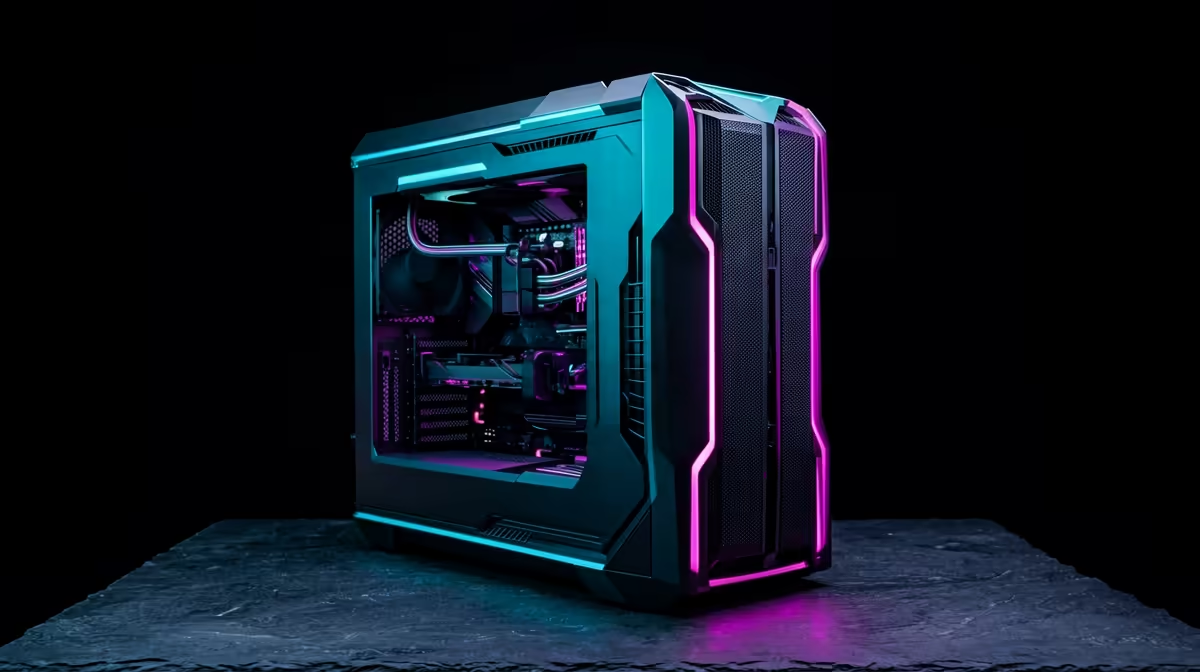
The cheapest sensible 1080p-capable build for cinematic story games in SA is not the absolute lowest-priced box; it is the lowest basket that still has Ryzen 5 5600 or Core i5-12400F, RTX 4060 or RX 7600, 16GB to 32GB RAM and a 1TB SSD. A cautious local price band is roughly R14,000-R24,000, and the useful target is 60-100 fps at 1080p high in many story titles.
Minimum Parts That Still Make Sense
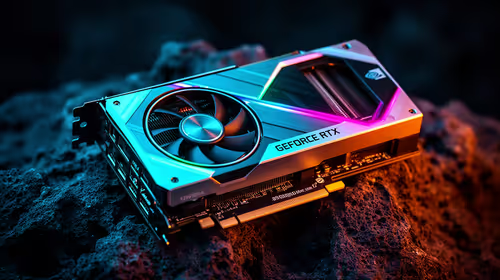
Start with the workload, then remove waste. For cinematic story games, the practical baseline is MSI RTX 4060 Ventus, Ryzen 5 5600 and a 1TB NVMe SSD. Going below that can still boot Windows, but it usually costs time through stutter, export delays, noisy fans or storage juggling. In Bloemfontein, also allow for a monitor, keyboard, mouse and delivery timing before spending every rand on the tower alone.
What 1080p Actually Means Here
A 1080p-capable system should drive a Full HD screen cleanly, not merely display the desktop. For games, that means a stable 60 fps target where possible. For creation work, it means a responsive preview window, enough RAM for the project, and SSD space for source files, cache and exports. A 75Hz or 144Hz monitor changes the graphics requirement, so pair the PC with the screen you will actually use.
SA Buyer Checks
Use broad price bands because stock and component bundles move quickly. Check that the system has at least two display outputs, enough USB ports and a clear upgrade route to 32GB or 64GB RAM if your work grows. Fibre users on Openserve or Vumatel should still keep Ethernet available for large game downloads, cloud backups and remote classes.
FAQ
Can I go cheaper than this for cinematic story games?
You can, but the first cut usually hurts RAM, storage or graphics headroom. For a daily SA setup, a small saving is rarely worth constant 256GB storage pressure or 8GB RAM limits.
Is 16GB RAM enough for a 1080p build?
For light gaming and lectures, 16GB is acceptable. For editing, streaming, MMOs, AI work or large creative projects, 32GB is the more comfortable starting point and 64GB becomes sensible for heavier local workloads.
Should I buy the GPU first or the CPU first?
For gaming and AI, protect the GPU after choosing a competent CPU. For recording, lectures and music production, a quieter CPU-focused machine with more RAM can be the better spend.
Buyer check
Before ordering, write down the monitor resolution, RAM target and storage size; those three numbers prevent most mismatched 1080p baskets.