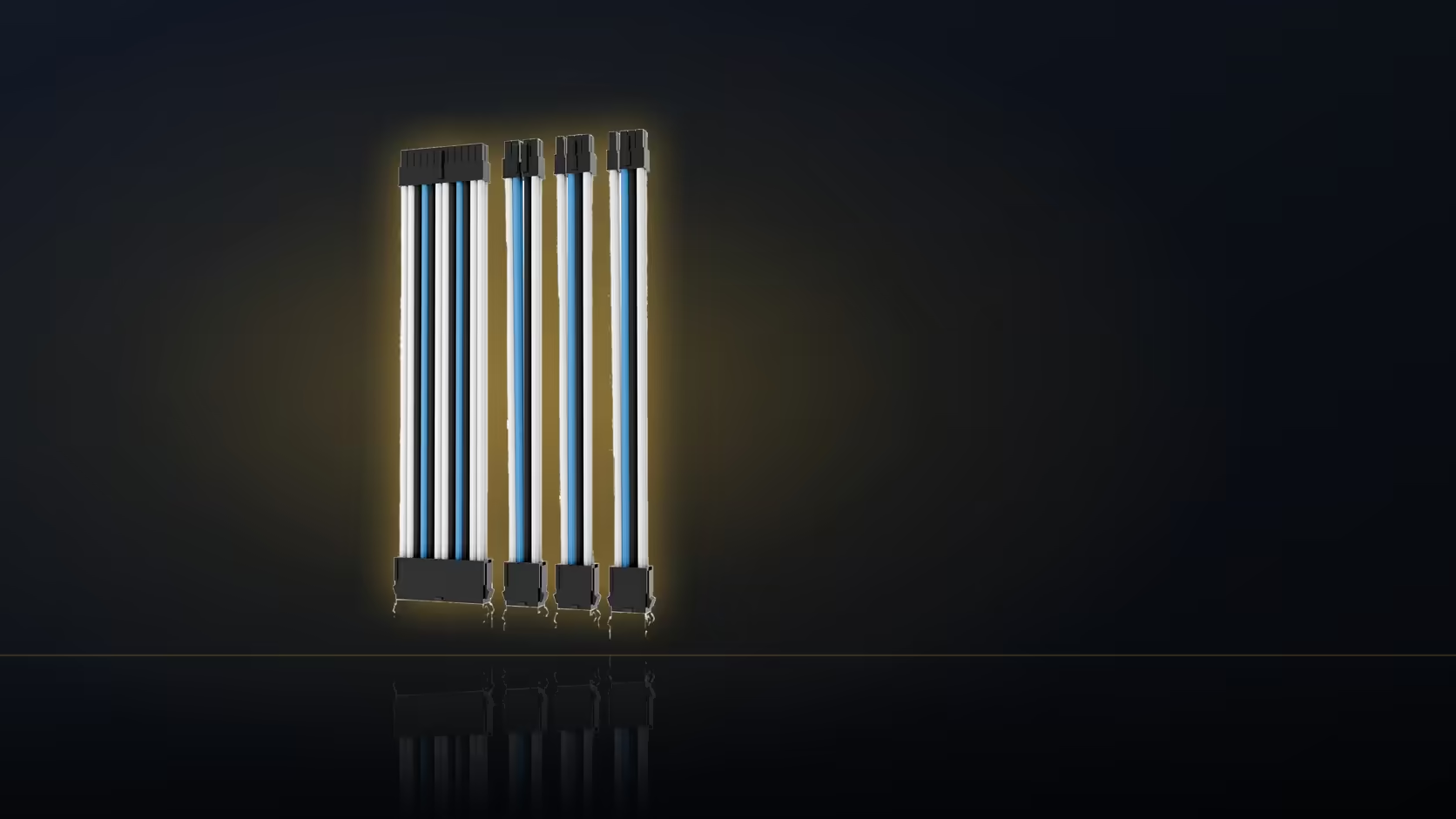
A parts list built purely on price tends to gravitate toward the shortest cable that gets the job done, and that habit works fine right up until it does not. Checking the longest accessory path in your build before committing to anything short and cheap saves you from ordering a product that simply cannot reach.
Quick Answer
Measure your build's longest cable route before shopping, not after. The AsiaHorse range has fixed lengths across the board: extensions add 30cm to an existing lead, the Hydrus 16-pin modular cable runs 50cm end to end, and the PCIe 5.0 riser is 200mm, priced from roughly R549 up to R1,299 depending on which product. None of these are offered in a range of lengths, so identifying your longest path first tells you honestly which products can actually serve it.
📐 Why lengths differ in kind, not just in number
Not every figure here means the same thing. An extension's 30cm is added on top of a factory lead that stays exactly where it is, so the total reach is the original cable plus 30cm, not 30cm on its own. The Hydrus 16-pin modular cable and the PCIe riser are different again: both are the entire run, plugging directly into the source rather than extending something already there. Comparing a 30cm figure against a 200mm figure as though they measure the same thing is exactly how a plan ends up short.
🥇 Which path is usually the longest
In most builds, it is the riser's path that stretches furthest, since it has to travel from the motherboard's PCIe slot all the way to wherever the graphics card is mounted elsewhere in the case, often via a vertical bracket on the opposite side of the chamber. This is worth identifying early, because it is also the one product in this range offered in a single fixed length with the least room to compromise.
🧵 How to actually measure a route
A tape measure along a straight line will mislead you. Use a length of string or flexible wire laid along the actual intended path, bends included, and measure that instead. Curves and detours around other components add real distance that a straight-line measurement misses entirely, and a route that looks comfortably short on paper can turn out to be longer once you trace where the cable genuinely has to go.
❌ What happens if a path exceeds the cable
If the measured route is longer than the product on offer, that product simply does not serve this particular path, since none of these come in a longer variant to fall back on. The honest fix is choosing a different mounting position, a different routing path, or accepting that particular accessory is not right for this build, rather than ordering it anyway and hoping it stretches.
🔧 Using the junction position to your advantage
On an extension specifically, where you place the join between the factory lead and the extension matters. Moving that junction closer to the socket it eventually plugs into shortens the distance the extension itself has to cover, effectively buying back some slack without changing the product. This trick does not apply to the Hydrus cable or the riser, since both plug in at fixed points with no equivalent junction to move.
🛒 Measuring before you order
Doing this measurement before placing an order, rather than after the parts arrive, is the difference between a cable that gets returned and one that simply gets used. Check your case's dimensions and your intended component layout, cross-referencing both Evetech's case fans positions and the case accessories shelf, before committing to any of the fixed-length cables in this family.
Frequently Asked Questions
Which lengths does this range actually offer?
Sleeved and lit extensions add 30cm to an existing lead, the Hydrus 16-pin modular cable runs 50cm, and the PCIe riser is 200mm, each as a single fixed option.
Do those figures mean the same kind of measurement?
No. An extension's length adds to a cable already fitted, while the Hydrus cable and the riser are the whole run from source to destination.
Which path in a typical build tends to be the longest?
Usually the riser's, since it spans from the board's slot across to a graphics card mounted vertically elsewhere in the case.
How should a route actually be measured before ordering?
With string or flexible wire laid along the intended path, including any bends, since a straight-line tape measurement misses real distance that curves add.
What happens if the measured path is longer than the product?
That product does not serve the path, since these come in single fixed lengths rather than a range, so a different route or position is the honest fix.
Can the junction position on an extension help with reach?
Yes. Moving the join closer to the destination socket shortens the distance the extension itself has to cover without changing the product bought.
Why measure before ordering rather than after?
Because a cable that does not reach gets returned rather than adjusted, and measuring the actual route first avoids that outcome entirely.
Planning a build with a graphics card mounted away from its slot?
Measure your routing path and check Evetech's case accessories range before ordering any fixed-length cable.