Is your gaming rig starting to feel sluggish? Before you blame lag or start pricing new GPUs, the culprit might be hiding in plain sight… a thick blanket of dust. In South Africa, dust is a constant battle. It silently chokes your PC, causing temperatures to climb and frame rates to drop. A clean dusty gaming PC isn't just about looks; it's about reclaiming the performance you paid for. Let's get your machine breathing freely again. ✨
Why You Need to Clean Your Dusty Gaming PC
Think of dust as a tiny, fluffy insulator. When it coats your CPU cooler, graphics card fans, and case vents, it traps heat. Your components, sensing the rising temperatures 🌡️, automatically slow down to protect themselves. This is called thermal throttling, and it's the number one enemy of smooth gameplay.
Regularly cleaning your PC can:
- Lower Temperatures: Improve airflow and let your cooling system do its job.
- Boost Performance: Prevent thermal throttling for higher, more stable frame rates.
- Increase Lifespan: Reduce wear and tear on fans and prevent components from overheating.
Keeping your hardware in top shape is crucial. Even the best gaming PC deals require a bit of maintenance to deliver their full potential for years to come.
Your Quick-Fix PC Cleaning Toolkit 🔧
You don't need a fancy workshop. To properly clean your dusty gaming PC, you just need a few simple items:
- Can of Compressed Air: The most important tool for blasting dust from tight spaces.
- Microfibre Cloth: For wiping down panels and flat surfaces.
- A Clear, Well-Ventilated Area: Preferably outdoors to avoid blowing dust all over your room.
Safety First: Before you even think about opening your case, completely shut down your PC. Unplug the power cable from the wall and hold the power button for a few seconds to discharge any residual electricity.
Pro Cleaning Tip 💨
When using compressed air on your fans (CPU, GPU, case fans), gently hold the blades with a finger to stop them from spinning. Forcing them to spin too fast with compressed air can damage the fan motor's bearings. Short, controlled bursts of air work best!
The Step-by-Step Guide to a Dust-Free Rig
Ready to evict those dust bunnies? Follow these simple steps.
Step 1: Open the Case
Place your unplugged PC on a stable surface. Remove the side panel (usually the one on the left if you're facing the front) to get access to the internals. For most modern cases, this just involves unscrewing a couple of thumbscrews at the back.
Step 2: The Great Dust Blast-Off
Take your PC outside or to a well-ventilated spot. Using your can of compressed air, work from the top of the case downwards. Use short, controlled bursts to blow dust out of:
- CPU Cooler: The heatsink fins here are a major dust trap.
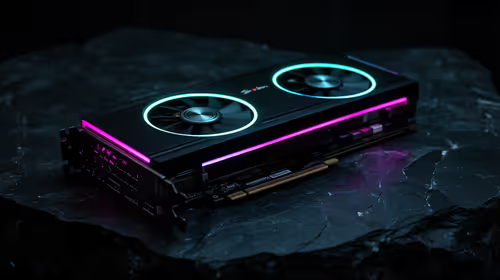
- Graphics Card: Pay close attention to the fans and the heatsink.
- Case Fans: Clean the blades and the surrounding intake/exhaust areas.
- Power Supply: Blow air through the vents to clear out any buildup.
- Case Bottom: Clear out all the dust that has settled at the bottom of the chassis.
Sometimes, you open up an old machine and realise the dust is the least of its problems. If it looks like a deep clean won't save it, it might be time to look at some fresh and affordable budget gaming PCs.
Step 3: Final Wipe-Down
Use your microfibre cloth to gently wipe down the inside of the case panels and any other flat surfaces where dust has settled. Re-attach your side panel, plug everything back in, and you're good to go!
When Cleaning Isn't Enough
A thorough clean will solve most performance issues related to heat. But if your PC is still struggling with the latest titles, it might be a sign that your hardware is simply getting old. Technology moves fast, and a PC that was top-tier a few years ago may now be the bottleneck.
If a deep clean doesn't restore the performance you need, it might be time to consider an upgrade. Whether you're looking for an accessible refresh with our powerful PCs under R20k or are ready to dominate the lobby with a monster rig from our selection of PCs above R20k, a new system offers a clean slate. You can even skip the hassle entirely with our expertly assembled pre-built PC deals, optimised and ready for action right out of the box.