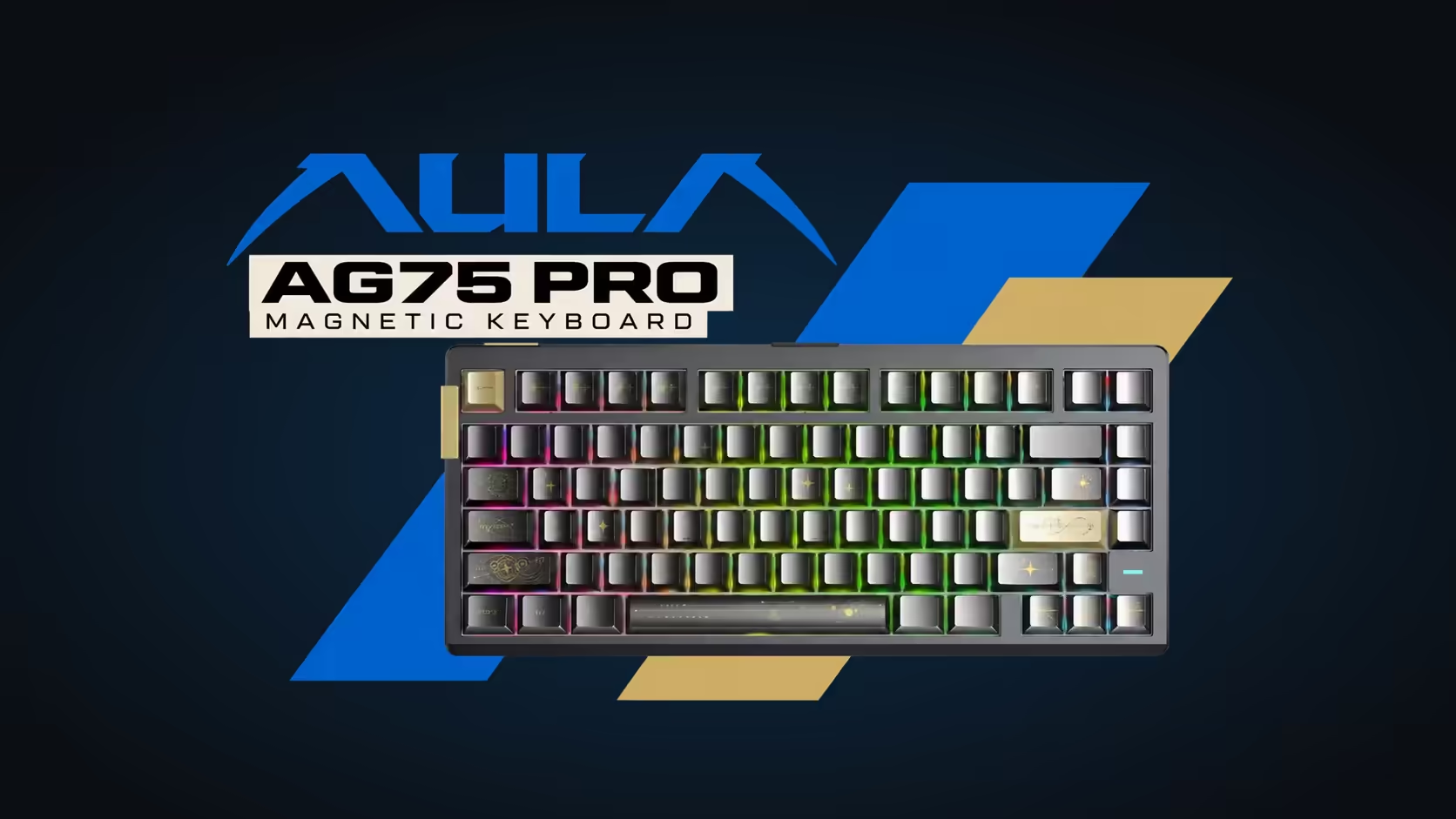
Anyone who lives near the sea in Cape Town or Gqeberha knows what salt air does to things left out: car roofs dull, outdoor furniture pits, window frames grow a white bloom. Indoors the effect is slower, but a fine salty film still lands on everything, including your desk. The AG75's aluminium case is anodised, which helps, yet a little aluminium keyboard care each week keeps a coastal setup looking sharp for years.
Quick Answer
Salt air in Cape Town and Gqeberha leaves a fine film on the AULA AG75's anodised aluminium case, so wipe it down with a dry or barely damp microfibre cloth about once a week. Keep the board away from sea-facing windows that stand open, cover it when you are away, and avoid abrasive or harsh cleaners. Anodising adds protection, but regular care still matters. Coastal owners also have a 2 Years Local Warranty behind the board, handled by Evetech, where the AG75 sells for R2,399 to R2,799.
🌊 What salt air does to aluminium
Sea breezes carry tiny droplets and salt crystals inland, and they settle as a thin, slightly sticky film. Salt attracts moisture, so that film stays damp for longer on humid coastal days. On bare aluminium, the combination of chloride and moisture can eventually cause pitting, small spots where the surface is eaten into.
The AG75 does not have a bare surface. Its full CNC-machined case is sandblasted at 220 grit and then anodised. Anodising thickens aluminium's natural oxide layer into a hard, protective skin, which is far more resistant than raw metal. The weak points are scratches and chips that break through that skin, and salt deposits left to sit for months. Regular cleaning removes the deposits and, as a bonus, makes you spot any scratch early.
🧽 Cleaning the case safely
Keep it gentle and regular:
- Unplug the USB-C cable.
- Wipe the case with a clean, dry microfibre cloth, following the direction of the finish.
- For a stubborn film, dampen the cloth very lightly with plain water, wipe, then dry immediately with a second dry cloth.
- Wipe the keycap tops the same way, keeping moisture out of the gaps.
Things to avoid on an anodised finish:
- Scouring pads, abrasive creams and anything gritty, which can scratch through the protective layer.
- Harsh household chemicals such as bleach or strong degreasers.
- Spraying anything directly onto the board.
A weekly wipe is plenty for most coastal homes. If you live within sight of the water with windows often open, a quick wipe every few days does no harm.
🔍 Inside the case
Because ball catches rather than screws hold the AG75 together, peeking inside takes a minute and no tools. There is no need to do it often; a check every few months is reasonable on the coast.
When you do open it, disconnect the lead, work on a soft surface and photograph the six dampening layers before touching anything. Look for any white residue or dampness around the edges, and clear dust with a soft brush and a hand blower. Water and cleaning fluids must never reach the foam or the electronics.
What about the switches?
The AG75 uses Hall Effect magnetic switches, LEOBOG Frostcore on the Pro and Eight Treasures on the Ultra. They are read by a sensor measuring a magnet's position rather than by two metal contacts touching, so there is no contact point for salt to foul in the way it can on some conventional switches. The switches are still mechanical parts with springs and housings, so keeping dust and damp out of the board remains worthwhile. If one ever feels rough, the switches are hot-swappable and can be replaced without soldering.
🏠 Placement at home, and local cover
Placement does as much as cleaning:
- Keep the desk away from windows that face the sea and stand open on breezy days.
- Avoid spots next to air conditioners or dehumidifier outlets where condensation can form.
- Throw a cloth or dust cover over the board whenever it will sit unused for a while.
- A desk mat under the board catches grit and keeps the base clean.
Buying the AG75 locally also keeps the warranty in South Africa. If a fault appears, you deal with Evetech here rather than posting a heavy metal keyboard overseas. Keep your invoice somewhere you can find it.
To compare the AG75 with other boards, start in Evetech's gaming keyboards section, then check the buyer favourites listed in the keyboard best sellers. Pricing is on the product pages.
Frequently Asked Questions
Can salt air damage an aluminium keyboard?
Over time, salt and moisture can pit bare aluminium. The AG75's anodised finish resists this well, especially if it is wiped regularly.
What is the safest way to clean the case?
Microfibre, dry for routine wipes and faintly damp for a salty film, always finished with a dry pass. Skip abrasives and harsh chemicals.
How often should I check inside?
A look every few months suits a coastal home. Disconnect the lead and take photos of the layers before moving anything.
Are magnetic switches more resistant to salty air?
They have no metal contacts touching to register a press, which removes one weak point, but keep the board clean and dry regardless.
Where should the board live at home?
Away from open sea-facing windows and condensation, ideally on a desk mat and covered when unused.
What if something goes wrong?
Contact Evetech with your invoice, since the board is covered locally.
Setting up a desk near the coast?
Explore Evetech's gaming keyboard range and see the AG75 in its anodised aluminium case.