This guide breaks down what actually matters when you buy for competitive gamers, with SA pricing and concrete specs so you spend on the right thing rather than the loudest spec sheet.
Quick Answer
For competitive gamers, a good air cooler from about R650 keeps a mid-range CPU under 80C and quiet under load, while a 240mm AIO from R1,800 buys headroom for higher-wattage chips. Match the cooler's TDP rating to your CPU and confirm case clearance before ordering.
Air Versus AIO For Your CPU
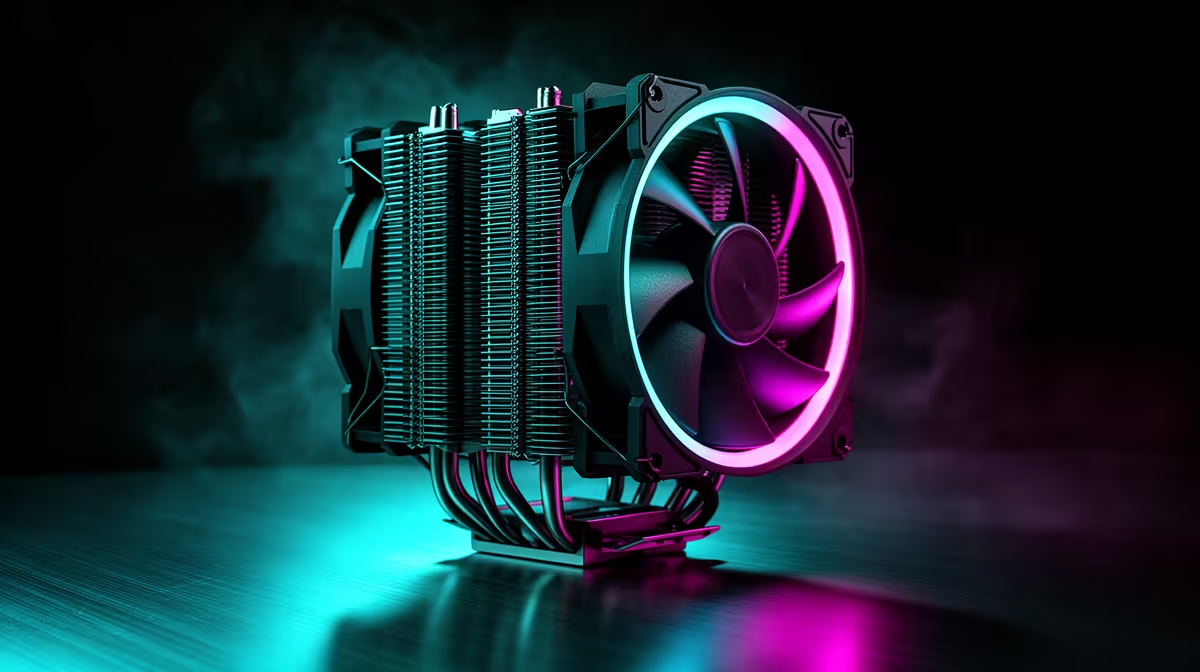
A quality tower air cooler from about R650 keeps a mid-range CPU under 80C and stays quiet. A 240mm AIO from R1,800 buys headroom for higher-wattage chips and a cleaner look, but it is overkill for a modest CPU. Match the cooler's rated TDP to your chip.
Confirm clearance: tall air coolers can block tall RAM or hit a small case panel, and AIO radiators need a matching mount point. For competitive gamers, steady temperatures keep boost clocks consistent, which is where frame-time smoothness comes from.
When Cooling Actually Helps Performance
Better cooling holds boost clocks longer under sustained load, which steadies frame times in long sessions. It does not magically raise peak fps, so do not expect a cooler to replace a GPU upgrade. For portable or compact builds, a low-profile cooler that fits the case beats a big tower that does not.
Quiet operation is a real benefit in a res or shared room. PWM fan control lets the cooler ramp down when the CPU is idle.
FAQ
How much should I budget for a CPU cooler in South Africa?
A solid CPU cooler starts at around R650 at Evetech, with mid-range and premium tiers above that. Decide your real use first, then buy the lowest tier that comfortably covers it rather than overspending on features you will not use.
Air cooler or AIO for gaming?
A good air cooler from about R650 handles most mid-range CPUs quietly. A 240mm AIO from R1,800 suits higher-wattage chips or a cleaner look, but it is overkill for a modest CPU, so match the cooler to your processor.
Will a better cooler raise my fps?
Not directly. Better cooling holds boost clocks longer and steadies frame times under sustained load, but it does not replace a GPU upgrade for higher peak fps. Buy it for quieter, more consistent performance.
write down your screen size, room size and real budget, then pick the model that matches those three, not the flashiest spec on the page.