Quick Answer
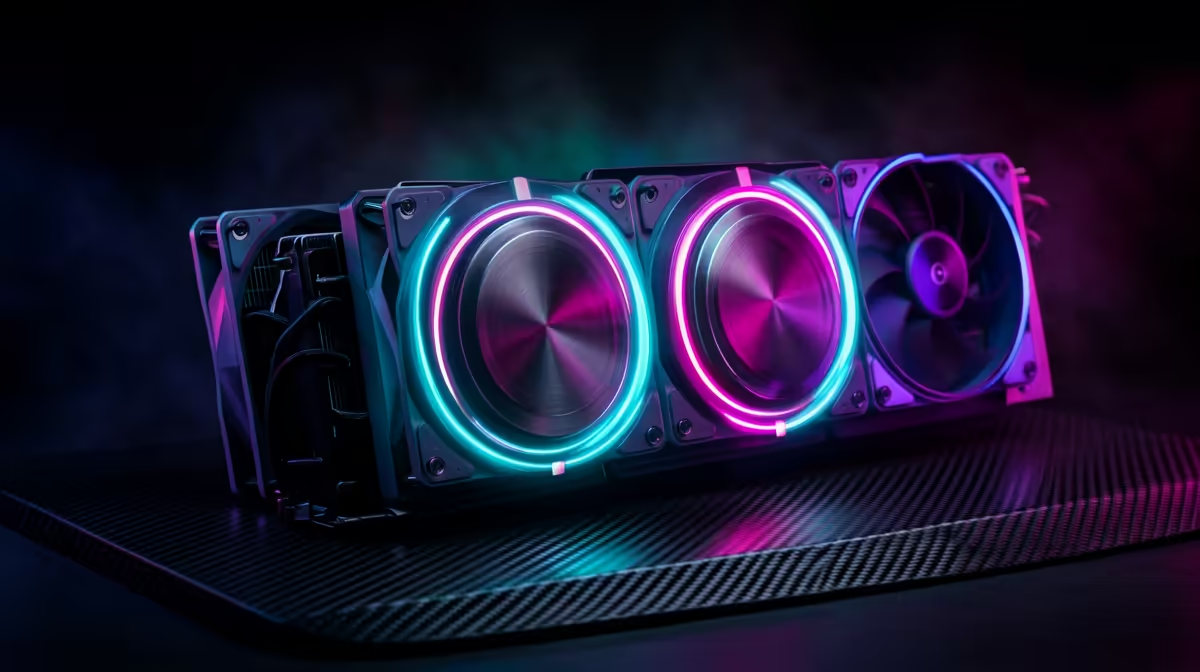
For a shared family gaming room where the PC runs all day, the CPU cooler upgrade path runs from a budget air tower (R350-R600) for starter builds, to a premium dual-tower air cooler or 240mm AIO (R1,500-R2,800) for serious ones. Match the cooler to the CPU's heat output, not the budget - a hot chip needs real cooling regardless of tier.
Starter: Budget Air Tower
A R350-R600 single-tower air cooler is a big step up from a stock cooler for a shared family gaming room where the PC runs all day, dropping temperatures and noise on mid-range CPUs. It is the sensible starting point - easy to fit, reliable, and enough for chips that are not pushed hard. Confirm socket and case-height clearance before buying.
Mid: Strong Air Or Entry AIO
As the build grows for a shared family gaming room where the PC runs all day, a high-end air tower or a 240mm AIO (R1,200-R2,000) handles hotter CPUs and sustained loads better, holding temperatures down during long sessions. This tier suits a serious gaming or creator machine where the stock or budget cooler runs out of headroom.
Serious: Premium AIO Or Dual-Tower
For the hottest, highest-core CPUs in a shared family gaming room where the PC runs all day, a 280-360mm AIO or a premium dual-tower air cooler (R2,000-R2,800) keeps thermals and noise in check under full load. Only step here if your CPU genuinely runs hot - over-cooling a modest chip wastes money better spent elsewhere.
FAQ
Where should I start on the cooler path?
With a budget air tower around R350-R600 if you are coming off a stock cooler - it cuts temperatures and noise on mid-range CPUs and is easy to fit. Step up only when the CPU runs hotter than that can handle.
When do I need an AIO over air?
When a strong air tower can no longer hold your CPU's temperatures under sustained load, or you want a tidier look. For many builds, premium air matches a 240mm AIO, so go liquid only when the heat demands it.
Does a hotter CPU need a bigger cooler?
Yes - match the cooler to the CPU's heat output, not just your budget. A high-core, high-power chip needs serious cooling to avoid throttling, while a modest CPU is well served by a budget air tower.
CPU's rated power draw and match the cooler's capacity to it - over-spending on cooling for a modest chip wastes money, while under-cooling a hot one causes throttling under load.