Eish! You’re in the final circle, victory is moments away… and your screen freezes. Nothing kills the vibe faster than a PC that won’t cooperate. Before you consider throwing your rig out the window, take a breath. This beginner's guide to gaming PC troubleshooting is here to help. Most common issues are surprisingly easy to fix yourself, getting you back into the action without needing a degree in computer science. Let's get that machine running smoothly.
Start with the Basics: The Simple Stuff First
Before diving into complex diagnostics, let's cover the essentials. This might sound obvious, but you’d be surprised how often these simple steps solve the problem. This is the foundation of all gaming PC troubleshooting.
First, the classic fix: turn it off and on again. A full shutdown and restart can clear temporary glitches in your system’s memory. Next, check your cables. Is your monitor plugged securely into the graphics card, not the motherboard? Is the power cable firmly in place? A stable connection is vital, even for a top-tier rig built to dominate in Counter-Strike 2.
Solving Software Snags 💻
If the basics don't work, the issue is likely software-related. Outdated drivers or corrupted game files are common culprits behind crashes and poor performance. Keeping your software in check is a crucial step in troubleshooting your gaming PC.
Update Your Graphics Drivers
Your graphics card (GPU) is the heart of your gaming experience, and its drivers are the instructions that tell it how to run your games. Both NVIDIA and AMD release frequent updates that optimise performance and fix bugs for new titles.
Pro Tip for Clean Driver Installs ⚡
For a truly fresh start, use Display Driver Uninstaller (DDU). This free tool completely removes old driver files before you install the new ones, which can solve stubborn, hard-to-diagnose graphics issues. Just be sure to follow the instructions and run it in Safe Mode!
Verify Game Files
Sometimes, the game files themselves can become corrupted during an update or installation. Platforms like Steam and the Epic Games Store have a built-in feature to fix this. For a game like Fortnite, which gets constant updates, verifying files can often solve random crashes. In Steam, just right-click the game in your library, go to Properties > Installed Files, and click "Verify integrity of game files."
A stable driver set is also non-negotiable for fast-paced, competitive shooters where every frame counts. Ensuring your system is optimised is key to climbing the ranks in Overwatch 2.
Tackling Overheating and Performance Drops
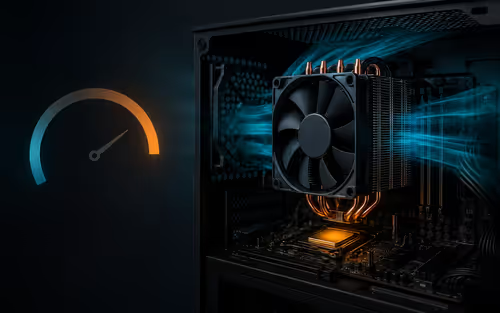
Is your PC suddenly running games slower than it used to? Does it sound like a jet engine taking off? 🤔 Your components might be overheating. When a CPU or GPU gets too hot, it automatically slows down (a process called "throttling") to prevent damage, which kills your frame rate.
Check your temperatures using free software like HWMonitor or MSI Afterburner. If your CPU or GPU is hitting temps above 90°C while gaming, you have a heat problem. The simplest fix? Dust. Open your case (while it's off and unplugged!) and gently clean the dust from fans and heatsinks with compressed air. Ensure your PC has room to breathe and isn't stuck in a tight cabinet. Demanding open-world games like GTA V can really push your cooling system to its limits over long sessions. Likewise, a sudden shutdown while exploring the neon-lit streets in Cyberpunk 2077 is a classic sign of overheating.
Specific Glitches and Their Fixes 🔧
Let's look at a few more common gaming PC problems and their potential solutions.
- Game Won't Launch: This can be due to missing software prerequisites like DirectX or Microsoft Visual C++ Redistributables. Often, reinstalling the game or using the "verify files" option will fix it. Some titles, like PUBG, rely on multiple background services that can sometimes fail to start correctly.
- Blue Screen of Death (BSOD): The dreaded blue screen usually points to a critical driver conflict or a hardware issue. Don't panic! Note the "Stop Code" on the screen (e.g.,
IRQL_NOT_LESS_OR_EQUAL) and search for it online. It can often point you directly to the faulty driver or component. Pushing your system with a highly detailed simulation like Microsoft Flight Simulator can sometimes expose underlying hardware instabilities. - Stuttering/FPS Drops: If your frame rate is inconsistent, check for other programs running in the background. A browser with dozens of tabs, cloud syncing, or an antivirus scan can steal resources from your game. Even a heavily modded game like Minecraft can bring a powerful PC to its knees if background processes are hogging the CPU. For a fast-paced battle royale like Call of Duty: Warzone 2.0, a smooth, consistent frame rate is everything.
When Your PC Needs More Than a Quick Fix
This guide covers the most common fixes you can do at home. However, if you've tried everything and are still facing crashes, blue screens, or performance that just isn't what it used to be, it might be a sign of a failing component or that your hardware is simply too old to keep up with modern games. Sometimes, the best troubleshooting step is a strategic upgrade. ✨
Ready for a Hassle-Free Gaming Experience?
While fixing your PC is rewarding, sometimes you just want a machine that works flawlessly out of the box. If your troubleshooting journey is turning into a nightmare, it might be time for an upgrade. Explore our incredible range of custom-built gaming PCs and find the perfect rig to conquer any game.