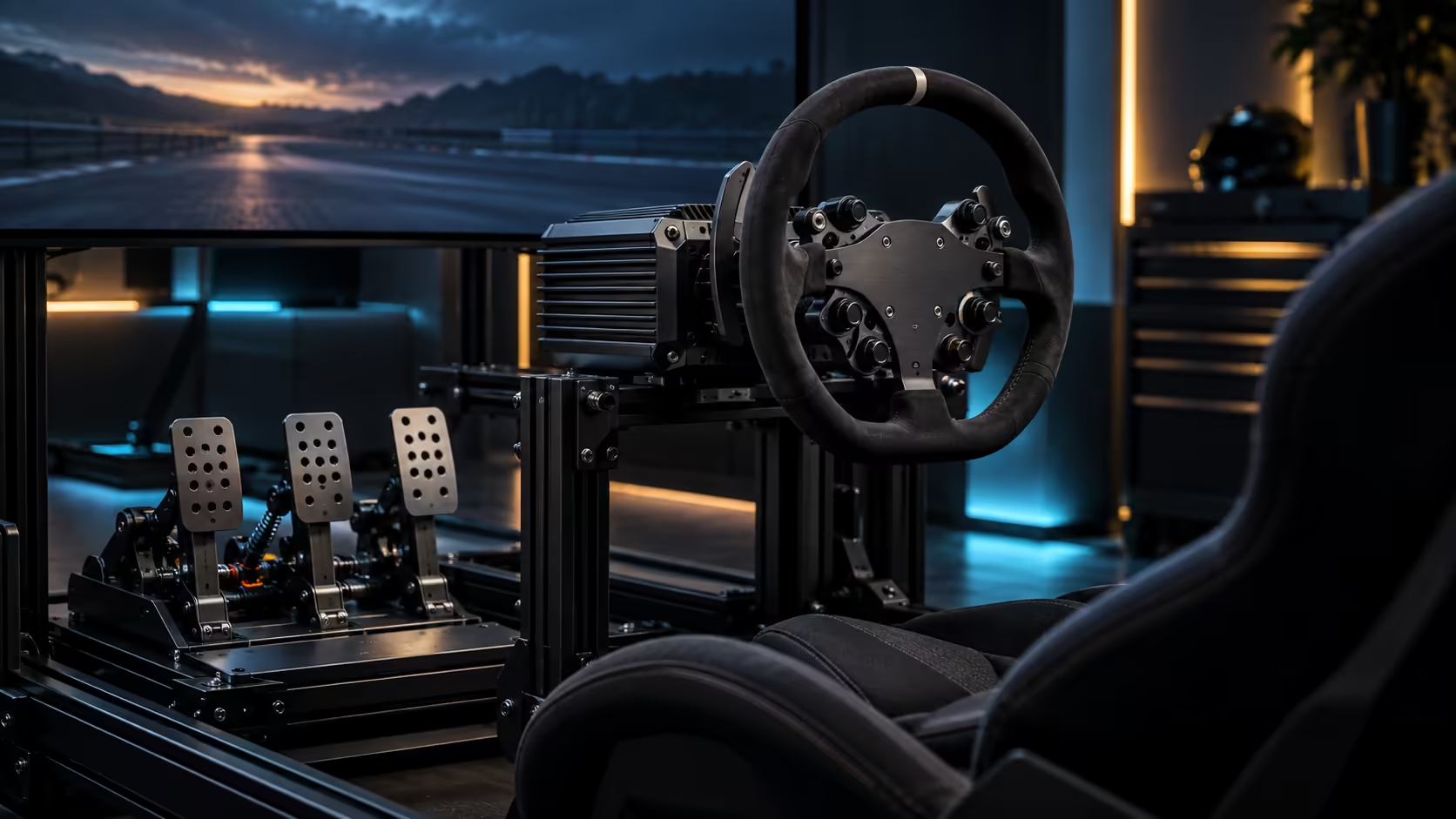
Most people set up a sim rig by sliding the seat back until the pedals feel reachable, and that gets the whole sequence backwards. A comfortable driving position starts with your knee, not your seat, and adjustable pedals only pay off once you know what you are adjusting them toward.
Quick Answer
Set your seat and steering position for a comfortable, slightly bent elbow first, then bring the pedal plate to meet your natural knee bend rather than moving the seat to reach a fixed pedal position. The 35 adjustment points on the P700 pedals inside the R14,999 bundle cover plate angle, spacing and height precisely so this order is possible.
🪑 Seat and wheel position come first, always
Adjust the seat distance and the wheel's reach and height before touching a single pedal setting. Your arms should sit with a slight, comfortable bend at the elbow, somewhere around 160 degrees rather than fully locked out, when holding the rim at nine and three, similar to a proper driving position in a real car. This position rarely changes once set, so it is worth getting right before anything downstream is built around it.
Once the seat and wheel feel right, your knee's natural resting angle when your foot is relaxed on an imaginary pedal is the reference point for everything that follows. Moving the seat afterward to accommodate a pedal problem undoes the wheel position you just settled on, which is exactly the trap adjustable pedals exist to avoid.
🦵 Bringing the pedal plate to your knee, not the other way round
With the seat fixed, adjust the pedal plate's height and distance until your knee sits at a natural angle of roughly 120 degrees, with your foot resting comfortably on the brake pedal at rest. A knee bent too sharply, pedals too close, fatigues the front of the thigh over a long session, while a leg extended too straight, pedals too far, makes fine pedal modulation harder and can strain the back of the knee over time.
The 35 points of adjustment on the P700 set exist specifically so this step does not involve compromise. Plate height changes the angle your ankle works at, plate angle fine-tunes how your foot naturally rests without twisting, and pedal spacing widens or narrows the gap between brake and throttle to match your own foot's natural stance. Adjust one variable at a time and drive a few laps after each change, since small position changes take a lap or two to feel normal even when they are objectively an improvement.
🔩 What a fixed desk and stand cannot solve
Adjustable pedals fix the plate's own geometry, but they cannot fix a fundamentally wrong seat height or a desk sitting at the wrong distance from the pedal set, and no amount of plate travel makes up for a seat sitting even 5cm too high or too low. If your knees feel cramped no matter how the plate is adjusted, or your feet feel like they are reaching down at an odd angle, check the relationship between your gaming desk height and your seat height before assuming the pedals are the problem. Pedal sets on the racing simulation shelf are worth comparing on adjustment range alone if this keeps happening after every reasonable attempt at repositioning. A pedal set adjusted perfectly on paper still feels wrong if the seat sits at the wrong height relative to where the pedals are mounted.
🪑 Why the seat itself belongs in this conversation
Position only stays consistent if the seat itself does not move during a race. A regular office chair on castors will roll or shift under braking load, quietly changing your carefully set knee angle mid-session without you noticing until lap times start drifting. Something fixed, whether that is a simulator chair or a seat bolted straight to the rig instead of resting free on the floor, is what keeps the whole position you built actually holding through a race rather than sliding out of it lap by lap.
Frequently Asked Questions
Should I set the seat or the pedals first?
The seat and wheel position first, based on a comfortable arm bend, then bring the pedal plate to your natural knee angle. Adjusting pedals before the seat means building the position around the wrong reference point.
What does plate height actually change?
Your ankle angle. Even a 5mm difference in plate height changes how your foot naturally rests on the pedal, which affects comfort and, indirectly, braking consistency over a session.
Can a good desk height replace the need to adjust pedals?
No, but the wrong desk or seat height can undo good pedal adjustment. Both need to be correct together for the position to actually hold up over a session.
Why does my carefully set position drift during a race?
A seat that can slide or roll under braking load is the most common cause. A fixed seat, mounted to the rig or the floor, keeps the position you set actually staying set.
Ready to build your position in the right order?
Settle the seat and wheel first, then bring the pedal plate to meet your knee.