Nothing kills the vibe faster than a stuttering frame rate mid-clutch or a black screen when you’re about to win. One minute you’re dominating, the next you’re staring at a frozen screen. For South African gamers, where every component is a considered investment, getting to the root of the problem is key. This guide offers a clear, step-by-step approach to graphics card troubleshooting, helping you diagnose the issue and get back in the game.
Start with Software: Your First Line of Defence
Before you even think about opening your PC case, the most common culprits are software-related. Effective graphics card troubleshooting always begins with these simple, non-invasive checks.
Update Your Graphics Drivers
This is step zero. GPU manufacturers like NVIDIA and AMD constantly release new drivers to optimise performance for new games and fix bugs. An outdated driver is often the source of crashes, visual glitches, and poor performance.
- NVIDIA: Head to the GeForce Experience app or their official website.
- AMD: Use the Radeon Software Adrenalin Edition application.
A fresh driver install can make a world of difference, especially for newer titles. Sometimes, a clean install is needed to remove any conflicting old files.
Pro Tip: The Nuclear Option ☢️
For persistent driver issues, use Display Driver Uninstaller (DDU). This free utility completely wipes every trace of old graphics drivers from your system in Safe Mode. It ensures your new driver installation is perfectly clean, solving many stubborn problems that a standard update won't fix.
Check In-Game Settings and System Temps
Are you pushing your GPU too hard? Cranking every setting to "Ultra" in a demanding game on an older card is a recipe for trouble. Try lowering settings like shadows, anti-aliasing, and texture quality to see if stability improves.
Overheating is another massive performance killer. Use software like MSI Afterburner or HWMonitor to check your GPU's temperature while gaming. If it’s consistently hitting over 85-90°C, you may have a cooling problem. Ensure your case fans are spinning and there's no dust clogging the GPU's heatsink. A well-ventilated PC is crucial for smooth gameplay, whether you're building in Minecraft or exploring vast open worlds.
Get Hands-On: Physical GPU Troubleshooting
If software fixes don't solve the problem, it’s time to power down, unplug, and look inside your rig. Don’t worry… this is easier than it sounds. 🔧
Reseat Your Graphics Card
It sounds almost too simple, but a graphics card that isn’t seated perfectly in its PCIe slot can cause all sorts of chaos, from black screens to system crashes.
- Power Down: Turn off and unplug your PC completely.
- Open Up: Remove the side panel of your case.
- Unplug & Unclip: Disconnect the PCIe power cables from the GPU. Press the small release tab at the end of the PCIe slot on the motherboard.
- Remove & Re-seat: Gently pull the card straight out. Give the slot a quick puff of air to clear any dust, then firmly push the card back in until you hear a "click" from the release tab.
- Reconnect: Plug the power cables back in securely.
This simple action fixes more problems than you’d think, especially if you’ve recently moved your PC. It's a fundamental check for any rig, from a basic setup for Fortnite to a high-end competitive machine.
Check Power Connectors and Cables
A thirsty GPU needs stable power. Make sure the 6-pin or 8-pin PCIe power connectors are clicked in all the way. A loose connection can lead to crashes under load, which is the last thing you want in a tense firefight in a game like Counter-Strike 2. If you're using a modular power supply, also check the connection at the PSU end.
Advanced Troubleshooting Steps
If you're still facing issues, it's time for some deeper diagnostic work. These steps can help you isolate whether the problem is the GPU itself or another component.
Test with Different Cables and Displays
Could the problem be your DisplayPort or HDMI cable? Or even your monitor? Try a different cable and, if possible, connect your PC to another monitor or a TV. This helps rule out external hardware as the source of your graphics card troubleshooting woes. This is an easy check before diving into complex titles like PUBG.
Stress Testing for Stability
Use benchmark tools like FurMark or 3DMark's Time Spy to put your GPU under 100% load. If your system crashes, freezes, or shows visual glitches (known as "artefacts") during the test, it strongly points to a hardware fault with the GPU or insufficient power. This is a great way to confirm stability for fast-paced shooters like Overwatch 2.
Knowing When It’s Time for an Upgrade ✨
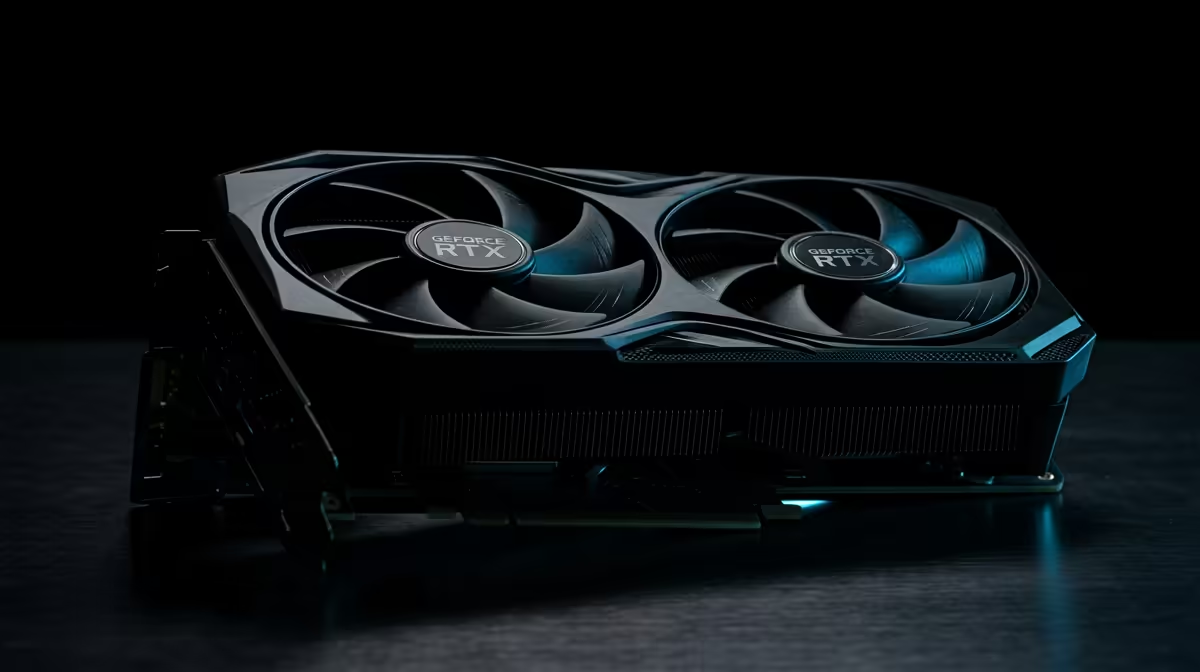
Sometimes, no amount of troubleshooting can fix the core issue: your graphics card is either failing or simply not powerful enough for the games you want to play. If you’re seeing strange colours or geometric shapes on screen, or if your PC consistently crashes even on the desktop, the card may have reached the end of its life.
Modern games are incredibly demanding. A GPU that was great for GTA V a few years ago might struggle to deliver a playable frame rate in the latest update for Call of Duty: Warzone 2.0. If you’re dreaming of ray-traced visuals in Cyberpunk 2077 or a buttery-smooth experience in Microsoft Flight Simulator, an upgrade might be the only real solution.
Ready for a Flawless Gaming Experience? If your GPU troubleshooting leads to a dead end, it might be time for an upgrade. A new graphics card can breathe new life into your PC, unlocking higher frame rates and stunning visuals. Explore our incredible range of graphics cards and find the perfect powerhouse for your rig.