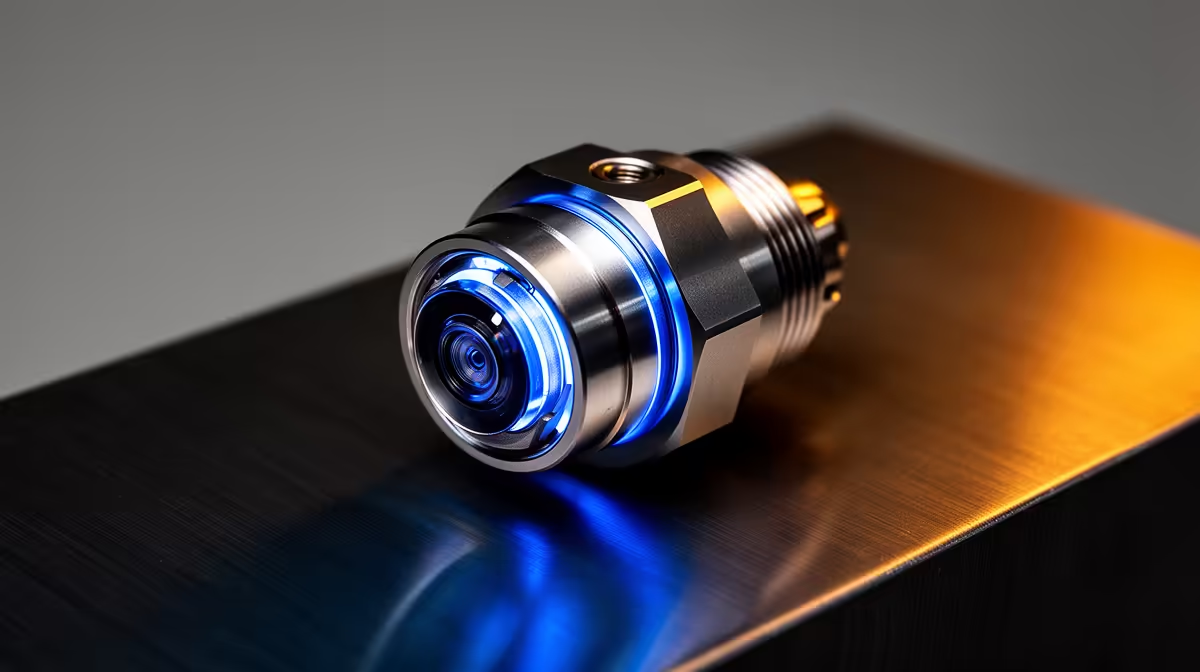
An eddy-current bed probe does not behave like the inductive sensor most printers ship with. Instead of clicking a switch the instant metal comes within range, it reads the bed continuously and hands the firmware a smooth distance number that changes as the nozzle moves closer or further away. That single difference, analog distance versus a fixed on/off trip, is why probes like the Beacon and Cartographer have changed how people level large beds.
Quick Answer
An eddy-current probe returns a proportional analog distance to the bed, so it can mesh hundreds of points fast and account for surface warp. An inductive sensor only trips at one fixed gap. The catch with eddy-current is drift: as the bed heats, the reading shifts, so you must run temperature compensation or your first layer will be wrong.
What the two sensors actually measure
Both sensor families work by inducing a small current in a conductive bed, but they read it differently.
An inductive sensor watches for the moment that induced field crosses a set threshold. When the nozzle drops to roughly 1mm to 2mm above the metal, the field is strong enough to trip the output, and the printer logs that single point as "the bed". Everything above or below that gap is invisible to it.
An eddy-current probe keeps reading the strength of the induced field the whole time and converts it into a live distance value. The firmware sees something closer to a measuring tape than a doorbell, which is what lets it scan a fast, dense mesh without physically touching the surface at every point.
Why drift is the real difference
Here is the trade-off that trips up first-time owners. Because an eddy-current probe reports an absolute distance, anything that changes the coil or the bed changes the number. Heat is the big one.
- Start with a cold bed and the probe reports one distance for a given height.
- Heat the bed to 90C for an ABS or ASA print and the same physical height now reads slightly differently.
- If you calibrated cold and printed hot, your first layer is either smeared or too high.
The fix is temperature compensation. You run a calibration routine where the firmware records the probe reading at several bed temperatures, builds a correction curve, and applies it automatically on every print. In Klipper this is part of the probe setup, and skipping it is the single most common reason people say an eddy-current probe "does not work".
An inductive sensor sidesteps all of this. Because it only cares about a trip threshold and not an absolute distance, modest thermal drift rarely moves the trip point enough to matter, so there is nothing to compensate for.
Which one belongs on your printer
If you run a small bed and print mostly PLA and PETG at moderate temperatures, an inductive sensor is simple, cheap, and reliable. There is no calibration curve to maintain.
If you run a large bed, print high-temperature materials, or want fast adaptive bed meshing before every job, the proportional reading of an eddy-current probe is worth the extra setup. You get a finer mesh and better warp correction, you just have to commit to the temperature calibration step. If you are putting together a printer or topping up consumables, it is worth browsing what is currently stocked across the 3D printer components shelf at Evetech so you match the probe to the rest of the build.
A few practical notes before you buy:
- Mounting distance matters. Eddy-current probes want a specific gap to the nozzle tip, set it wrong and the readings saturate.
- Bed material matters. Both sensors need a conductive bed surface to read against.
- Cable routing matters. The analog signal on an eddy-current probe is more sensitive to noisy wiring than a simple switch output.
- Firmware support matters. Make sure your board and Klipper build expose the probe and its compensation routine before you buy.
One more practical point: an eddy-current probe scans without the nozzle ever touching the bed, so there is no physical wear on the surface from probing. An inductive sensor is the same in that respect, but compared with a touch-based probe that taps the bed, both of these contactless options keep your build surface cleaner over time, which is a small but real bonus on a large, expensive sheet.
For the small extras that finish a printer build, such as cables, clips, and tools, the regularly updated accessories that move fastest at Evetech are a quick place to stock up.
Frequently Asked Questions
Does an eddy-current probe need temperature compensation?
Yes. Its reading drifts as the bed heats, so you must calibrate a correction curve across several bed temperatures. Without it, your first layer height will be wrong on hot prints.
Is an inductive sensor good enough for most printers?
For small beds and standard materials like PLA and PETG, yes. It is cheap, simple, and needs no drift correction. The case for upgrading is large beds, high-temp filaments, or fast adaptive meshing.
Can I use an eddy-current probe with Klipper?
Yes. Probes such as Beacon and Cartographer are designed for Klipper, and temperature compensation is built into their setup process. Follow the calibration routine before your first real print.
Why does my eddy-current probe read differently when the bed is hot?
Because it reports absolute distance, not a fixed trip point, and heat changes the coil and bed slightly. That is normal, and temperature compensation is exactly what corrects for it.
Do both sensors need a metal bed?
They need a conductive surface to induce a field in. A standard metal print bed works for both, but a non-conductive build plate without a metal carrier can stop either sensor from reading.
Building or upgrading a printer and want the probe matched to the right bed and consumables? Browse the current 3D printer components range at Evetech (https://www.evetech.co.za/components/3d-printers-130) and put together a setup that meshes reliably from cold start to hot bed.