Quick Answer
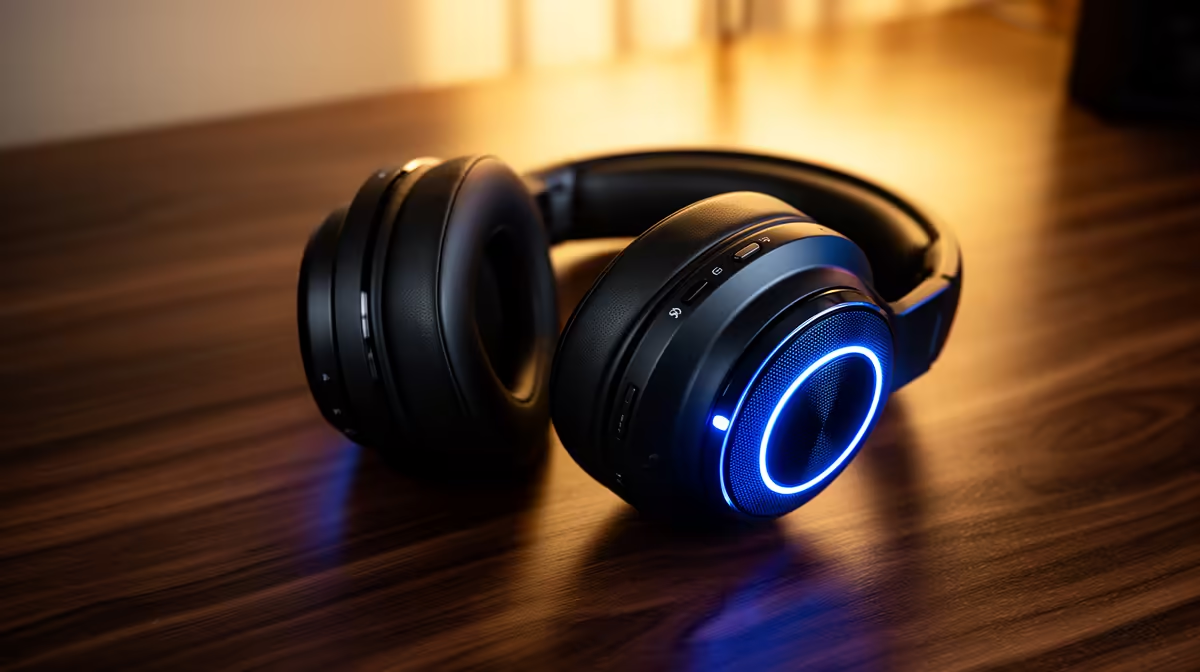
Avoid overbuying by naming the real problem first. For school holiday gaming, most buyers get the right result inside roughly R450-R3,500 without jumping to specialist gear. Use named reference points such as SteelSeries Arctis Nova 3, Logitech G435 and Razer BlackShark V2 X, then confirm current Evetech stock before treating any price as final.
Do Not Pay For Unused Extras
Start with the physical setup: room size, desk space, cable path, device ports and who will use it every day. In school holiday gaming, a small mismatch can create daily irritation even when the product looks strong on paper. The useful buying band is roughly R450-R3,500, with the final choice depending on fit and included accessories.
The first filter is closed-back cups, detachable mic, USB or 3.5 mm connection and replaceable pads. That gives you a cleaner shortlist than cosmetic features because it connects directly to comfort, reliability and setup time. If a cheaper option misses that floor, it is not a bargain.
Spend Where The Setup Improves
Use 20 Hz-20 kHz audio range, 50 mm drivers and sub-50 ms wireless latency targets as the practical numeric check. For performance setups, that number protects latency, cooling, storage speed or recording quality. For study and shared-room setups, it helps avoid gear that works once in a demo but becomes awkward during a full evening session.
SA context matters too: shared rooms, school holidays and home podcast setups. Check warranty handling, plug or cable compatibility, and whether the product needs extra stands, adapters, fans or hubs. Those extras can turn a low sticker price into a worse buy.
FAQ
What should SA buyers check first?
Check compatibility with the exact PC, console, laptop, room or desk before comparing premium features. Then confirm the current Evetech listing sits near the roughly R450-R3,500 planning band.
Is the cheapest gaming headset good enough?
It can be good enough if it meets closed-back cups, detachable mic, USB or 3.5 mm connection and replaceable pads and does not need extra parts immediately. If it lacks the core port, mount, fan, cable, comfort or control you need, move to the balanced tier.
Which number matters most for this choice?
Use 20 Hz-20 kHz audio range, 50 mm drivers and sub-50 ms wireless latency targets as the first numeric sanity check. It is more useful than a huge marketing figure because it connects the purchase to real daily use.
write down the exact device, room and workload this gaming headset must support. Pick the lowest tier that solves that list cleanly, not the one with the longest feature list.