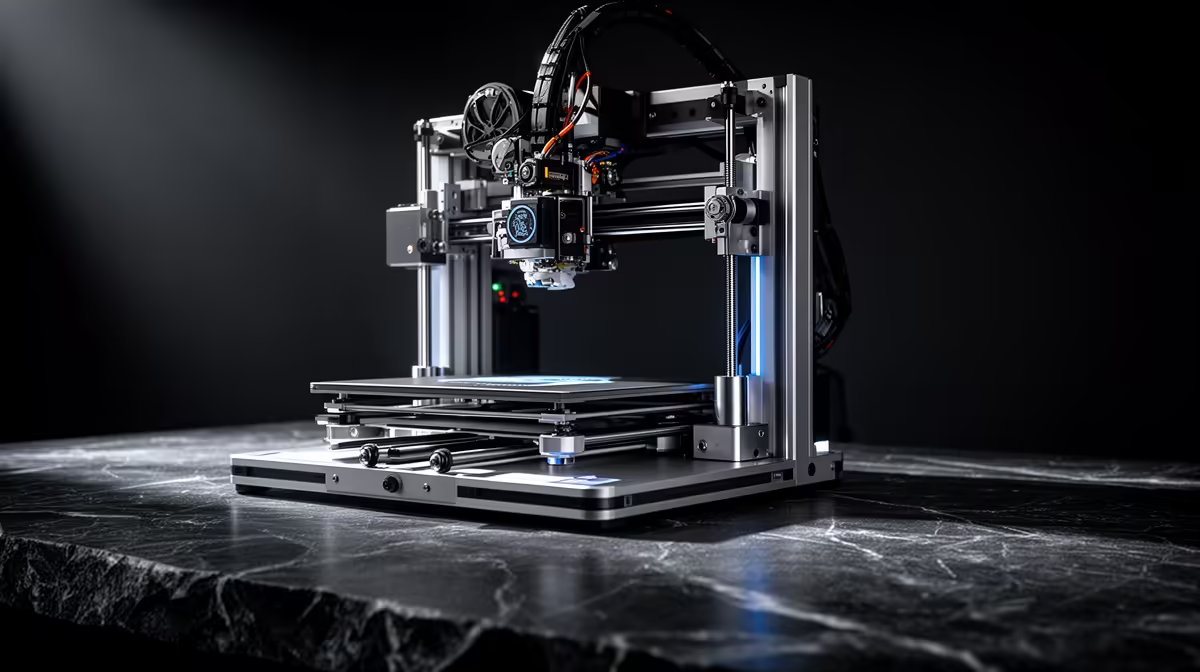
A printer that fails halfway through a twelve hour print rarely breaks without warning. It tells you first through a clogged nozzle, a belt that has gone slack, or a Z lead screw that squeaks on every layer change. A proper 3D printer maintenance schedule turns those warnings into a short routine you run on a calendar instead of a crisis you fight at 2am. Group the work by how often it actually needs doing, and most of the common FDM failures simply stop happening.
Quick Answer
Split maintenance into three intervals: per-print bed cleaning and a quick visual check, monthly belt tension and rail lubrication, and quarterly nozzle, fan and firmware servicing. Following this rhythm prevents the bulk of failed prints and adds years to a machine that would otherwise grind itself out.
Build the schedule around print intervals, not the clock
The most useful way to organise upkeep is by frequency, because a hobby printer running once a week and a small print farm running daily need the same tasks at very different rates. Tie each task to a trigger you already notice: every print start, every full spool, every month of use.
- Per print, before you hit start. Wipe the bed with isopropyl alcohol so finger oils do not ruin first layer adhesion, glance at the nozzle for stray plastic blobs, and confirm the print area is clear. Thirty seconds here saves a scraped plate later.
- Per spool change. Check the extruder gear for ground filament dust, brush it out, and run a quick filament path inspection so a brittle or tangled spool does not jam mid print.
- Weekly, if you print most days. Inspect the nozzle tip and clear any oozed material while the hotend sits around 200 degrees, then brush the exterior with a brass wire brush so it does not scorch onto the block.
This part-by-part rhythm is the backbone. The sections below fill in what each deeper service actually involves.
Monthly: belts, lubrication and the motion system
Once a month is the right cadence for the moving parts, because belt stretch and dried grease creep in slowly and you will not spot them between prints.
Start with belt tension. Pluck the X and Y belts like a bass string. A healthy belt gives a low, clean twang; a spongy thud or visible flapping when the toolhead changes direction means the tensioner needs a turn. Loose belts show up as ghosting and dimensional drift, so this single check fixes a whole class of quality problems.
Then lubricate the motion system. Wipe the linear rails and rods clean, apply a light coat of PTFE based synthetic grease to the X and Y rails, and use a lithium based grease on the Z lead screws. Run the gantry up and down its full travel twice afterwards so the lubricant spreads evenly rather than sitting in one band. Avoid over greasing, which attracts dust and turns into a gritty paste that wears the rails faster than running them dry would.
While you are in there, check that frame bolts and eccentric nuts have not worked loose from vibration. A wobbly gantry shows up as layer shifts that look like a software problem but are pure mechanics.
Quarterly: nozzle, fans and firmware
Every few months, do the deeper service that keeps extrusion and cooling honest. A worn nozzle is a quiet killer: brass nozzles open up over time, especially if you run abrasive filaments, and the wider bore wrecks dimensional accuracy. Inspect it, and budget on swapping it as part of this cycle rather than waiting for a visible problem.
Clean the cooling fans next. Dust on the part cooling fan and the hotend fan chokes airflow, and a hotend fan that stalls will let heat creep up the throat and cause repeated jams. Blow them clear and confirm both spin freely on a test heat up.
Finally, check for firmware updates from your printer's manufacturer and re run your calibration afterwards. Firmware changes can alter steps per millimetre or thermal behaviour, so a quick recalibration of the bed and extrusion multiplier keeps everything dialled in. Keeping a small kit of brushes, alcohol and the right greases in a drawer near the machine, alongside a few spare nozzles, makes the whole routine a five minute job rather than a hunt through cupboards. A tidy set of printer and workshop accessories keeps those consumables in one place.
A simple checklist you can pin to the wall
- Before each print: clean bed, check nozzle tip, clear print area.
- Each spool: brush extruder gear, inspect filament path.
- Monthly: check belt tension, lubricate rails and Z screws, tighten frame bolts.
- Quarterly: inspect or replace nozzle, clean both fans, update firmware, recalibrate.
Write the dates on a sticky note on the frame or log them in your slicer notes. The habit matters more than the perfect interval.
Frequently Asked Questions
How often should I replace a 3D printer nozzle?
For standard PLA and PETG with a brass nozzle, plan on a swap every few months of regular printing or sooner if you notice extrusion inconsistency. Abrasive filaments like carbon fibre or glow in the dark blends chew through brass far faster, so a hardened steel nozzle pays for itself if you print them often.
What grease should I use on the rails and lead screws?
Use a PTFE based synthetic grease on the linear X and Y rails and a lithium based grease on the Z lead screws. Avoid thin household oils, which fling off and need constant reapplication, and avoid over greasing, which collects dust.
How do I know if my belts are too loose?
Pluck them like a guitar string. A correctly tensioned belt produces a clear low note, while a loose belt gives a dull, spongy thud and may flap when the print head reverses direction. Loose belts cause ghosting and dimensional errors, so retension at the first sign.
Do I really need to update the firmware?
Not on every print, but checking quarterly is worth it. Firmware updates can improve thermal safety and motion accuracy, and they occasionally fix bugs that cause intermittent failures. Always recalibrate after an update.
Can skipping maintenance actually damage the printer?
Yes. A stalled hotend fan can cause heat creep and permanent jams, dried rails wear prematurely, and a clogged nozzle left unaddressed can damage the hotend. Most of these are far cheaper to prevent than to repair.
Ready to keep your machine printing cleanly for years? Browse the latest filament printers and spares in the 3D printers range at Evetech and build your maintenance kit while you are there.