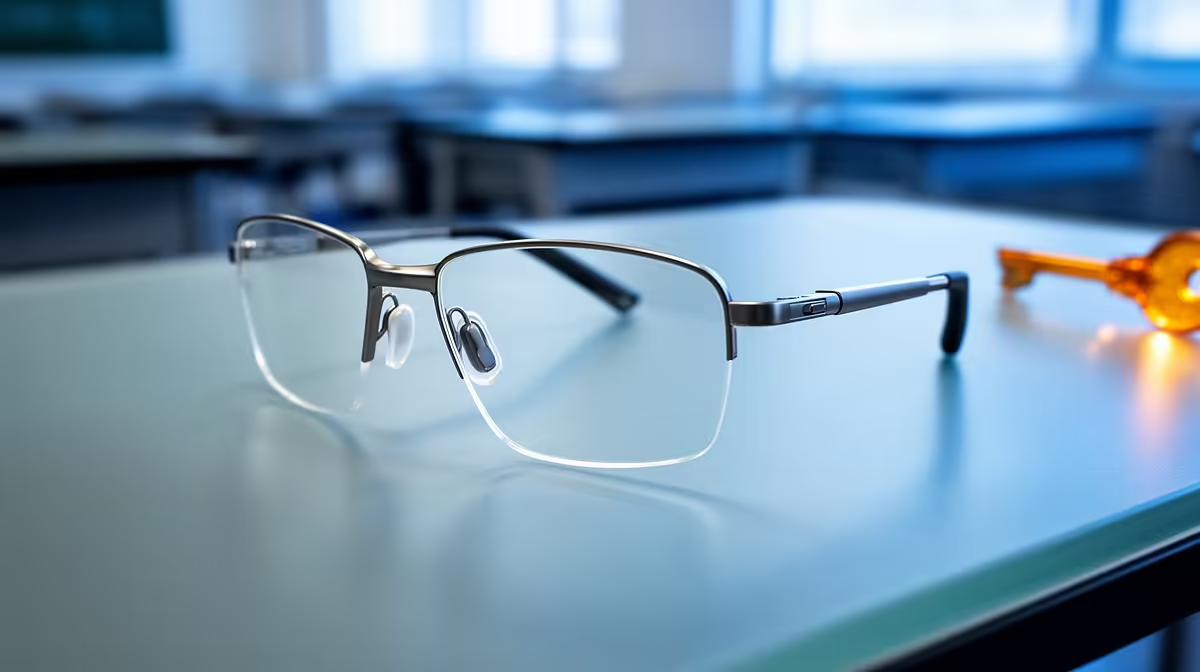
Smart glasses are still a niche-first buy, useful to size up before spending. This guide keeps the focus on daily commuters who carry kit between home and campus and what is genuinely worth paying for at Evetech.
Quick Answer
For daily commuters who carry kit between home and campus, AR and smart glasses are still a niche-first buy: treat them as a wearable second screen and audio device, not a phone replacement. The honest pick today is a media-and-notification pair around R3,500 to R9,500, not a full mixed-reality headset. Buy them for hands-free audio and glanceable info, and ignore claims that they replace a laptop.
Battery, weight and all-day comfort
On a daily commute, weight on the nose and battery life decide whether you wear them. Audio pairs often run 4 to 6 hours of playback; display glasses drain faster and may need a tethered battery pack. Anything heavier than normal specs gets left in the bag, so comfort beats feature count for commuters.
Cutting through the hype before you spend
Marketing oversells AR glasses as laptop replacements; in reality the field of view, daylight brightness and text sharpness are still limiting. Test how they handle outdoor light and small text before buying. For most students a R6,000 pair for audio and glanceable info is honest value, while a full mixed-reality headset is overkill for a commute.
Pairing, prescriptions and practical fit
Check phone compatibility, since some features are Android- or iOS-only, and whether prescription inserts are available, because glasses-over-glasses is uncomfortable. Confirm the IP rating for sweat and light rain on a commute. These practical fit details matter more day to day than any AR demo reel.
FAQ
Are AR glasses worth buying yet?
For daily commuters who carry kit between home and campus, only as a wearable audio-and-notification device, not a phone or laptop replacement. The R3,500 to R9,500 media pairs deliver honest value; full mixed-reality headsets are overkill for a commute.
What is the difference between audio and display glasses?
Audio glasses have no screen and play sound and read notifications, often R3,500 to R6,500. Display glasses project a virtual screen through the lenses and cost more, around R7,500 to R12,500. Pick by the job you want.
How long does the battery last?
Audio smart glasses commonly run 4 to 6 hours of playback; display glasses drain faster and sometimes need a tethered battery. For a full commute day, plan to top up or pick a longer-battery audio pair.
Decide whether you want audio-only or a projected display first, then test daylight brightness and text sharpness in person - compare smart glasses at Evetech by battery hours and weight before you spend.