Filming a wedding, festival or sports day from the air looks effortless in the final edit, but flying a drone over a crowd is the single riskiest thing you can do with one, and in South Africa charging for that footage puts you squarely under SACAA rules. Getting event drone filming right means pairing the correct aircraft with the correct paperwork, because a dropped drone over people is both a safety and a legal disaster.
Quick Answer
To film events safely and legally with a drone in SA, use an aircraft with omnidirectional obstacle sensing to navigate crowds and structures, and never fly over people without SACAA approval. Any paid filming requires a Remote Pilot Licence (RPL) and your operator a Remote Operating Certificate (ROC) under SACAA Part 101. Crowd overflight needs specific SACAA permission on top of that.
The Legal Foundation: What SACAA Requires
Before any gear talk, get the regulatory side straight, because this is where event work most often goes wrong. The moment you film an event for payment, you are operating commercially, and South African law treats that very differently from a weekend hobby flight.
RPL and ROC for Paid Work
Commercial drone work in SA needs two things. You, the pilot, need a Remote Pilot Licence (RPL), which involves training, exams and a skills test. The business operating the drone needs a Remote Operating Certificate (ROC) from SACAA. Filming a paid event without both is illegal, regardless of how good your footage is. If event work is a serious plan, budget the time and cost to get licensed first.
Approval for Flying Over People
Standard drone rules in SA prohibit flying over crowds or people who are not part of your operation. Events are full of exactly those people. To fly above a gathering legally you need specific SACAA approval for that operation, granted case by case based on your safety plan. Do not assume your RPL and ROC alone cover crowd overflight; they do not.
Choosing the Right Aircraft
With the paperwork understood, the hardware has to match the risk. Events are cluttered, unpredictable environments, marquees, lighting rigs, moving people, and your drone needs to cope with all of it.
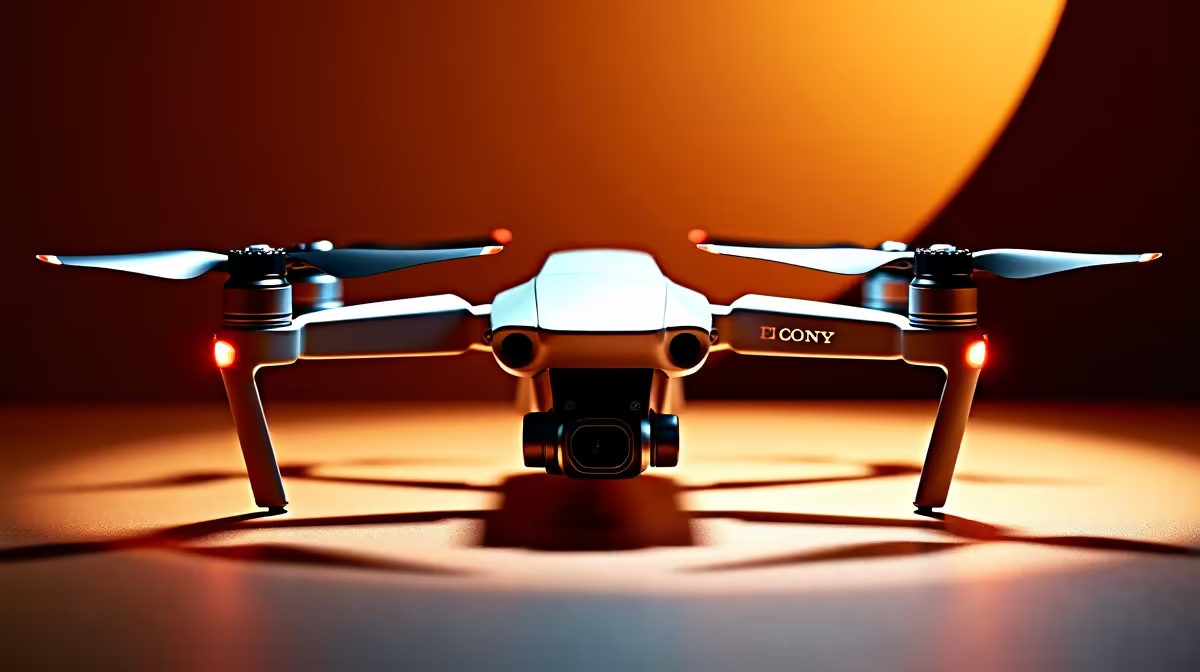
- Prioritise omnidirectional obstacle sensing. Look for an aircraft with all-round APAS-style obstacle avoidance so it can detect and route around structures and people from every direction, not just the front. In a busy venue this is your most important safety feature.
- Choose a stable, reliable platform. Event work is no place for a twitchy budget toy. A proven, well-built drone that holds position cleanly in light wind gives you smoother footage and far fewer surprises.
- Carry spare batteries and props. Events do not pause for you. Enough batteries to cover the key moments, plus spare propellers, keep you in the air when it matters.
- Confirm the camera suits the shots. Stabilised gimbal, sufficient resolution and a frame rate that matches your edit. Match the camera to what the client expects from the final video.
Browse camera drones and their sensing features across the smart home and connected-device range at Evetech to identify which platforms include full obstacle avoidance.
Flying the Event Safely
On the day, treat the flight as a planned operation, not a casual shoot. Walk the venue first and note hazards: power lines, lighting towers, trees and the busiest crowd areas. Brief the event organiser on where you will and will not fly. Maintain direct visual contact with the drone throughout the flight, and keep meaningful distance between the aircraft and people unless you hold specific approval to be overhead.
Plan your shots so the most dramatic moves happen over open ground, then transition to the crowd from a safe lateral distance rather than directly above heads. Have a clear landing spot and an emergency plan for a lost signal or low battery. Good footage that nobody got hurt to capture is the only footage worth keeping.
Keeping Your Kit Field-Ready
Reliable event filming depends as much on preparation as on flying skill. Charge every battery the night before, update firmware ahead of time rather than on site, format your cards, and pack spares for anything that fails. The supporting accessories that keep a drone operation running smoothly, from cases to extra storage, are easy to round up, and the accessories best sellers at Evetech show you exactly what other operators stock up on before a job.
Frequently Asked Questions
Do I need a licence to film a paid event with a drone in SA?
Yes. Filming for payment is commercial work, which requires a Remote Pilot Licence for you and a Remote Operating Certificate for the operating business under SACAA Part 101. Both are legally required before you charge a client.
Can I legally fly a drone over a crowd?
Not under standard rules. Flying over people who are not part of your operation needs specific SACAA approval, granted per operation based on your safety plan. Your RPL and ROC alone do not permit crowd overflight.
What drone feature matters most for events?
Omnidirectional obstacle sensing. A venue is full of structures and people from every angle, so all-round obstacle avoidance is the feature that most reduces the risk of a collision.
Why is flying over people considered so risky?
A drone failure over a crowd can injure people directly below with no time to react. It carries the highest safety risk of any drone operation, which is why SA law restricts it so tightly.
How should I plan shots around a crowd?
Keep the dramatic flying over open ground and approach the crowd from a safe lateral distance rather than directly overhead, unless you hold specific SACAA approval to fly above people.
Planning aerial coverage for your next event? Browse the camera drone range at Evetech, compare models with full obstacle avoidance, and build a kit that lets you film crowds safely once your SACAA paperwork is in place.