Quick Answer
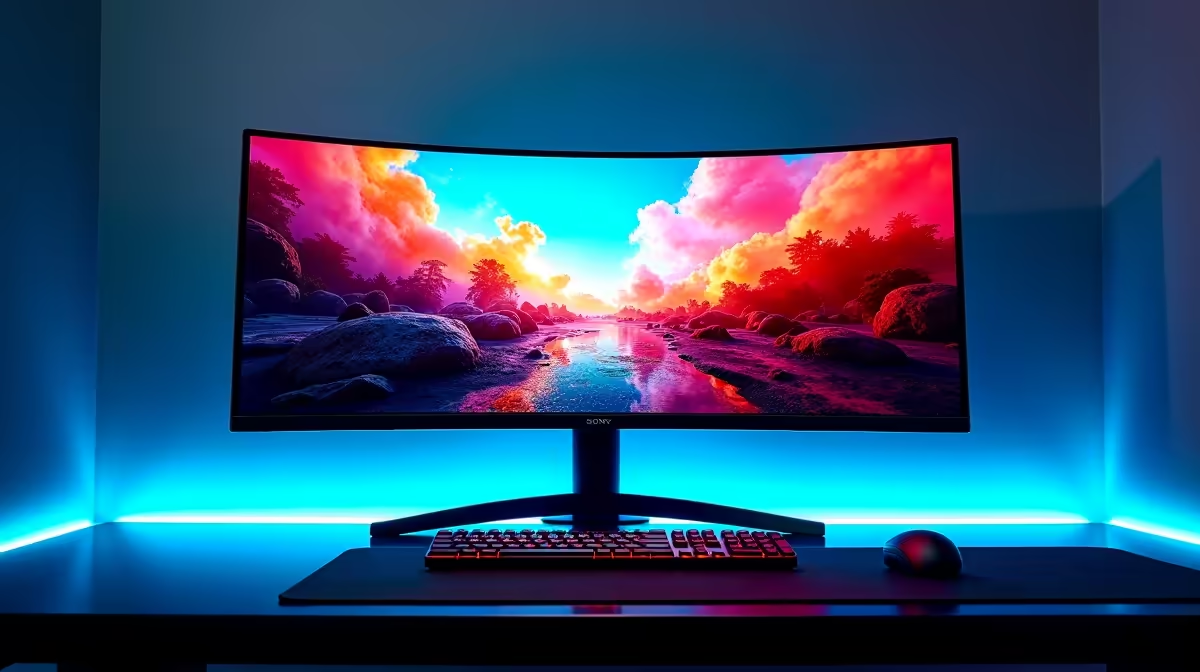
To fix a black screen with a 240Hz Monitor Signal, work from cable and connection out to driver and BIOS: reseat the part, swap the display cable, update the graphics driver, and confirm the correct refresh or link speed. Most cases clear within four checks; the tell-tale sign is the display going black with the PC clearly powered on.
First checks that fix most cases
Start with the cheapest, fastest checks before opening the case again. Boot once into safe mode to see whether the fault happens before or after the graphics driver loads. If a black screen persists, note exactly when it appears (cold boot, in-game, or after sleep), because that timing points straight to the cause on a 240Hz Monitor Signal.
Checks specific to the 240Hz Monitor Signal
Set the panel to its rated refresh, for example 175Hz, and use a cable certified for that bandwidth; a 4ms response setting is a safe starting point. Make one adjustment at a time so you know which step actually cleared it.
If it still happens
Test the part in a second system or with a spare cable to isolate hardware from software. If a clean OS boot is fine but the issue returns under load, focus on drivers, firmware and power delivery rather than the panel.
FAQ
Why did a black screen start after my 240Hz Monitor Signal change?
The change alters how drivers, firmware and power behave, so a previously fine cable or setting can suddenly misbehave. Reseating the part, refreshing the driver and locking the right refresh or link speed resolves most of them. Focus on the 240Hz Monitor Signal while you work through these.
Is a black screen a hardware or software fault on a 240Hz Monitor Signal?
Prove it out: a clean boot or known-good cable that fixes it points to software or a lead, while a fault that travels between systems is hardware, so use the warranty. The same test logic applies to the 240Hz Monitor Signal.
Can a BIOS or firmware update fix a black screen?
Usually yes. Plenty of a black screen cases come down to firmware older than the new part, so a stable BIOS or firmware update with a current graphics driver clears them.
Pro Tip
Make a single adjustment at a time and note what you tried, so you can roll back cleanly if a step makes the a black screen worse.