Quick Answer
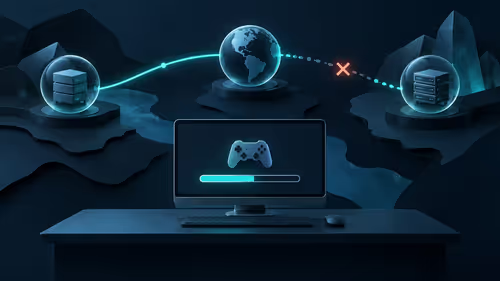
No signal after a Steam Deck means the external display signal path is failing at the handoff point, not that every new part is dead. Start with one known-good cable or receiver, one port, one display or client device, and a clean restart; prove whether USB-C dock, charger wattage, HDMI cable and monitor input is the weak link. For SA buyers, test before replacing Steam Deck OLED dock, USB-C hub or HDMI 2.1 adapter class gear because related parts can sit around R1,200-R4,500.
Start With One Clean Signal Path
Reduce the setup to the smallest working chain. For display faults, use one monitor on the primary GPU output. For Wi-Fi, audio or input faults, test one client device, one receiver, and one short cable path before adding docks, hubs or extra software.
A working baseline should be simple: the handheld screen and external monitor work separately. ## Check The Installed Part
For this category, focus on USB-C DisplayPort Alt Mode, 45W charging and 720p to 1080p output. Named parts such as Steam Deck OLED dock, USB-C hub or HDMI 2.1 adapter need the correct power, firmware, driver and port choice before Windows can behave normally. On a desktop, reseat RAM and PCIe power after a motherboard, CPU or GPU change; on a router or peripheral, move the receiver or cable away from hubs and metal obstruction.
Check dock power and HDMI cable before blaming the handheld.
BIOS, Driver And Replacement Checks
If the screen is blank before Windows, enter BIOS with Del or F2, clear an unstable memory profile and check CPU/DRAM/VGA/BOOT LEDs where available. If Windows loads but the signal disappears later, use Safe Mode, remove the last driver, then install one current package.
FAQ
What is the first fix for no signal after a Steam Deck?
Use the shortest working path and remove extras. One cable, one port and one client device will show whether the problem is the new part or the surrounding setup.
Can Windows 11 cause a no signal problem?
Yes. Windows 11 can keep an old display, audio, USB or network profile after an upgrade, so Safe Mode and a clean driver install are useful when BIOS still appears.
What should I check before buying replacement parts?
Check cable standard, port choice, firmware, driver version and debug lights. With related gear around R1,200-R4,500, those checks can prevent an unnecessary replacement.
Practical check
Label the cable, port and driver version that produced the first stable signal. Use that label before adding a second device.