Quick Answer
To fix a no-signal screen with a a USB DAC, work from cable and connection out to driver and BIOS: reseat the part, swap the display cable, update the graphics driver, and confirm the correct refresh or link speed. Most cases clear within four checks; the tell-tale sign is the monitor reporting no signal after boot.
First checks that fix most cases
Start with the cheapest, fastest checks before opening the case again. Plug the cable into the GPU outputs, not the motherboard, and swap to a known-good DisplayPort or HDMI lead. If a no-signal screen persists, note exactly when it appears (cold boot, in-game, or after sleep), because that timing points straight to the cause on a a USB DAC.
Checks specific to the a USB DAC
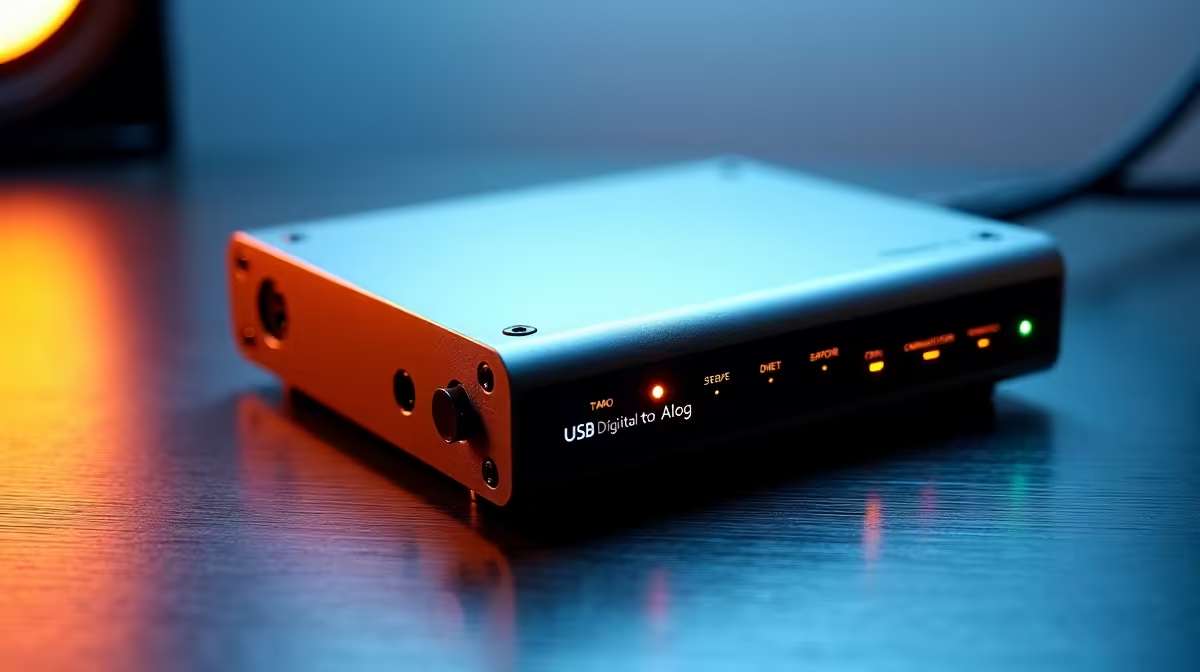
Try a different USB port directly on the motherboard, update the device firmware, and check polling-rate settings, since a flaky peripheral can trigger display and input glitches. Make one adjustment at a time so you know which step actually cleared it.
If it still happens
Test the part in a second system or with a spare cable to isolate hardware from software. If a clean OS boot is fine but the issue returns under load, focus on drivers, firmware and power delivery rather than the panel.
FAQ
Why did a no-signal screen start after my a USB DAC change?
Fitting a new part changes driver, firmware and power conditions, which can reveal a borderline cable, wrong setting or under-negotiated link. A reseat, a clean driver and the correct refresh or link speed clear the bulk of cases. Treat the a USB DAC as the prime suspect first.
Is a no-signal screen a hardware or software fault on a a USB DAC?
Narrow it down: if a spare cable or a clean boot resolves it, blame software or the cable; if it survives a second system, the hardware is suspect and the warranty applies. This holds true for the a USB DAC as much as any part.
Can a BIOS or firmware update fix a no-signal screen?
More often than not. A lot of a no-signal screen cases stem from firmware that predates the hardware, and a stable BIOS plus an up-to-date graphics driver fixes them.
Pro Tip
Make a single adjustment at a time and note what you tried, so you can roll back cleanly if a step makes the a no-signal screen worse.