Most driveway cameras capture the fact that a car arrived but not the one detail that matters to a case docket: a readable number plate. The difference comes down to lens choice and settings. To monitor a driveway and gate with a camera and actually capture plates, you need optical zoom to keep the plate large in frame, wide dynamic range to handle headlight glare, and a night configuration tuned for reflective plates rather than faces.
Quick Answer
Use a camera with optical zoom so the number plate stays large and legible at the distance of your gate, rather than a wide panoramic lens that spreads the plate across too few pixels to read. Add wide dynamic range to tame headlight glare, set a faster shutter for moving vehicles, and configure a dedicated night mode so reflective plates stay readable after dark. Mount it at plate height on the approach, not looking down from the roof.
Why Zoom Beats A Wide Lens
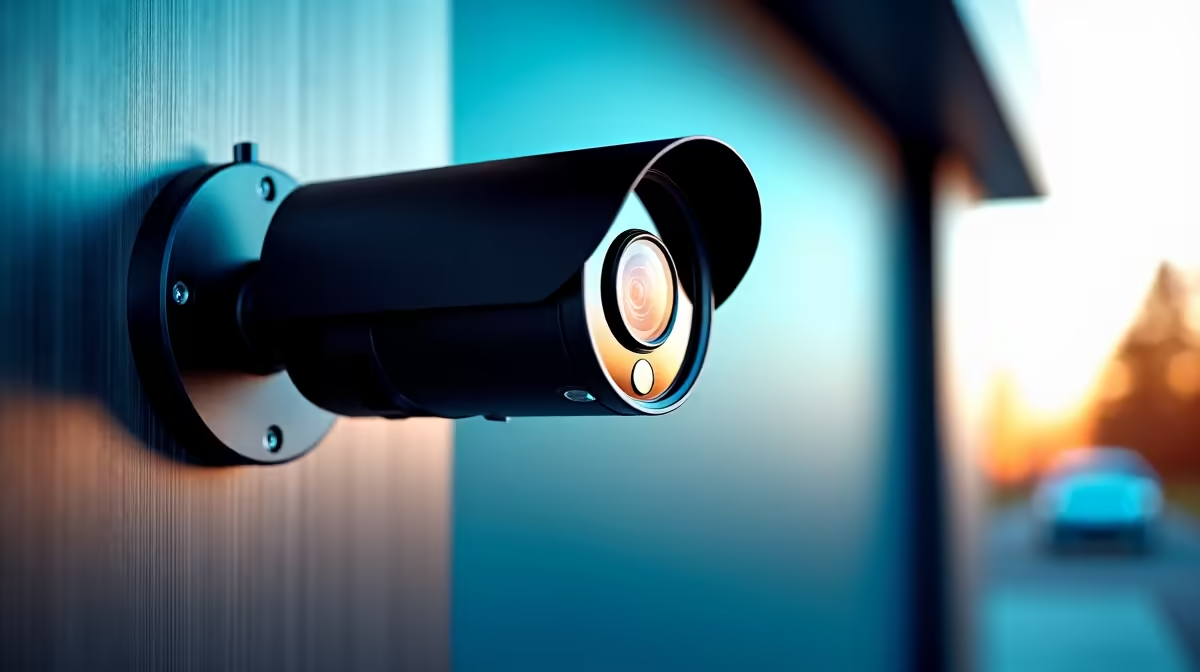
The instinct is to fit the whole driveway in shot, but a wide panoramic lens spreads a number plate across so few pixels that it dissolves into an unreadable blur. Optical zoom does the opposite: it keeps the plate filling enough of the frame to stay legible at the distance of your gate. A bullet camera with a varifocal or zoom lens is the standard choice for plate capture precisely because it trades width for the reach and detail that make characters readable. Pick the camera for the plate first, and use a second wider camera for general overview if you want both.
Setting It Up Step By Step
Work through these to get a plate-capable gate camera right.
- Pick the capture distance and zoom. Measure how far the camera will sit from where vehicles stop or pass. Choose a lens with enough optical zoom to keep the plate large at that distance; a varifocal lens lets you fine-tune the framing on site.
- Mount at plate height on the approach. Aim the camera at the height a number plate sits and along the direction of travel, not from a high roofline looking down. A steep top-down angle distorts the plate and loses characters.
- Frame for the plate, not the whole scene. Tighten the view so the plate occupies a meaningful portion of the frame as the vehicle reaches the gate. Resist the urge to capture the entire driveway with the same camera.
- Enable wide dynamic range. Headlights at night and bright sun by day both blow out a plate. WDR balances the bright and dark parts of the frame so the plate stays visible against glare.
- Set a faster shutter for motion. A moving car smears a plate at a slow shutter speed. Raise the shutter so the plate is frozen sharply, accepting a slightly darker image that night mode and IR compensate for.
- Configure a dedicated night mode. Reflective plates behave differently from faces under infrared, often washing out. Tune exposure and IR so the plate stays legible at night, even if that means the rest of the scene is darker.
- Test with real vehicles, day and night. Drive a car up to the gate and check the recording in daylight and after dark. Adjust zoom, angle and shutter until the plate is readable in both.
The South African Driveway Reality
For a typical South African home, the gate is the chokepoint where every vehicle slows, which is the ideal capture point. Position the camera to catch the plate as a car waits for the gate to open, when it is closest and slowest, giving the cleanest possible frame. Pair the plate camera with broader perimeter coverage so you have both the readable plate and the wider context of the property. These cameras slot into a larger connected-home setup, and the smart home and connected-living products show what pairs well with a gate camera.
Keeping It Reliable
A plate camera is only as good as its weakest link, so use a quality power and cabling setup and keep the lens clean, since dust and spider webs at a gate degrade night captures fast. Recheck the framing after any knock or storm that might shift the mount. Having spare mounts, cabling and cleaning kit on hand keeps the system honest, and the best-selling accessories cover the practical extras an install needs.
Frequently Asked Questions
Why does my camera miss number plates at night?
Usually because the lens is too wide, the shutter is too slow, or the night mode is not tuned for reflective plates. Plates wash out under standard IR, so a dedicated night configuration with the right exposure is essential.
Do I need a special plate-recognition camera?
Not necessarily for capturing a readable plate. A camera with enough optical zoom, WDR and a tuned night mode can record legible plates. Dedicated recognition systems add automatic plate reading on top, but the imaging fundamentals are the same.
What lens should I use for a gate camera?
A varifocal or zoom lens, so you can adjust the framing to keep the plate large at your specific gate distance. Fixed wide lenses spread the plate across too few pixels to stay readable.
Why is wide dynamic range important here?
Gates face both bright headlights at night and harsh sun by day, either of which can blow out a plate. WDR balances the bright and dark areas of the frame so the plate stays visible against the glare.
Where exactly should I aim the camera?
At plate height, along the direction the vehicle travels, framed to capture the plate as the car waits at the gate. Avoid steep top-down angles from a roofline, which distort the plate and lose characters.