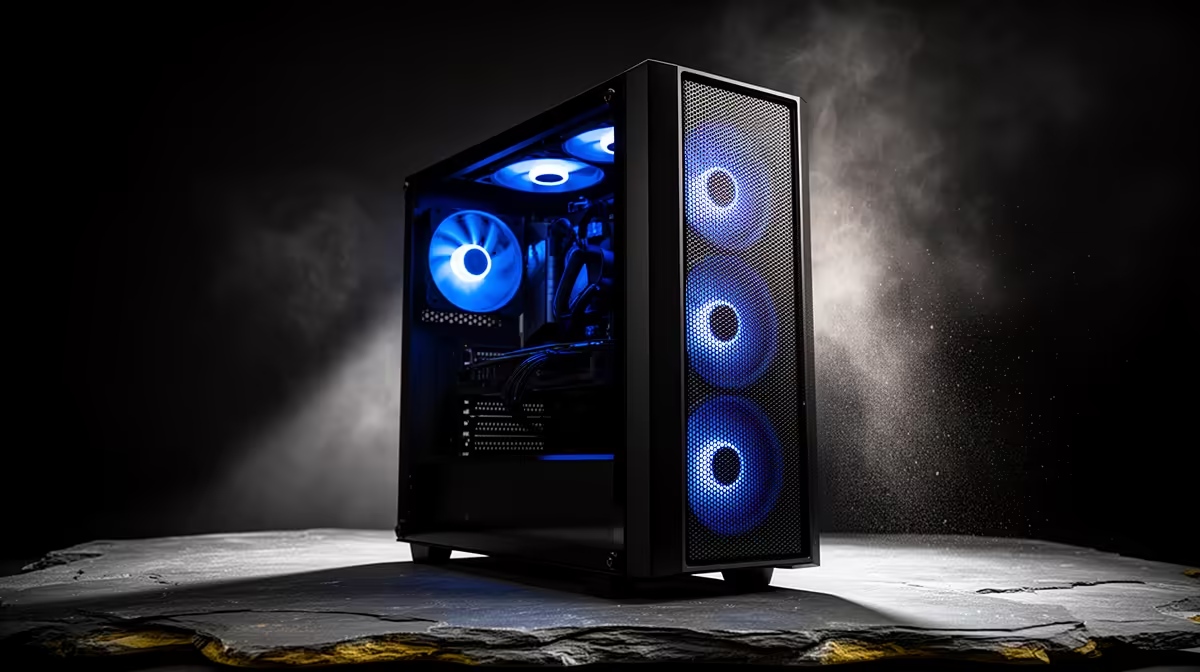
Six fans moving air non-stop will pull in more than a whisper of dust, and nobody wants to see that build up behind a tempered glass panel three months after setup. Keeping an atx mid-tower case clean is less about scrubbing and more about a routine, because dust that settles on fan blades and heatsinks quietly raises temperatures long before anyone notices a problem.
Quick Answer
A high-airflow case needs a proper wipe-down roughly once a month, and closer to every two weeks in dustier rooms. The Antec NX410, with its six-fan layout and R1,199 price tag, rewards that routine with lower long-term temperatures and a case that still looks new behind the glass.
💨 Why high-airflow builds collect dust faster
More fans mean more air moving through the case every hour, and every cubic metre of that air is carrying whatever is floating around the room with it. A build running close to its six-fan ceiling, like the Antec NX410 supports, will visibly gather dust on fan blades and the GPU heatsink faster than a two-fan case simply because more air has passed through in the same period. This is not a flaw in the design; it is the tradeoff for the extra cooling that six fans provide.
Positive pressure keeps the worst of it out
Running slightly more intake than exhaust fans creates positive pressure, which pushes air out through case gaps rather than pulling unfiltered air in through them. With six mounting points available across the front, top and rear, an ATX mid-tower gives you enough flexibility to bias the fan count toward intake without starving exhaust entirely.
🧹 A cleaning routine that actually gets followed
The reason most cleaning schedules fail is that they are vague. A routine that survives contact with real life needs to be short and scheduled around something you already do.
Weekly: a five-minute check
Glance at the front intake fans and the dust that has gathered on the tempered glass panel. If you can see a visible film on the glass, the same amount is likely sitting inside on components you cannot see.
Monthly: fans and filters
Power down, unplug, and wipe down each fan blade with a dry microfibre cloth or a soft brush. Compressed air is useful here for blowing dust out of tighter fan hubs and heatsink fins without needing to remove them.
Quarterly: a full teardown
Once every three months, pull the side panels, remove dust that has settled on the motherboard tray and PSU shroud, and check that all six fan positions are still spinning freely. This is also a good moment to confirm cable routing has not shifted and blocked any airflow paths.
🧼 Cleaning without damaging what you have
Compressed air is safe on fans and heatsinks but should be used in short bursts to avoid spinning fan blades past their rated speed, which can strain the bearings over time. A soft-bristle brush works well on the tempered glass panel and front I/O area, which on the Antec NX410 includes USB 3.0, USB 2.0, HD audio, and the LED control button, all of which benefit from staying free of dust and grime for reliable contact. Avoid household glass cleaners with ammonia on tinted glass panels; a damp microfibre cloth with plain water is safer for both the glass and the case finish.
If you are still deciding on a case for a high-airflow build, the Antec NX410 in white gives you six fan mounts and 168mm of cooler clearance to work with from the start. It is also worth comparing it against the wider Antec case range if you want a different panel finish or layout with the same maintenance principles applying, and the case fans range is where to look once an existing fan starts sounding gritty or spins noticeably slower after months of dust exposure.
Frequently Asked Questions
How often should I clean a six-fan ATX case?
Aim for a light check weekly, a proper fan wipe-down monthly, and a full teardown every three months, adjusting more often in dusty rooms.
Does more fans mean more maintenance?
Yes, more airflow moves more dust through the case over the same period, so a six-fan build needs slightly more frequent attention than a two-fan one.
Can I use compressed air on ARGB fans?
Yes, in short bursts, but hold the fan blades steady while spraying to avoid over-spinning the bearings.
Will positive pressure eliminate dust completely?
No, but it reduces how much unfiltered air is pulled in through case gaps, which lowers the overall dust load over time.
Is the tempered glass panel hard to keep clean?
Not particularly, a soft cloth and plain water handle fingerprints and dust without streaking or damaging the tint.
Does the front I/O need cleaning too?
Yes, ports and the LED control button can collect dust like anything else on the front panel, and a dry brush keeps connections reliable.
Ready to keep dust out of a high-airflow build?
Zero in on the ATX NX410 case via Evetech.co.za at R1,199 sharp. Pair its mesh intake with a simple filter-cleaning routine.