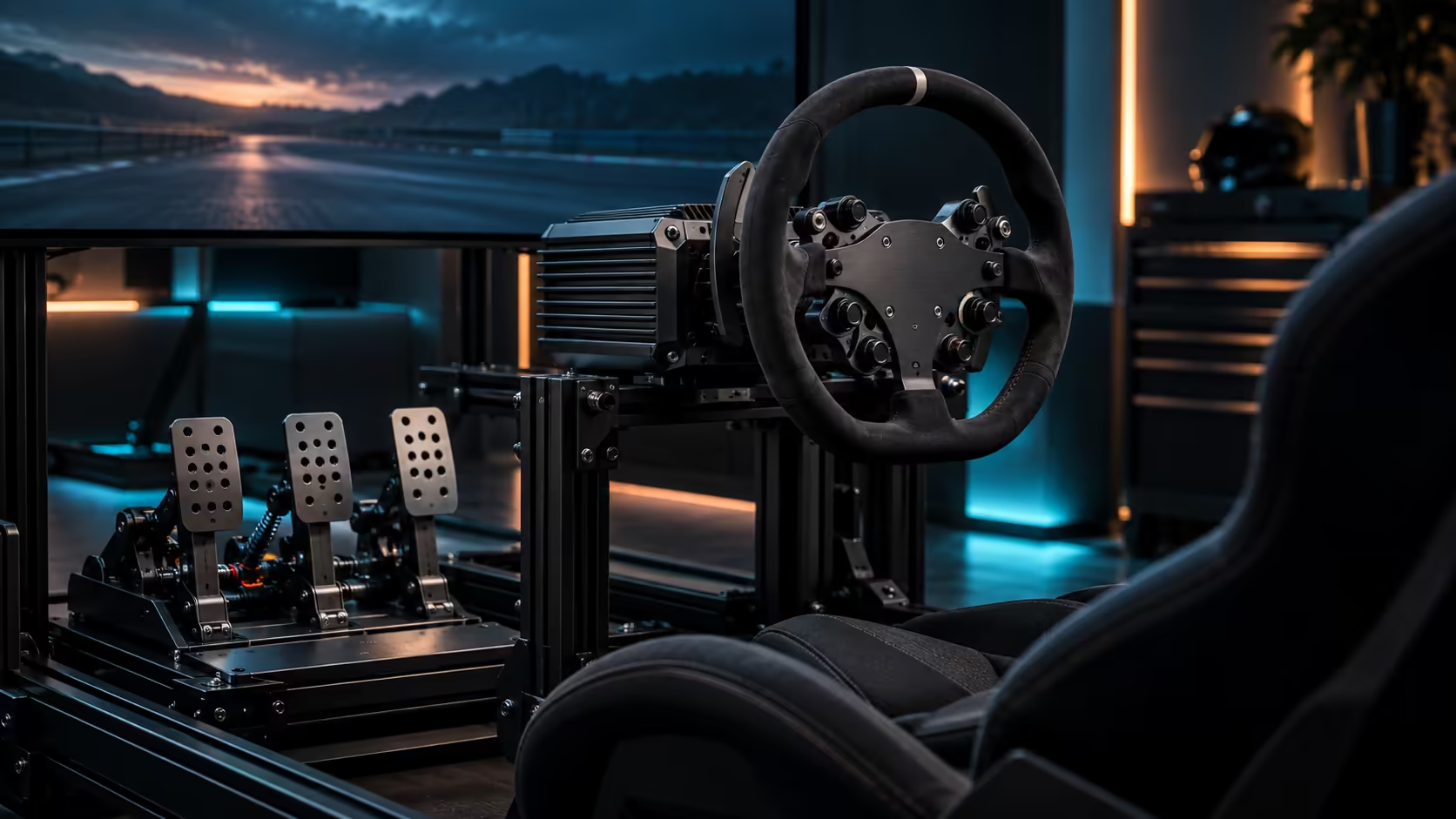
Nine newton metres does not sound like much until it is pulling against a desk. A 9Nm direct drive base applies its full torque straight to the wheel shaft with no belts or gears in between, so every kerb and every snap of oversteer arrives as a real force that has to be resisted by whatever the base is bolted to. The Simagic Green Flag bundle is R14,999 and the mounting comes before the settings, every time.
Quick Answer
Bolt the Alpha EVO base down to something rigid, install SimPro Manager, then start with torque set low and work upward over a few sessions. The R14,999 Green Flag bundle arrives with the GT Neo wheel and P700 pedals carrying a 150kg load cell sensor, and 9Nm pulls hard enough that a flexing desk ruins the feel long before any setting does.
🔩 Mounting is the whole job
Direct drive is different from a belt or gear wheel in one way that matters here: there is nothing in the drivetrain to absorb a sudden force. What the game sends, your hands feel, and what your hands resist, the mount resists too.
A standard SA office or gaming desk with a particleboard top and a thin steel frame will flex visibly under 9Nm. You feel it as a mushy, delayed response, as though the forces are arriving through a sponge, and turning the strength up makes it worse rather than better because you are simply flexing the desk further.
Three arrangements work. A proper aluminium profile rig is the best and the most expensive. A dedicated wheel stand is the middle option and folds away, which matters in a flat. A solid hardwood desk with the base through-bolted rather than clamped is the cheapest, and it is genuinely fine if the desk is heavy and the bolts go through the top rather than pinching it.
Clamps are the usual compromise and the usual disappointment. A clamp that grips a 25mm particleboard top transfers torque into the top layer only, and it will either slip or dent. If a clamp is the only option, pack a steel or hardwood plate under the desk top so the clamp bites on something solid.
Pedals need the same thought, and more of it than people expect. The P700 set uses a 150kg load cell brake, which means you brake by pushing with force rather than by moving the pedal through travel. Pushing against 150kg of sensor will slide an unrestrained pedal set across a tiled floor within a lap, so the pedals want bolting to a rig, a plate, or a wall-side stop.
⚙️ SimPro Manager, and starting low on purpose
Install SimPro Manager before the first drive. It is where the base is configured, where firmware lives, and where the 35 adjustable settings are exposed.
Set peak torque low for the first session. Around 3Nm, roughly a third of maximum, is plenty to learn the wheel on and it protects your wrists while you find out how the forces behave. A 9Nm base at full strength on a first outing catches people out on the first big kerb, and the reflex is to let go, which is exactly what you do not want to learn.
Work upward over several sessions rather than in one sitting. Sim racing forces are sustained rather than momentary, and the fatigue arrives an hour in, not in the first ten minutes.
The settings worth understanding early are the strength ceiling, the damping and the filtering. Strength is the overall scale. Damping adds resistance to movement and smooths out a wheel that feels nervous around centre. Filtering softens the sharpest spikes, which costs some detail but makes a harsh setup liveable. Change one at a time and drive the same three laps after each change, or you will have no idea which one did what.
🏁 Setting up for South African online racing
If you are racing in local leagues, two practical things shape the setup more than the wheel settings do.
The first is ping. Most large public servers for the popular titles sit in Europe, and an SA connection typically lands somewhere in the region of 160 to 200 milliseconds to them. That is perfectly raceable on your own pace but it changes wheel-to-wheel racing, because the car you are dicing with is being drawn from slightly old information. Local leagues on SA-hosted servers solve it and are where most serious local racing happens, so it is worth finding one before assuming the hardware is the limit.
The second is the room. A full rig with a 9Nm base and a load cell pedal set is a permanent installation, and in a flat or a townhouse that usually means it lives in a corner of a lounge or a spare bedroom. Measure before you buy a rig rather than after, and include the space behind the seat that you need to get in and out.
Noise travels through the floor rather than the air with direct drive. The forces go into the rig and then into the building, so a rig on a suspended wooden floor in a townhouse is audible downstairs in a way a belt wheel never was. A rubber mat under the rig feet costs very little and helps considerably.
Seating is the third item people leave to last and should not. Braking against a 150kg load cell pushes your whole body back into the seat, and an office chair on castors moves. A fixed simulator seat or a seat bolted to the rig is what turns consistent braking pressure into consistent lap times.
🎮 Before you buy the rest
Check compatibility for the platforms and titles you actually race, on the manufacturer's own support list, rather than assuming a wheel works everywhere. Support for consoles and for individual games varies by base and by firmware version, and it changes over time.
The wider racing simulation and simulation gear ranges are where the rigs, stands and mounting hardware sit, and getting the mount right first is what makes the rest of the money worth spending.
Frequently Asked Questions
Can I clamp a 9Nm base to a normal desk?
Not reliably. A clamp on a particleboard top transfers torque into the top layer and will slip or dent. Through-bolting a solid desk, or using a stand or rig, is the workable version.
What torque setting should I start on?
Around a third of maximum for the first few sessions. Work upward as you learn how the forces arrive, rather than starting at full strength.
Why do my pedals slide on the floor?
Because a 150kg load cell brake is pressure-based, so you push hard against it rather than moving it through travel. The pedal set needs bolting down or bracing against a stop.
Does ping matter for sim racing in South Africa?
For your own lap times, not much. For close wheel-to-wheel racing on European servers it does, which is why local leagues on SA-hosted servers are worth finding.
Is a direct drive wheel noisy for neighbours?
The forces travel into the rig and then the floor rather than through the air. On a suspended floor it carries, and a rubber mat under the rig feet helps a lot.
Ready to feel what a direct drive wheel actually does?
Sort the mounting first, start the torque low in SimPro Manager, and build up over a few sessions rather than one.