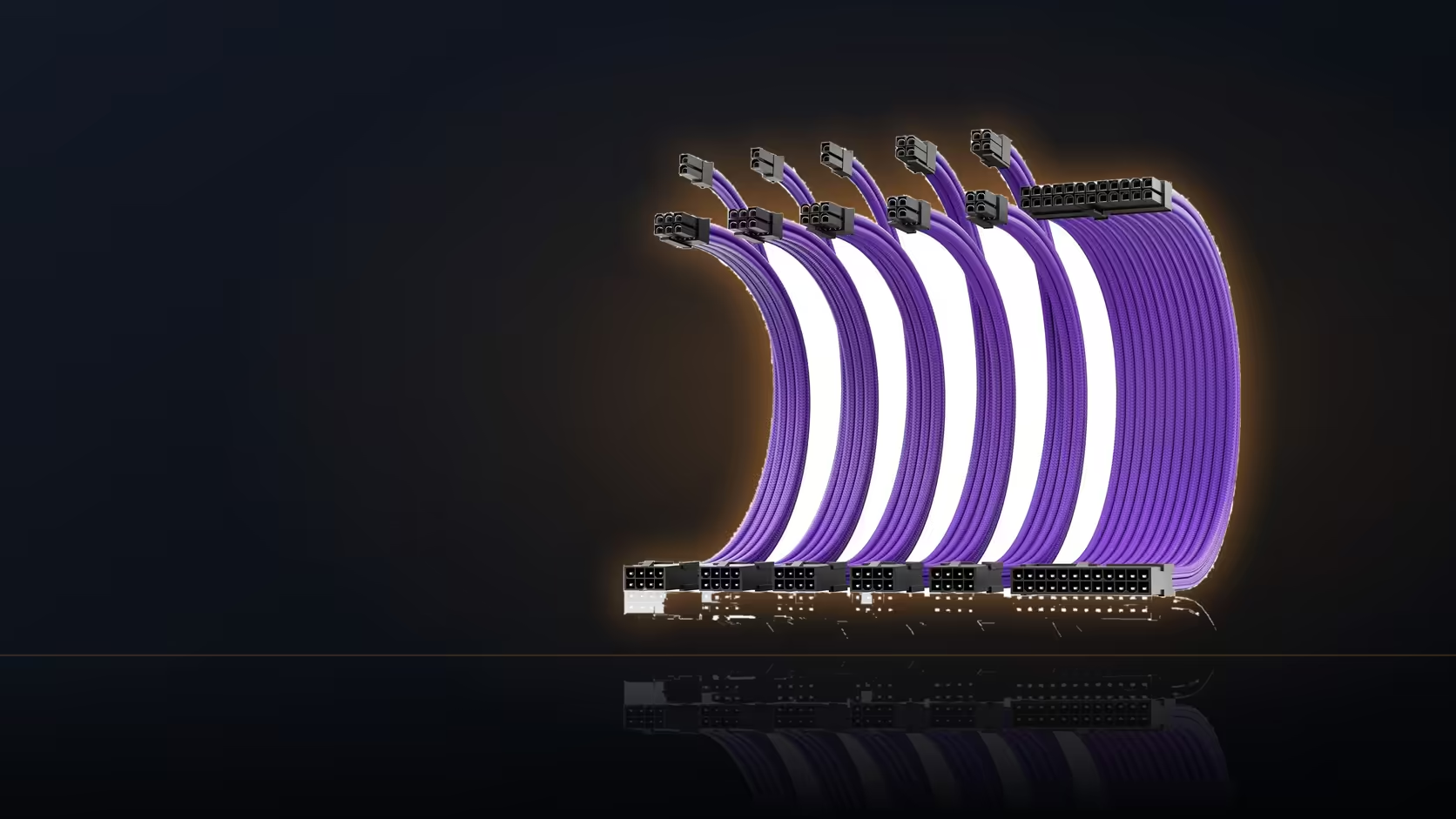
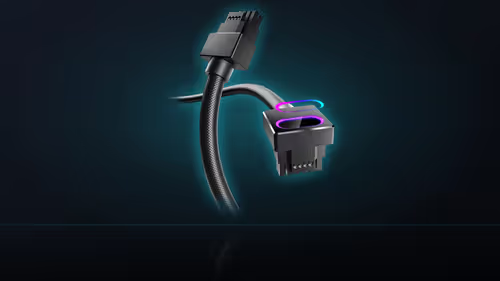
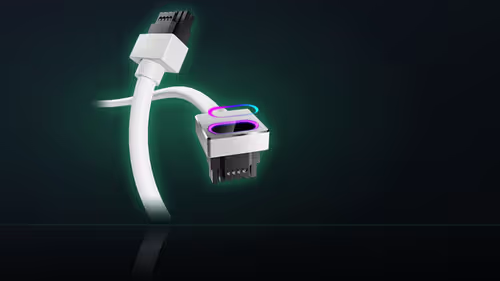
A card support bracket and three sleeved power leads frequently want to occupy the exact same physical space, and whichever one gets routed second has to make a deliberate decision about how to pass the other rather than simply crossing it wherever convenient.
Quick Answer
A card support bracket sits where the three card leads want to cross. Decide which passes in front of the other before fitting either. The bracket usually wins, and routing the leads behind it keeps both looking intentional.
🥇 Which element should be positioned first
Position the bracket first, since its placement is largely fixed by where the graphics card actually needs support against sag - that position is not something you have much freedom to adjust after the fact. Cables, by contrast, have considerably more freedom to move around a fixed obstacle, so treating the bracket as the anchor point and routing the cables to accommodate it, rather than the other way around, produces a far more workable result.
➡️ Is routing cables in front of the bracket ever acceptable
It can work in specific cases, provided a given run crosses the bracket cleanly at a single defined point rather than draping loosely across its length - but cables that visibly drape over a support bracket generally read as an afterthought rather than a planned element of the build, undermining the otherwise careful appearance the rest of the sleeved work achieves.
🔙 What routing behind the bracket actually involves
Routing behind means bringing the three leads up on the far side of the bracket's line and across to their respective sockets from there, which keeps the bracket itself reading as a single clean horizontal element uninterrupted by cable clutter, while the cables reach their destinations from an angle that does not compete visually with the bracket for attention.
🔢 Why three leads make this considerably harder than one
A single cable can be tucked almost anywhere around an obstacle with relatively little planning required - three leads sharing the same crossing point need a genuinely shared path that does not collapse into a messy bundle exactly at the point where they cross the bracket, which takes considerably more deliberate planning than routing any one of them alone would. The type of bracket in use matters here too: an adjustable post-style bracket is noticeably easier to route cables around than a full-length bar, since the bar leaves far fewer realistic choices about exactly where cables are permitted to cross it. Keep combs clear of the crossing point specifically too - a comb positioned right at the point where cables cross the bracket draws the eye precisely to the one spot in the whole arrangement you most want to look uneventful and unremarkable. And if the bracket itself ends up blocking a power socket outright, the fix is to move the bracket rather than force a cable into an awkward, strained angle to avoid it - contact between a support bracket and a power plug is a legitimate reason to reposition the bracket, not a problem for the cable routing to solve around. cable solutions has the wider range these leads belong to, and a from-scratch alternative for a particularly awkward bracket layout sits at individually sleeved premium cables.
🖐️ A final hands-on test before closing up
With the panel still off, run a finger along the bracket's full length to confirm no cable is pinched or resting under load anywhere along its run. This quick physical check catches a hidden pressure point that a purely visual inspection can easily miss, especially in a corner where light does not reach clearly.
Frequently Asked Questions
Which should be positioned first?
The bracket, since its position is set by where the card actually sags. Cables have far more freedom to move around it.
Is passing in front ever acceptable?
It can work if the run crosses cleanly at one point, but cables draped over a bracket usually look like an afterthought.
What does routing behind involve?
Bringing the leads up behind the bracket line and over to the sockets, which keeps the bracket reading as a clean horizontal element.
Do three leads make this harder?
Considerably. One cable can be tucked anywhere, while three need a shared path that does not turn into a bundle at the crossing point.
Does the bracket type matter?
An adjustable post is easier to work around than a full-length bar, which leaves fewer choices about where cables can cross.
Should combs sit near the crossing?
Keep them clear of it. A comb right at the crossing draws attention to exactly the point you want to look uneventful.
What if the bracket blocks a socket?
Move the bracket. Contact with a power plug is a reason to reposition it rather than to force the cable into an awkward angle.
Routing three GPU leads around a support bracket?
Browse Evetech's power supply range and settle the bracket's position before a single cable gets fitted.