Quick Answer
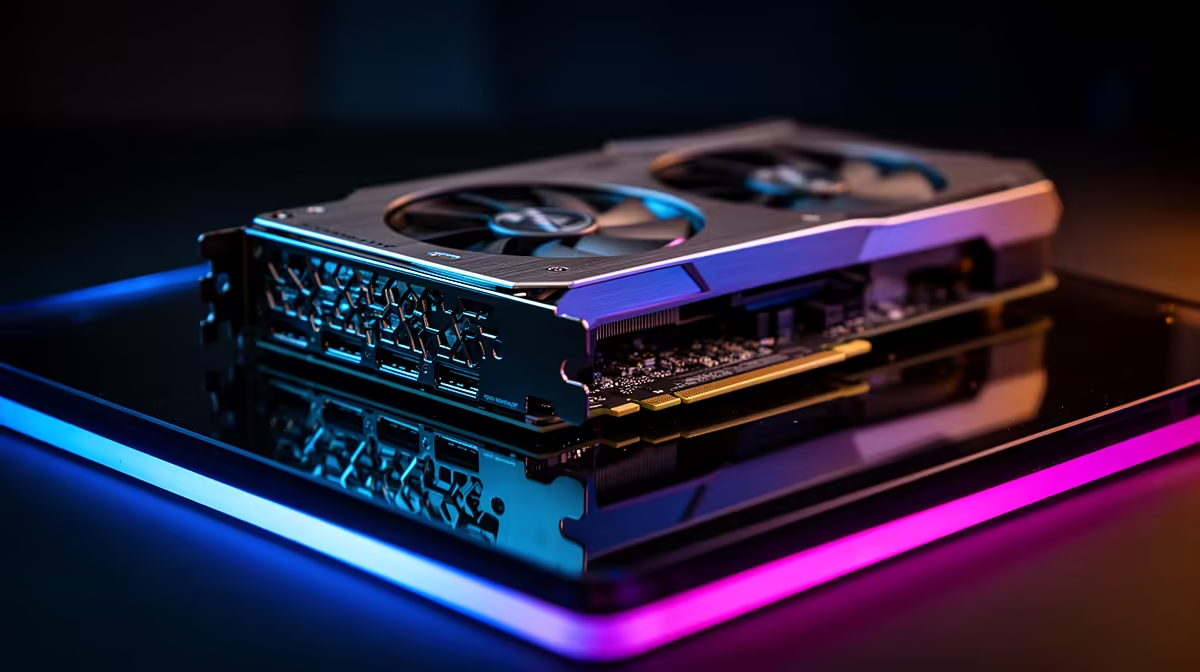
240 fps at 1080p in Oblivion Remastered on RX 9070 is the target, but high-refresh goals need tuned shadows, reflections, view distance, and upscaling. Use the target as a stability check, then tune image quality and frame caps so the system stays consistent. In SA, RX 9070 systems often sit in the R22,000-R36,000 band, so match the build to the screen before paying for unused frames.
Baseline Settings
Start from the high preset at 1080p, set a hard 240 fps cap, and test the same route or benchmark scene. Pair RX 9070 with a Ryzen 5 7500F, Core i5-14400F, or better, plus 16GB to 32GB RAM and a 1TB NVMe SSD. If the average is high but the game feels rough, watch 1% lows and frame-time spikes instead of only the headline FPS.
What to Lower First
use FSR Quality and keep 1440p high-refresh realistic. Use DLSS, FSR, or XeSS Quality when native resolution misses the target or runs too hot. Cut ray tracing and ultra shadows before reducing textures, because clarity matters more than small lighting gains for most players.
SA Monitor Match
A 1080p 144Hz monitor, 1440p 165Hz screen, and 4K 120Hz TV all change the right settings. Local stock, warranty support, delivery time, and PSU sizing matter alongside FPS. If the game already reaches the display limit, spend the rest on SSD space, airflow, and a reliable platform rather than another GPU tier.
FAQ
Can RX 9070 hit 240 fps at 1080p in Oblivion Remastered?
It can target 240 fps with the right preset discipline, though the final result depends on the game engine, CPU, and upscaling mode. Test averages and 1% lows.
Should I use upscaling?
Yes when native resolution misses the target or creates too much heat. Quality mode is the cleanest first option.
What should SA buyers match with this GPU?
Match the monitor first, then choose CPU, RAM, SSD, and PSU around that target. A balanced tower feels better than an uneven parts list.
Settings check
Set resolution and FPS cap first, then tune shadows, reflections, ray tracing, and upscaling in that order.