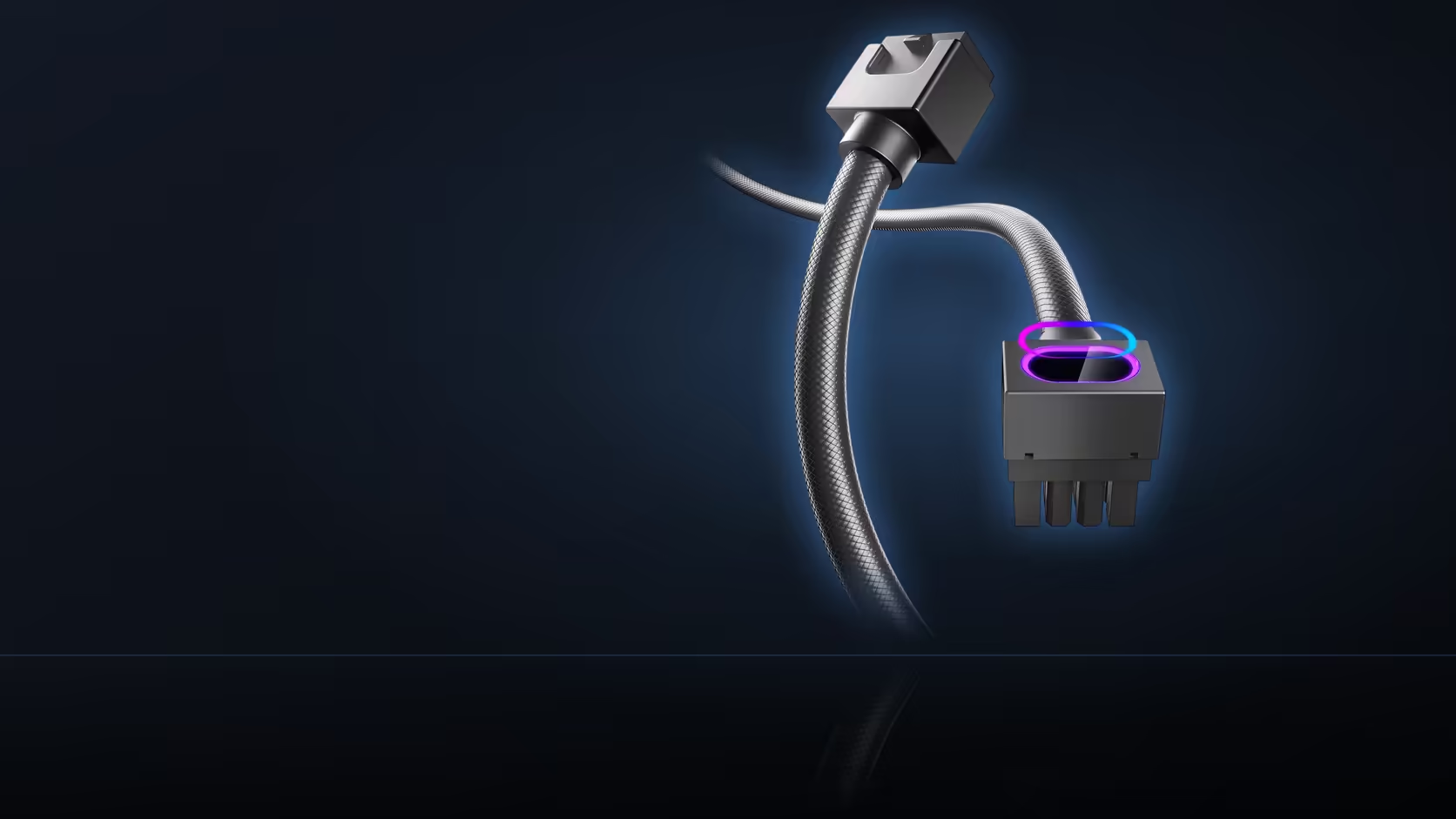
A frosted jacket that looks flawless coming out of the box can pick up a scuff in seconds if it gets dragged across the wrong edge while you are busy wrestling the original PSU lead into a new position. Sequencing the job correctly is the entire fix, and it costs nothing but a moment's thought before you start.
Quick Answer
Pull the original supply lead into position before the frosted extension goes on. The new jacket should not be dragged across sharp edges while you work. A scuff on frosted PVC shows in a way a mark on braid does not.
🔀 Why the order of operations genuinely matters
The factory lead needs pulling, repositioning and manoeuvring into its final resting place behind the tray as part of any extension install, and doing that manoeuvring with the frosted extension already attached means dragging its jacket across whatever edges and obstructions lie along that same route - exposing the more delicate, mark-prone material to exactly the abrasion it is least suited to handle. Get the factory lead settled first, then bring the new extension in afterward, and the jacket never has to travel across anything rough at all.
⚠️ Which surfaces actually cause the damage
Bare, unfinished tray cutouts, the sharp corners of drive cage mounts, and pretty much anything presenting a pressed metal edge are the common offenders here - all of them frequently sit directly along a typical cable route, and none of them are particularly forgiving of a smooth plastic surface dragged across them under any tension.
🔍 Why frosted PVC shows marks more readily than braid
Frosted PVC presents a smooth, visually uniform surface, and that very smoothness is exactly what makes any mark or scuff stand out clearly once it happens - where braid's inherently textured, woven surface tends to hide small blemishes within its own pattern almost automatically, frosted PVC has no such texture to disguise a scratch, so damage that would go unnoticed on a sleeved cable becomes immediately visible here.
🧽 Can existing damage be fixed, and protecting the jacket going forward
Light surface marks may genuinely polish out with gentle attention from a soft cloth, restoring most of the original finish, but any actual cut or gouge into the jacket material itself is permanent and cannot be reversed - which makes prevention during the initial fitting process considerably more valuable than any cleanup attempted afterward. Using grommets consistently wherever the case actually provides them is worth doing as standard practice, since a rubber-lined opening treats a jacket far more gently than a bare metal cutout ever will, regardless of how carefully you might otherwise try to feed the cable through by hand. It is worth being clear that the cable's 40,000-bend durability rating has nothing to do with this specific concern either - that figure describes flex cycles the jacket can withstand over repeated bending, not abrasion resistance, so it says nothing whatsoever about how the surface holds up to being dragged across a sharp edge during fitting. The connector head itself is considerably more robust than the jacket material and less prone to this kind of surface damage generally, though the ARGB window specifically is still worth keeping well clear of anything that might scratch or scuff its surface during the install, since a scratched window would visibly dull the light it is meant to display. cable solutions rounds out the category this jacket belongs to, and further accents worth fitting with the same careful sequencing sit at NZXT case lighting.
🧤 A simple physical precaution worth adopting
Wrapping a soft cloth loosely around the extension's jacket while manoeuvring the older factory lead into place adds a cheap, easy layer of protection during exactly the riskiest part of the job, without slowing the work down meaningfully. It is a small habit worth adopting as standard practice on any frosted-jacket install, not just this specific cable.
Frequently Asked Questions
Why does the order of work matter?
Because the factory lead needs pulling and manoeuvring, and doing that with the frosted extension already attached drags it over edges.
What surfaces cause marks?
Bare tray cutouts, drive cage corners and anything with a pressed metal edge, all of which are common along a cable route.
Does frosted PVC mark more easily than braid?
It shows marks more readily, because it presents a smooth uniform surface where braid hides small blemishes in its texture.
Can a scuff be removed?
Light surface marks may polish out with a soft cloth, but a cut into the jacket is permanent, so prevention is the better approach.
Should grommets be used throughout?
Where the case provides them, yes. A rubber-lined opening is far kinder to a jacket than a bare metal cutout.
Does the bend rating cover this?
The rating describes flex cycles rather than abrasion, so it says nothing about how the surface handles being dragged across an edge.
Is the head at risk too?
It is more robust than the jacket, though the ARGB window is worth keeping clear of anything that might scratch it.
Fitting your extension without marking the jacket?
Browse Evetech's power supply range and plan the fitting order before pulling any cables into place.