You're not alone. That constant fan whine can ruin immersion, distract you during a clutch moment, and just be plain annoying. For noise-sensitive users in South Africa, a quiet PC build isn't a luxury... it's a necessity for focused work and deep gaming sessions. This guide will walk you through the key components for achieving whisper-quiet performance without sacrificing power. 🤫
Why Your PC Sounds Like a Jet Engine
The noise from your PC almost always comes from moving parts, primarily fans. Your Central Processing Unit (CPU), Graphics Card (GPU), Power Supply Unit (PSU), and case all use fans to push hot air out and pull cool air in. The faster they spin, the more noise they make. A successful quiet PC build is all about choosing components that cool efficiently at lower, quieter speeds.
It’s a balancing act between thermal performance and acoustic comfort. Let's break down where to focus your attention.
Core Components for Your Silent PC Build
Crafting a near-silent machine is about smart component selection. Each part plays a role in the final sound profile of your system.
The PC Case: Your First Line of Defence
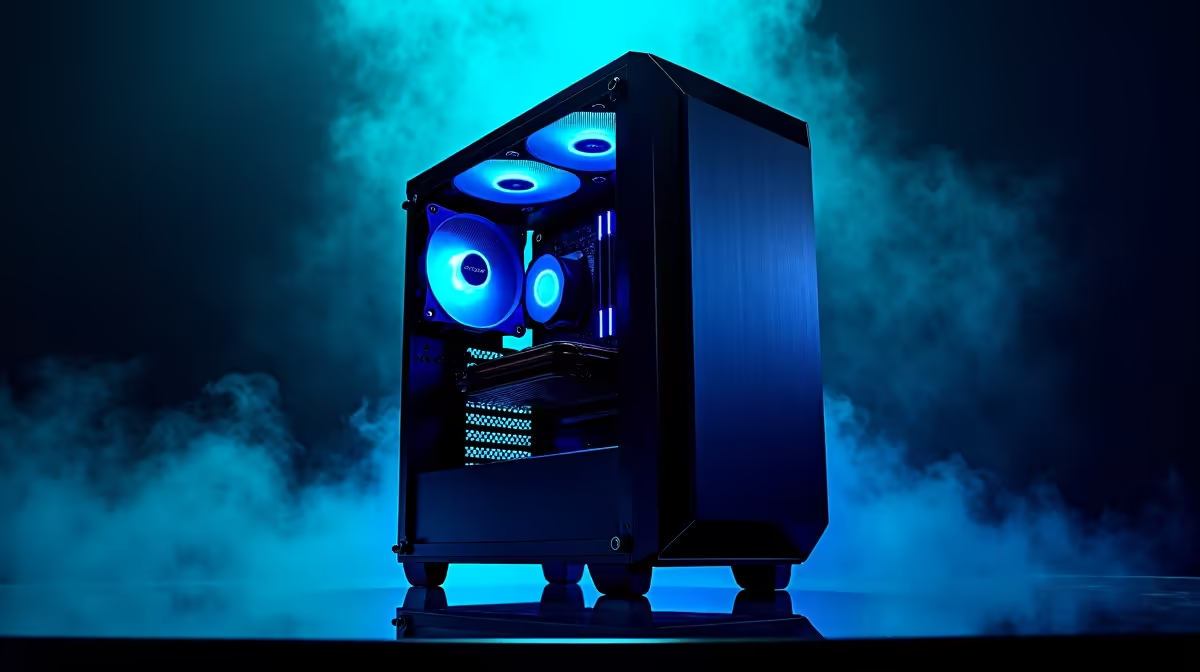
Think of the case as the foundation of your silent build. While mesh-front cases offer amazing airflow, they do little to block internal noise. For a truly quiet experience, look for cases with:
- Sound-Dampening Material: High-density foam on the side, top, and front panels can absorb vibrations and fan noise.
- Solid Panels: A solid front panel, as opposed to mesh, directly blocks the sound from your intake fans.
- Quality Construction: A well-built, heavy case made from steel or aluminium will vibrate less than a flimsy one.
Many of the best gaming PC deals in SA feature chassis options specifically designed for low-noise operation.
CPU Cooling: Taming the Brains of the Operation
Your CPU's stock cooler is often the loudest component in a standard build. Upgrading it is one of the most effective steps toward a quiet PC build.
- Large Air Coolers: A big heatsink with a 120mm or 140mm fan can dissipate heat more effectively than a small one. This means the fan can spin much slower (and quieter) to keep your CPU cool.
- All-in-One (AIO) Liquid Coolers: AIOs move heat from the CPU to a radiator, where it's cooled by larger, slower-spinning fans. They can offer excellent performance with minimal noise, especially in high-end systems. You'll often find premium AIOs in powerful pre-built PCs over R20k.
The Graphics Card (GPU): Silent Power 🚀
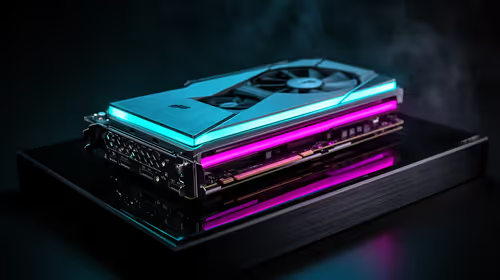
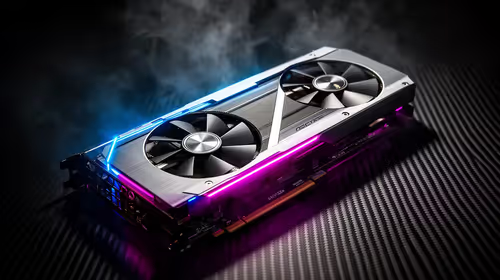
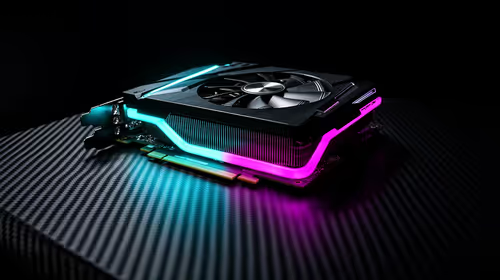
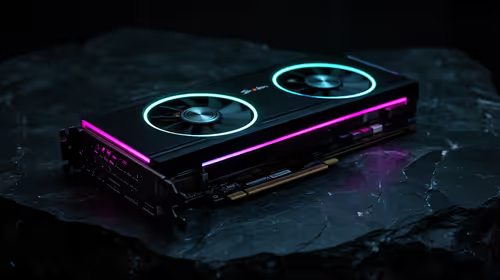
Modern GPUs are incredibly powerful, but that power generates a lot of heat. Look for models with "0dB" or "zero-RPM" fan modes. These features keep the GPU fans completely off during light tasks like browsing or watching videos, making your PC totally silent. Under load, custom coolers with two or three fans are generally quieter than single-fan "blower" style cards. Choosing from a range of pre-built PC deals allows you to see these different cooling solutions in action.
Master Your Fan Curves 🔧
Most motherboards and GPUs come with software that lets you create custom fan curves. You can set your fans to spin at minimum RPM until your components reach a certain temperature (e.g., 60°C). This simple tweak can make a massive difference to your PC's idle noise level, ensuring it stays silent when you're not gaming.
The Power Supply (PSU)
A cheap, inefficient PSU has to work harder and spin its fan faster to provide stable power, creating unnecessary noise. A high-quality, 80 Plus Gold or Platinum rated PSU is more efficient, generates less waste heat, and often includes a semi-passive mode. This means its fan won't even spin up until the load hits a certain threshold. It's a critical, often overlooked, part of a silent build, even for PCs in the under R20k price bracket.
Storage: The Final Piece
This one is simple: use Solid-State Drives (SSDs) instead of Hard Disk Drives (HDDs). HDDs have spinning platters and a moving read/write head, creating audible clicks and whirring sounds. An SSD has no moving parts, making it completely silent. Thankfully, even most budget gaming PCs today come with a fast, silent SSD as the primary drive.
Building a Quieter Future ✨
By carefully selecting your case, coolers, GPU, and PSU, you can create a powerful PC that you'll barely hear. A quiet PC build transforms your computing experience, allowing for deeper focus and more immersive gaming without the distracting drone of fans. It's an investment in your comfort and concentration.
Ready for Whisper-Quiet Performance?
Building a silent PC requires careful component matching. If you'd rather skip the hassle and get a professionally built, optimised system, Evetech has you covered. Explore our wide range of custom and pre-built PCs and find the perfect quiet rig for your setup.