

Clean Gaming Keyboard: Guide for Dusty & Humid Conditions
Clean gaming keyboard quickly and safely in dusty or humid conditions with step-by-step tips, tool checklist, and maintenance routines to prevent corrosion and switch failure. 🧼💨
Read moreStuck with a black screen? Our Ryzen motherboard troubleshooting guide offers easy, step-by-step solutions for common glitches in South Africa. From no POST issues to RAM compatibility, get your rig running smoothly again! 🛠️💻 Learn to diagnose debug lights and update your BIOS safely.
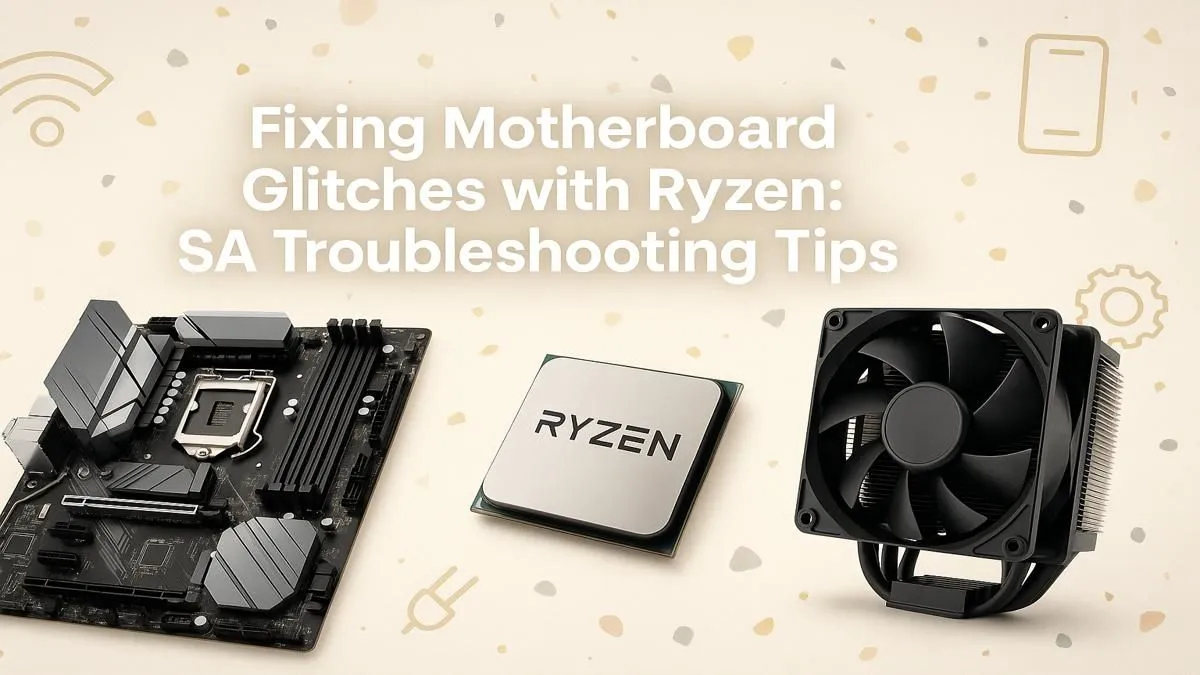
You’ve unboxed your shiny new Ryzen CPU. You’ve carefully installed it, clicked in the RAM, and wired everything up. You press the power button, the fans spin… but your screen stays black. That gut-wrenching feeling is something no PC builder in South Africa wants. Before you start panicking, know that most issues are fixable. This guide offers straightforward Ryzen motherboard troubleshooting to get you from a dead box to a gaming beast. 🚀
When your PC won't POST (Power-On Self-Test), it means a core component is failing its initial check. Effective Ryzen motherboard troubleshooting starts with the basics, not complex software fixes.
Before you start pulling components, run through this simple checklist:
Many modern boards, from entry-level to high-end AMD X870 motherboards, include diagnostic LEDs (often labelled CPU, DRAM, VGA, BOOT). These tiny lights are your best friend, telling you exactly which component is causing the hang-up.
Ryzen CPUs are famously sensitive to RAM speed and compatibility. If your diagnostic LED points to a DRAM issue, don't worry... this is a frequent and usually simple problem to solve.
The first step is to check your motherboard's Qualified Vendor List (QVL) on the manufacturer's website. This list confirms which specific RAM kits have been tested and are guaranteed to work. While many unlisted kits work fine, sticking to the QVL is the safest bet for stability.
If you're still stuck, try booting with only one RAM stick in the primary slot (usually the second slot from the CPU, but check your manual). If it boots, you may have a faulty stick or a compatibility issue when running in dual-channel mode. Ensuring you have a quality foundation from a wide selection of AMD motherboards can prevent many of these headaches from the start.
Sometimes, the hardware is all correct, but the software controlling it—the BIOS/UEFI—is the source of your Ryzen motherboard issues. This is especially common when pairing a brand-new Ryzen CPU with a slightly older motherboard.
For example, putting a Ryzen 5000 series CPU into some older AMD B550 motherboards required a BIOS update before the board could even recognise the processor. Without the update, it would fail to POST every time.
Many modern motherboards have a feature called BIOS Flashback (or Q-Flash Plus). This lets you update the BIOS with just a USB stick and a power supply—no CPU or RAM needs to be installed! It’s an absolute lifesaver for fixing CPU compatibility issues on a new build. Just download the latest BIOS onto a FAT32-formatted USB, plug it into the designated port, and press the button.
Clearing the CMOS is another classic fix. This resets your BIOS settings to their factory defaults, which can resolve glitches caused by an unstable overclock or incorrect setting. You can usually do this by shorting two pins on the motherboard (check your manual!) or by removing the coin-cell battery for a few minutes.
You’ve tried everything, but the glitches persist. While most problems are fixable, sometimes you're dealing with faulty hardware or a board that's simply not up to the task for your new components. If your board is showing its age or lacks features like PCIe 5.0, it might be the bottleneck in your system.
Upgrading to a newer platform can provide a more stable, feature-rich experience. The latest chipsets, like the versatile AMD B850 motherboards, are designed to handle the power and connectivity needs of modern Ryzen processors, offering a smoother build process right out of the box.
Ready for a Rock-Solid Foundation? Effective Ryzen motherboard troubleshooting can solve most issues, but starting with the right board is key to a stable, high-performance PC. If it's time for an upgrade, we've got your back. Explore our huge range of AMD motherboards and find the perfect match for your build.
A common cause for a new Ryzen PC failing to POST is an outdated motherboard BIOS. Ensure your motherboard's BIOS supports your specific Ryzen CPU model. Other causes include improperly seated RAM or power connections.
Motherboard debug lights (CPU, DRAM, VGA, BOOT) indicate which component is failing the power-on self-test. A lit CPU light often means a compatibility issue or poor contact, while a DRAM light points to RAM problems.
Yes, often you do. If you're pairing a new generation Ryzen CPU with an older motherboard, a motherboard BIOS update for Ryzen is almost always required for the system to recognize the CPU and boot.
To fix Ryzen RAM compatibility issues, first check your motherboard's Qualified Vendor List (QVL). Ensure RAM is in the correct slots (usually A2/B2), and try enabling the DOCP/XMP profile in the BIOS. If unstable, update the BIOS.
If your Ryzen CPU is not detected in BIOS, check for bent pins on the CPU. Re-seat the processor carefully, ensuring the triangle alignment markers match. A BIOS update is another critical step if the motherboard is older than the CPU.
Absolutely. An underpowered or faulty PSU can cause random shutdowns, boot failures, and instability. Ensure your power supply provides enough wattage for your Ryzen CPU and GPU, and that all power cables are securely connected.
Clean gaming keyboard quickly and safely in dusty or humid conditions with step-by-step tips, tool checklist, and maintenance routines to prevent corrosion and switch failure. 🧼💨
Read more
Best gaming keyboard features to prioritize when building a high-end setup: mechanical switches, low latency, hot-swap, RGB, macros, durability and ergonomics 🎮⌨️
Read more
Custom actuation point keyboard setup guide: learn to set per-key actuation on your analog gaming keyboard for faster, precise inputs and better control 🎮⚙️
Read more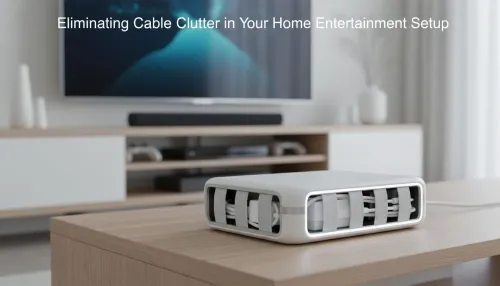
Cable management for home entertainment helps you eliminate cable clutter quickly and safely. Learn routing, concealment, and product picks to tidy your setup fast 📺🔌
Read more
conference room setup Microsoft Teams Zoom: Upgrade AV, camera, mic, and network to ensure seamless meetings, clear audio, and crisp video 🎯🔧
Read more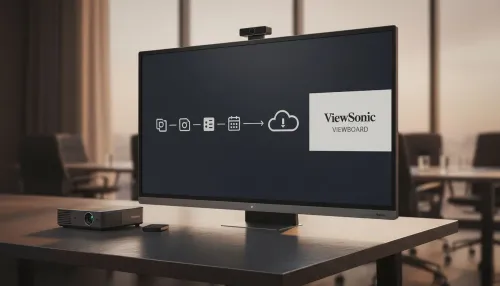
• Audit setup • Link accounts • Configure ViewBoard • Test workflows Integrate Google Workspace with ViewSonic ViewBoard to enable secure SSO, calendar and Drive sync, and smooth collaborative whiteboarding 🔗📋
Read more
Discover webcams that automatically adjust light and color for crystal-clear video calls 🎥✨. Boost your streaming quality today!

Discover webcams that blend into your workflow 🎯 Capture moments while you work, stream, or create. Upgrade your setup with smart, multitasking tech!
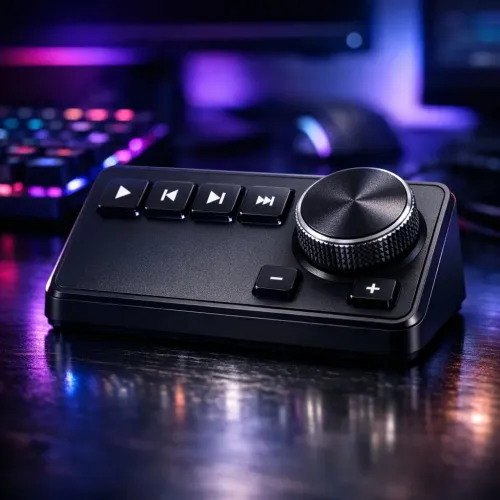
Dedicated media keys give streamers one-touch control to mute, switch scenes, clip highlights, and adjust audio — cutting task time and boosting consistency 🎛️⚡
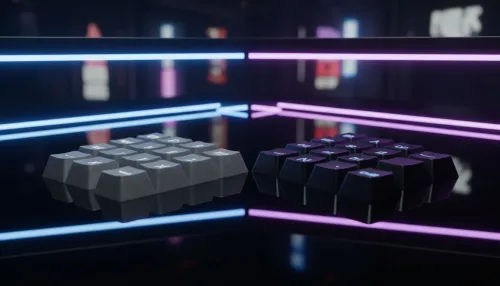
PBT vs ABS keycaps: Clear, local guide for South African gamers—compare feel, sound, durability and where to buy. Find the best material for your budget and playstyle 🎮🇿🇦
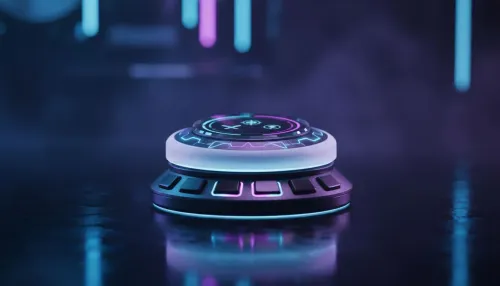
- Multi-Function Digital Dial: define benefits - Show gamer setups and macros - Offer buying and setup tips Multi-Function Digital Dial puts programmable control at your fingertips for faster actions and smoother streaming. 🎮⚙️
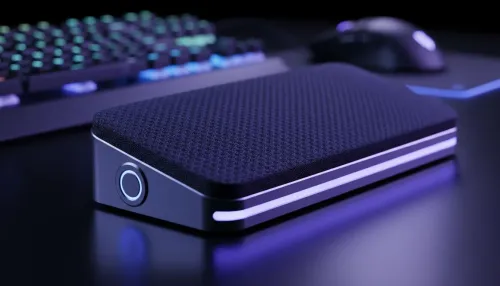
- Explain benefits; - Show the science; - Compare options; - Recommend picks. Magnetic wrist rest for gaming cuts wrist strain and boosts comfort during long sessions 🕹️✨