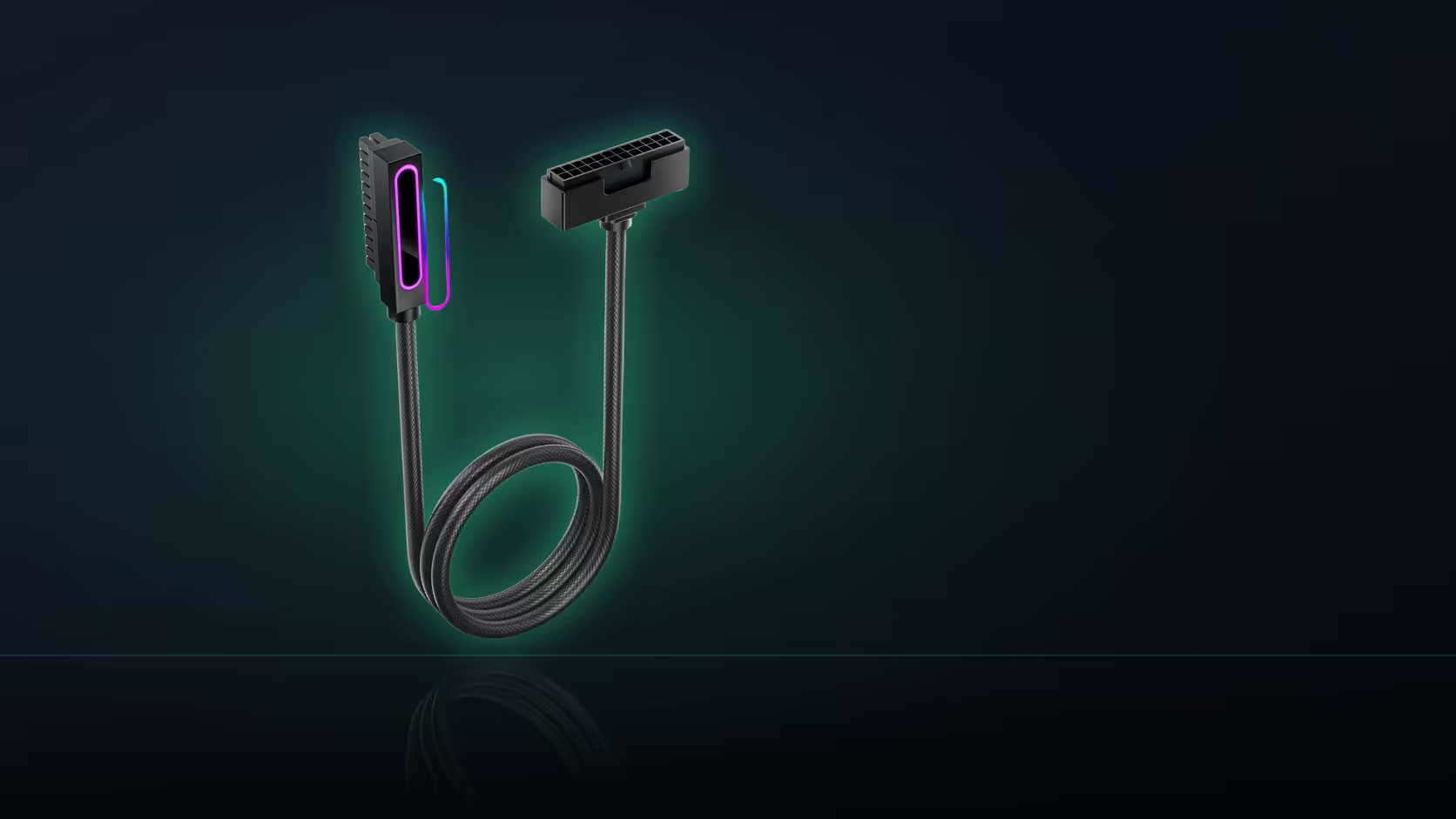
A polished GPU backplate sitting close to a lit connector head does something a matte surface never would: it throws back a sharp, mirror-like copy of the ARGB window, and that reflection reads to the eye as a second, entirely separate light source rather than a flattering highlight on an already-good accent.
Quick Answer
A glossy card backplate near the lit head will pick up the glow. The reflection reads as a second light source rather than a highlight. Angle or distance is the fix, and it is easier to plan before the cable is fitted.
👁️ Why a sharp reflection reads as wrong
The human eye interprets a genuinely sharp, mirror-like reflection as a second independent light source rather than as a soft highlight cast off an existing one - which means what was meant to be one deliberate, carefully placed accent point ends up presenting as two competing points of light instead, undermining the clean, singular effect the connector was chosen to deliver in the first place.
🪞 Which specific surfaces cause the worst version of this
Glossy card backplates, polished power supply shrouds, and anything genuinely chromed or mirror-finished are the worst offenders here, since all of them return a crisp, clearly defined image of the window itself rather than a softened, diffuse glow - the more polished and reflective the surface, the sharper and more distracting the resulting duplicate image becomes.
✅ Can a reflection ever actually work in your favour
Yes, genuinely - a softer reflection bounced off a matte or satin-finished surface nearby can spread the connector's light attractively across a broader area, adding a pleasant ambient glow rather than a jarring duplicate point. The actual problem is specifically a sharp, mirror-like return off a genuinely glossy surface, not reflection as a general phenomenon - matte surfaces are a genuine asset here rather than something to avoid entirely.
🔧 What can actually be adjusted, and other factors worth knowing
Two practical variables are available to fix an unwanted sharp reflection once identified: the physical distance between the head and the offending reflective surface, and the angle the cable itself takes as it leaves the socket, both of which influence exactly where and how strongly any resulting reflection lands. Jacket colour has only a minor bearing on this whole effect, since the window itself is the actual light source doing the work - what matters considerably more is the surface finish of whatever sits directly opposite it, not the colour of the cable's own jacket. The EPS version of the cable sidesteps this particular problem more easily than the ATX version tends to, simply by virtue of its position at the top edge of the board, well away from a typical card backplate - it faces an entirely different set of neighbouring surfaces up there, with a correspondingly different set of reflective risks to consider. And where a reflection genuinely cannot be avoided through positioning alone, lowering the lighting brightness through whatever software controls the board's addressable headers does reduce the strength of any unwanted reflection, though it inevitably reduces the primary effect you actually bought the cable for as well, so that particular fix comes with its own real trade-off worth weighing. cable solutions rounds out this connector's shelf, and accents positioned well clear of any glossy surface sit at NZXT case lighting.
🌙 Testing the effect properly at night
Judge this specific problem after dark, with the room lights off and only the build's own lighting running, rather than during the day under bright ambient lighting that washes out subtle reflections either way. A reflection that seems negligible under a bright office light can read very differently once the room is genuinely dim and the build's own glow becomes the dominant light source in the space.
Frequently Asked Questions
Why does a reflection look wrong?
Because the eye reads it as another source rather than a highlight, which turns one deliberate accent into two competing ones.
Which surfaces are worst?
Glossy backplates, polished shrouds and anything chromed, all of which return a sharp image of the window rather than a soft glow.
Can the effect ever be useful?
A soft reflection off a matte surface can spread the light attractively. The problem is a mirror-like return, not reflection in general.
What adjustments are available?
Distance between the head and the surface, and the angle the cable takes as it leaves the socket, are the two practical variables.
Does jacket colour affect this?
Only slightly. The window is the light source, so the jacket matters less than what sits opposite it.
Would the EPS version avoid the problem?
It sits at the top edge, away from a card backplate, so it faces different neighbours and different reflective surfaces.
Can lighting settings help?
Lowering brightness reduces the strength of a reflection, though it also reduces the effect you paid for.
Planning around a glossy GPU backplate?
Browse Evetech's power supply range and think through reflective surfaces before fitting your lit connector.