Quick Answer
A solid podcast setup in Empangeni runs about R13,000–R20,000: a Core i5-13400 or Ryzen 5 7600, 16GB DDR5, a 1TB NVMe SSD, and a USB dynamic mic from R3,500. Spend your money on the microphone and room, not a big GPU — audio work is CPU and storage driven.
Build priorities for audio
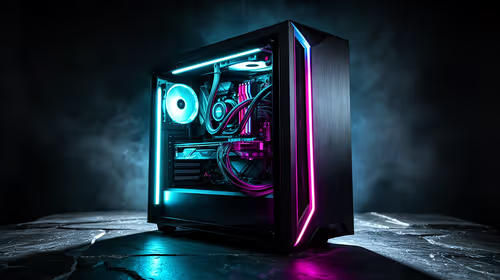
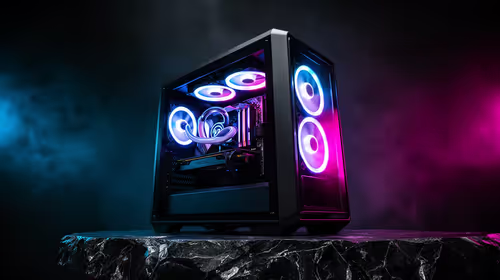
Editing podcasts means scrubbing through multi-track sessions, applying noise reduction and exporting — all jobs that load the CPU and SSD, not the graphics card. A 6-core Ryzen 5 7600 with 16GB DDR5 handles this with room to spare, and a 1TB Gen4 NVMe keeps large WAV sessions responsive. Skip the high-end GPU; integrated graphics or a quiet entry card is all you need.
Microphone, interface and Empangeni connectivity
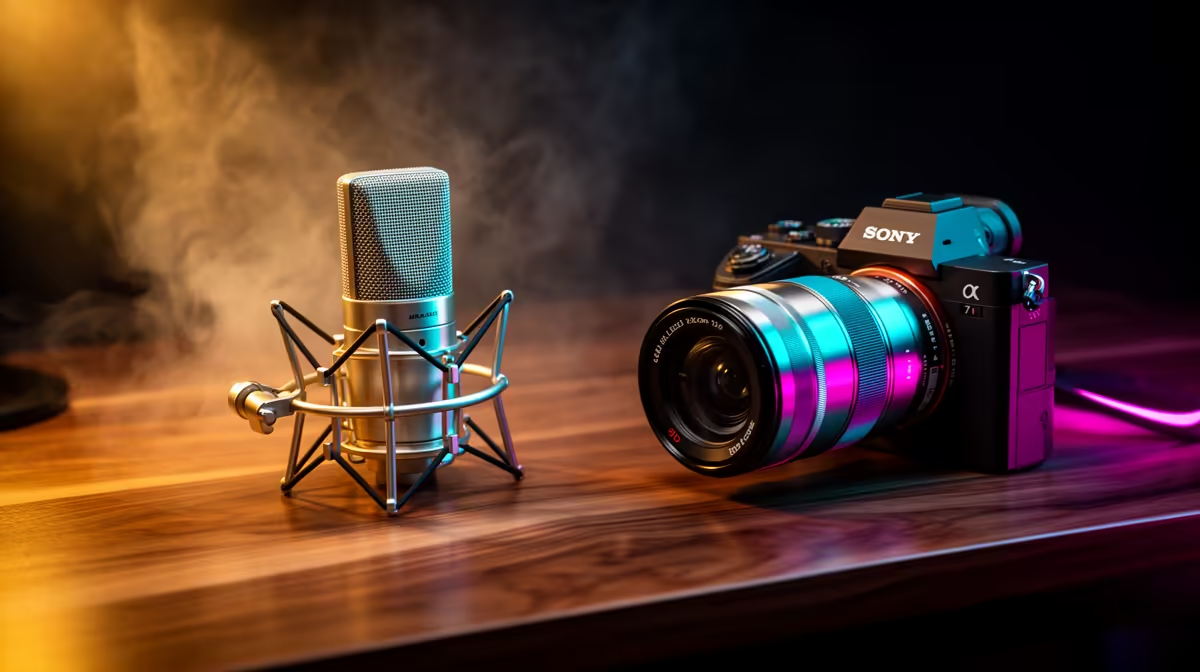
A USB dynamic mic (Shure MV7+, around R6,000) is the single biggest quality lever — it ignores fans and the humid coastal air-con far better than a condenser. Empangeni has reliable fibre and LTE; a 20 Mbps upload pushes a finished episode out in minutes. Record at 24-bit WAV and export spoken word at 128–192 kbps.
Editing software and workflow
Audacity is free and fine for two-track shows; Reaper (a modest one-off licence) scales to complex edits with noise reduction and multiband compression. Record each guest on a separate track so you can fix one voice without touching the others. Keep a template project so every episode starts with your intro, levels and effects pre-loaded.
FAQ
XLR or USB mic for a first podcast?
Start with USB — fewer cables, no separate interface, and quality is excellent. Move to XLR only when you add a second host or want analogue gear.
How fast must my internet be to upload episodes?
A 10–20 Mbps upload is comfortable; a 45-minute episode at 128 kbps is well under 100MB and uploads in a couple of minutes.
Does podcasting need a graphics card?
No discrete GPU is required. Audio editing leans on the CPU and SSD, so put that budget into a better mic and 32GB RAM.
30-second test and listen on headphones before every session — catching a loose USB cable or hum upfront saves a re-record.