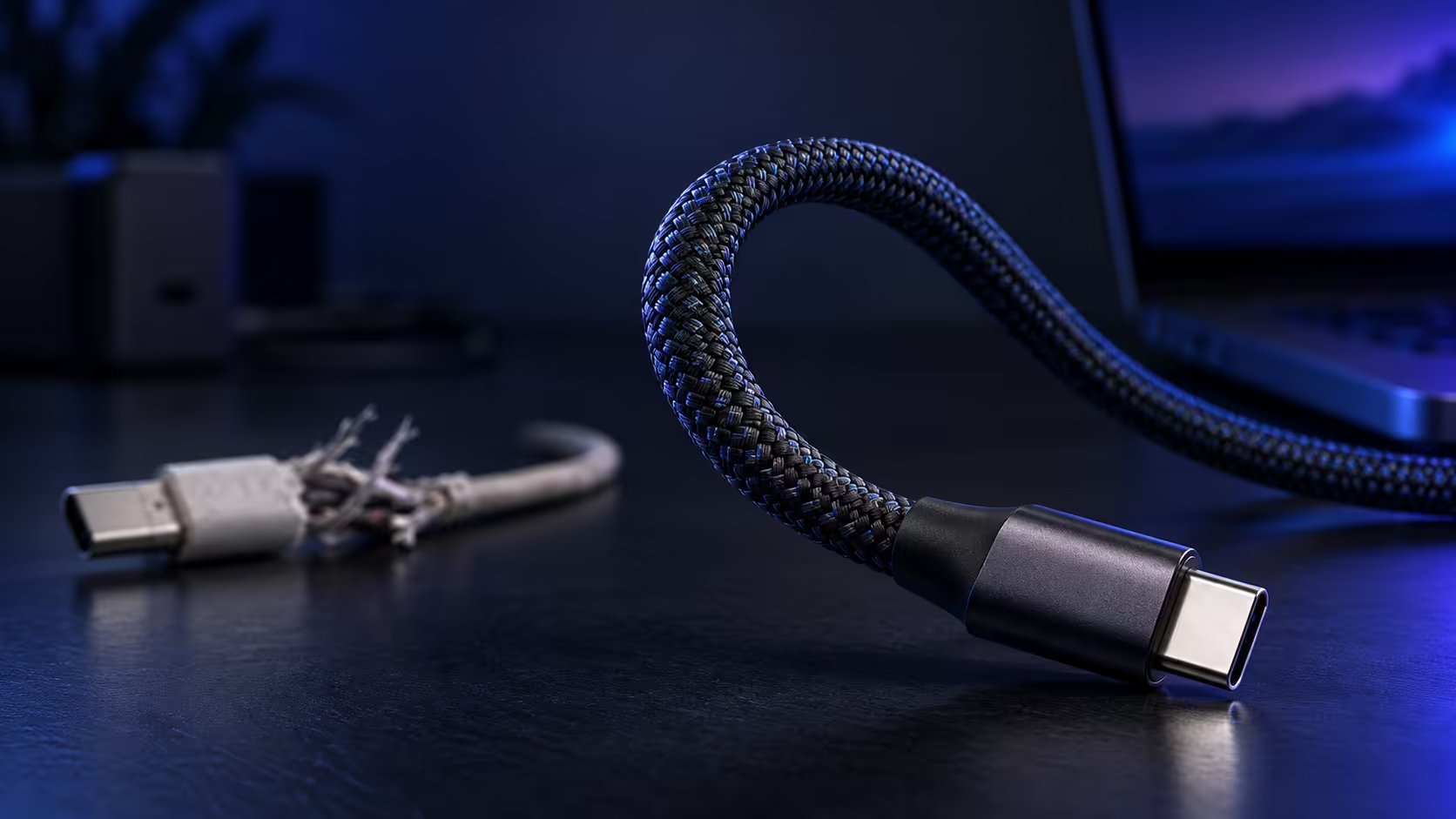
Frayed and broken charging cables almost always fail in the same specific spot, which means the fix is not a thicker cable overall, it is a cable built to survive exactly where the stress actually concentrates.
Quick Answer
Fraying is a bend-stress problem concentrated in the last 20mm before the connector. The fix is a rated jacket plus looser coiling: a 30,000-bend bio-nylon cable like the R399 Anker 544 survives handling that kills plain TPE in a year, with local warranty cover.
🔬 Where fraying actually starts
The last 20mm before a USB-C connector takes the sharpest bend angle every time a cable is coiled, pulled at an angle, or yanked slightly to unplug it, which is exactly why fraying and eventual failure concentrate there rather than spreading evenly along the cable's length. A cable can look perfectly intact along most of its run while already failing intermittently right at that joint, which is why a visual check of the middle of the cable rarely reveals the actual problem.
🧵 What a bend rating actually measures and prevents
A published bend rating comes from putting a cable, connector included, through that exact motion over and over on a rig, counting cycles until a wire inside finally gives way or the signal drops, which is a direct measure of how many of these stress events the cable survives before the exact failure mode described above actually happens. The Anker 544 is built specifically to push that failure point much further out than a plain, unrated cable manages, pairing a 30,000-bend rating with an exterior that is 46% bio-based nylon.
🎒 Bag habits that speed up wear without anyone noticing
Coiling a cable into a tight loop under 5cm across to fit a small pocket, rather than a single loose wrap, concentrates bend stress at fewer points along the cable rather than spreading it out, accelerating wear at those specific spots. Wrapping a cable around a charger block for storage does the same thing at an even tighter radius. Both habits are convenient and both quietly shorten a cable's working life well before its published bend rating would otherwise be reached.
🧯 Why a fraying cable is worth replacing sooner rather than later
A USB-C cable already showing visible fraying at the connector is not simply a cosmetic issue waiting to happen, it is usually a sign that the internal shielding or conductors near that point have already been compromised to some degree. Continuing to use it risks an intermittent connection that undercharges a device without any obvious warning, which is a more frustrating failure mode than a cable that simply stops working outright.
🔁 Why the same failure keeps happening on replacement cables
Buying an identical unrated USB-C replacement after a cable frays simply resets the clock on the same failure rather than fixing it, since the new cable still concentrates stress at the same connector joint in exactly the same way its predecessor did. This is why swapping like for like, rather than upgrading to a rated option, is such a common source of frustration: the person doing the replacing assumes the first cable was simply unlucky, when the actual cause was built into the design from the start.
🛒 Replacing a frayed cable properly
Once a cable is visibly fraying or charging intermittently, replacing it with a rated option addresses the actual cause rather than delaying the same failure with a fresh but equally unrated cable. The Anker 544, from the comprehensive cable range, at R399 combines the bend rating and bio-nylon braid discussed above, and its warranty is handled locally rather than through an overseas return. For anyone whose cable spends most of its life inside a laptop bag, coiling it loosely rather than tightly extends that rated lifespan further, and our accessories range covers cable organisers that help with exactly this habit.
Frequently Asked Questions
Can a frayed cable be repaired instead of replaced?
Generally not safely for a USB-C cable, since the fraying usually indicates damage to the internal conductors or shielding near the connector, which is not something to attempt fixing at home.
Does wrapping a cable around a charger block actually damage it?
Yes, over time. It creates a tight bend radius at a fixed point, concentrating stress there repeatedly rather than distributing it across a looser coil.
How can I tell if a cable is starting to fray before it becomes visible?
Watch for intermittent charging or a connection that only works at certain angles, both of which often appear before any visible damage to the jacket itself.
Is a higher bend rating always worth paying extra for?
For a cable that travels daily in a bag, yes, since that is exactly where a higher rating extends useful life. For a cable that stays permanently plugged in and undisturbed, it matters much less.
Does the colour of a cable's jacket affect how visible early fraying is?
A darker jacket can hide the earliest signs of surface wear longer than a lighter one, though the underlying stress at the connector builds regardless of what colour the outer material happens to be.
Ready to stop replacing frayed cables every few months?
Choose a bend-rated cable and coil it loosely, and the failure point this guide describes stops recurring.