Quick Answer
A podcast recording build under R20,000 in Standerton splits nicely: about R12,000–R14,000 for a Ryzen 5 7600 PC with 16GB DDR5 and a 1TB NVMe SSD, leaving R6,000+ for a USB dynamic mic, headphones and treatment. Audio editing is CPU- and storage-driven, so no big GPU is needed.
Allocating the R20,000
Spend on what listeners hear. Around R12,000 buys a capable 6-core Ryzen 5 7600 with 16GB DDR5 and a 1TB Gen4 NVMe — enough to edit multi-track sessions in Reaper or Audition smoothly. That leaves roughly R8,000 for the parts that matter most acoustically: a USB dynamic mic like the Shure MV7+ (~R6,000), closed-back monitoring headphones (R1,500–R3,000) and a pop filter.
Room and connectivity
Treat the room before spending more on gear — a blanket behind the mic and a rug tame the reflections that make small studios sound boxy. Standerton's fibre and LTE upload a finished 45-minute episode (under 90MB at 128 kbps) in minutes.
Acoustics and a starter kit
Treat the room first — a blanket behind the mic and a rug cut the reflections that make small studios sound boxy, at near-zero cost. A complete starter kit (USB dynamic mic, closed-back headphones, pop filter, boom arm) fits within roughly R8,000. Record at 24-bit WAV and export at 128–192 kbps for speech. Record a short test and listen on headphones before each session, so a loose cable or hum is caught before you commit to a take.
FAQ
How should I split a R20,000 podcast budget?
Roughly R12,000 for the PC and R8,000 for the mic, headphones and treatment — audio quality lives in the mic and room.
Do I need an audio interface?
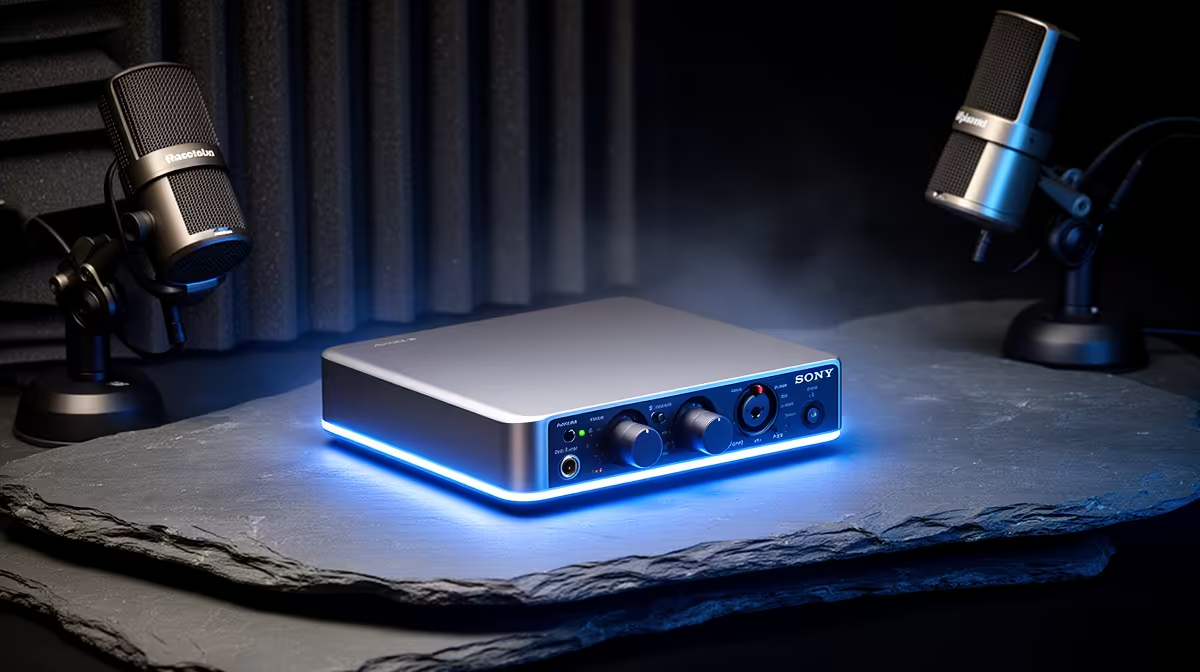
Not with a USB dynamic mic; it plugs straight in. Add an interface only for multiple XLR mics.
Is 16GB RAM enough for podcast editing?
Yes for talk shows; 32GB helps if you stack music beds, plugins, or multitask while editing.
gain so peaks hit around -12dB to -6dB — that headroom stops clipping that no amount of editing can fully repair.