Quick Answer
Here's the short version: for a UCT Information Systems student, the best R15,000 build is a Ryzen 5 7600, RTX 4060 8GB, 16GB DDR5, 1TB NVMe. This spec puts the money where Information Systems coursework needs it. Let the coursework decide the parts, not the marketing.
Where the Information Systems budget should go
Your IS workload is SQL, a dev environment and the odd Docker stack. None of it leans on a graphics card, so build for threads and RAM and leave the GPU budget for later. In practice that means SQL Server or PostgreSQL, Visual Studio and VS Code, Docker and a Linux VM, all of which lean on CPU cores, RAM and a quick NVMe SSD - and no real graphics demand.
Inside the R15,000 spec
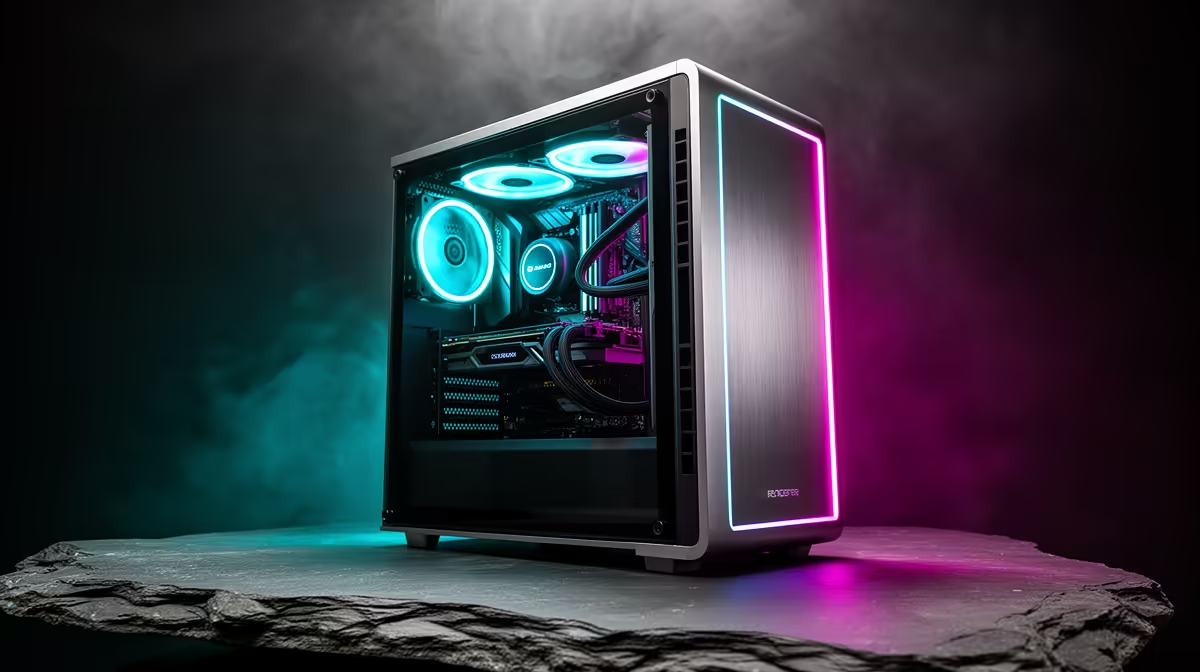
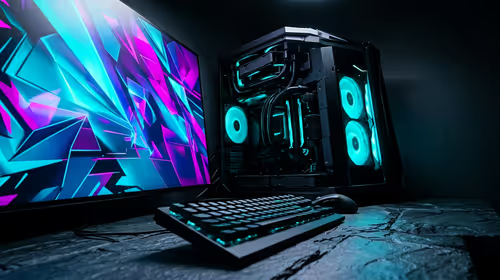
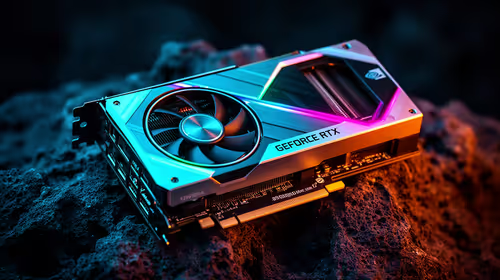
At R15,000 the build steps up to a discrete GPU - a Ryzen 5 7600 with an RTX 4060 8GB, 16GB DDR5 and 1TB of NVMe storage. Study by day, 1080p gaming after hours. The 16GB DDR5 keeps it responsive and the 1TB NVMe loads projects fast. 16GB is enough for a single project; 32GB is the comfortable target once you run a DB, a backend and an IDE at once.
Where the rest of the budget goes
Because information systems doesn't need the GPU, this build runs on RTX 4060 8GB (or RX 7600 8GB). Expect 100+ fps at 1080p High from the RTX 4060, dropping to a still-smooth 60-90 fps at 1440p. A 27-inch IPS panel at 1080p or 1440p is the natural match, and a 100Hz model keeps long study sessions easy on the eyes.
Getting it to Mowbray
Mowbray's proximity to UCT makes a stay-at-home desktop the obvious choice over a pricey laptop. Orders to Cape Town courier out of the Joburg warehouse within roughly 2-3 business days. Fibre from Openserve or Vumatel is the norm here; a 5G router covers you until it's connected. With NSFAS giving R5,200 and the cheapest laptop at R8,000, the gap is real; a desktop you build once often works out better over three or four years.
FAQ
Do Information Systems students need a gaming graphics card?
Not for study. Information Systems runs fine on integrated graphics, so a discrete GPU is optional and only worth it if you also want to game in your downtime.
Is 16GB or 32GB RAM better for Information Systems?
16GB is the working minimum with a single VM; 32GB is what you want once a database and containers run together. DDR5 is standard on current AM5 boards.
Should an Information Systems student buy a desktop or a laptop?
A desktop gives far more performance per rand at R15,000 and is easy to upgrade later. A cheap laptop for lectures plus a desktop at home is the combination most students settle on.
second NVMe slot to your shortlist now; a 1TB drive today and a second one next year is the easiest mid-degree upgrade.