Quick Answer
For a Sandton-based UJ Information Systems student, the best R10,000 build is a balanced desktop for SQL practice, Visual Studio Code, browser research, VMs, Teams calls, spreadsheets, and light gaming, not a flashy parts list. Start with Ryzen 5 5600G or Core i3-12100, 16GB DDR4, and NVMe storage; add integrated graphics first, with a GTX 1650-class card only if the bundle allows it only where the budget still leaves room for a reliable motherboard and power supply.
What The Budget Should Buy
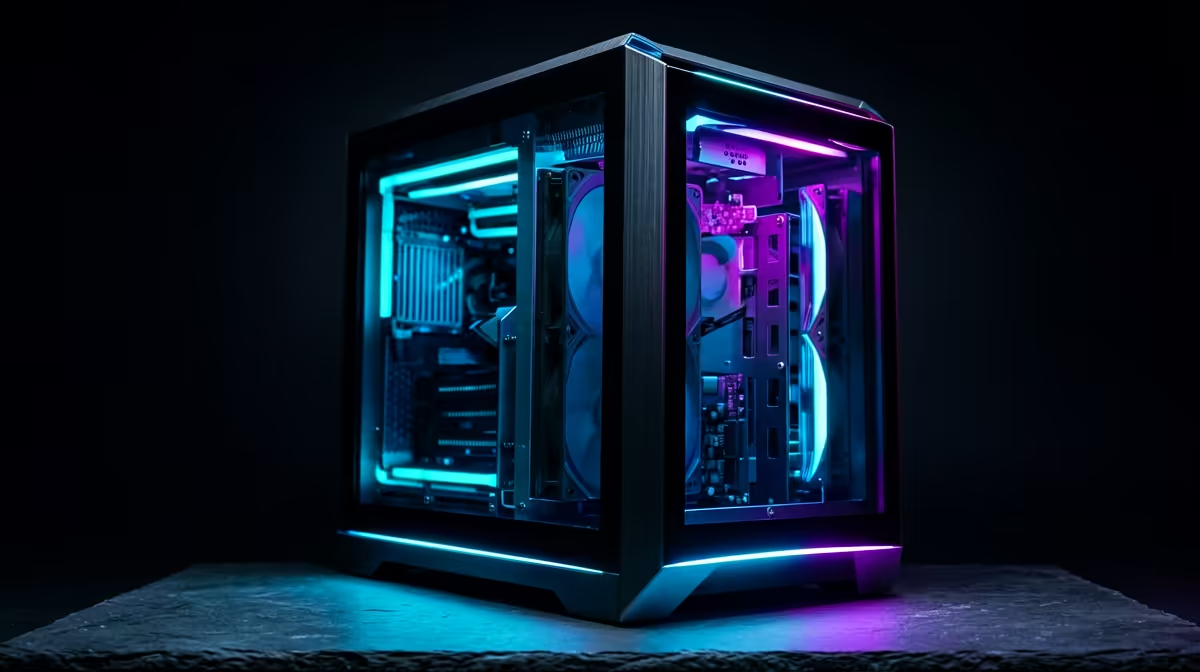
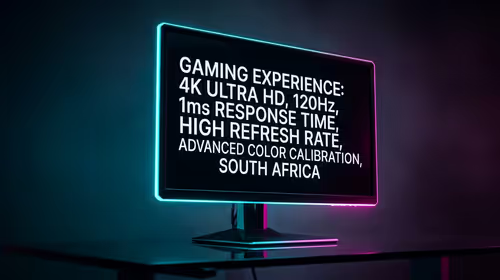
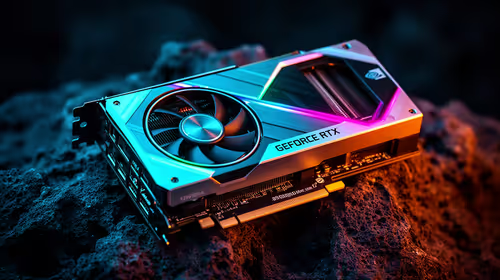
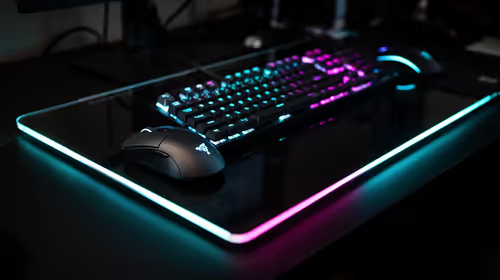
A useful shortlist is Ryzen 5 5600G or Core i3-12100, integrated graphics first, with a GTX 1650-class card only if the bundle allows it, 16GB DDR4, and a 500GB NVMe SSD. If the student runs local databases or a Linux VM, 32GB RAM beats a flashier case. Around R10,000, the strongest value is usually a complete, warrantied build rather than separate impulse upgrades. Sandton students commuting to Auckland Park, Doornfontein, or Soweto campuses should also think about where the PC will live: a quiet case and a stable 24-inch 1080p monitor matter more than oversized lighting.
Coursework And Gaming Targets
Expect 100-160 fps at 1080p competitive settings in lighter esports games, while VMs and database tools benefit most from RAM and NVMe speed. For coursework, the practical floor is 16GB RAM and a 500GB NVMe SSD; 32GB RAM is the better target from R15,000 upward. Keep a named platform in mind, such as an MSI B550M or B650M motherboard, so future RAM and SSD upgrades remain simple.
Where To Spend In Sandton
Put money into the CPU, memory, SSD, and warranty-backed assembly before adding premium fans. A lean student build should boot quickly, handle multiple browser tabs, and stay quiet during evening study sessions. If the budget is tight, choose a smaller SSD now and leave a second M.2 slot open rather than buying a weak power supply.
FAQ
Is R10,000 enough for a UJ Information Systems student in Sandton?
Yes, if the build includes at least 16GB RAM and NVMe storage. For heavier Information Systems projects, R15,000 to R25,000 gives more room for 32GB RAM and a stronger GPU.
Should the student buy a laptop instead of a desktop?
A laptop is better for carrying to campus, but a desktop gives more performance per rand at the same budget. If the student already has a basic laptop for notes, the desktop can handle heavier work at home.
Which upgrade matters first after checkout?
Upgrade RAM to 32GB first if coursework involves VMs, CAD, or large browser sessions. After that, add a second NVMe SSD before replacing the GPU.
Build check
Before ordering, confirm 16GB minimum RAM, NVMe storage, a named motherboard platform, and enough desk space for the case plus a 24-inch monitor.