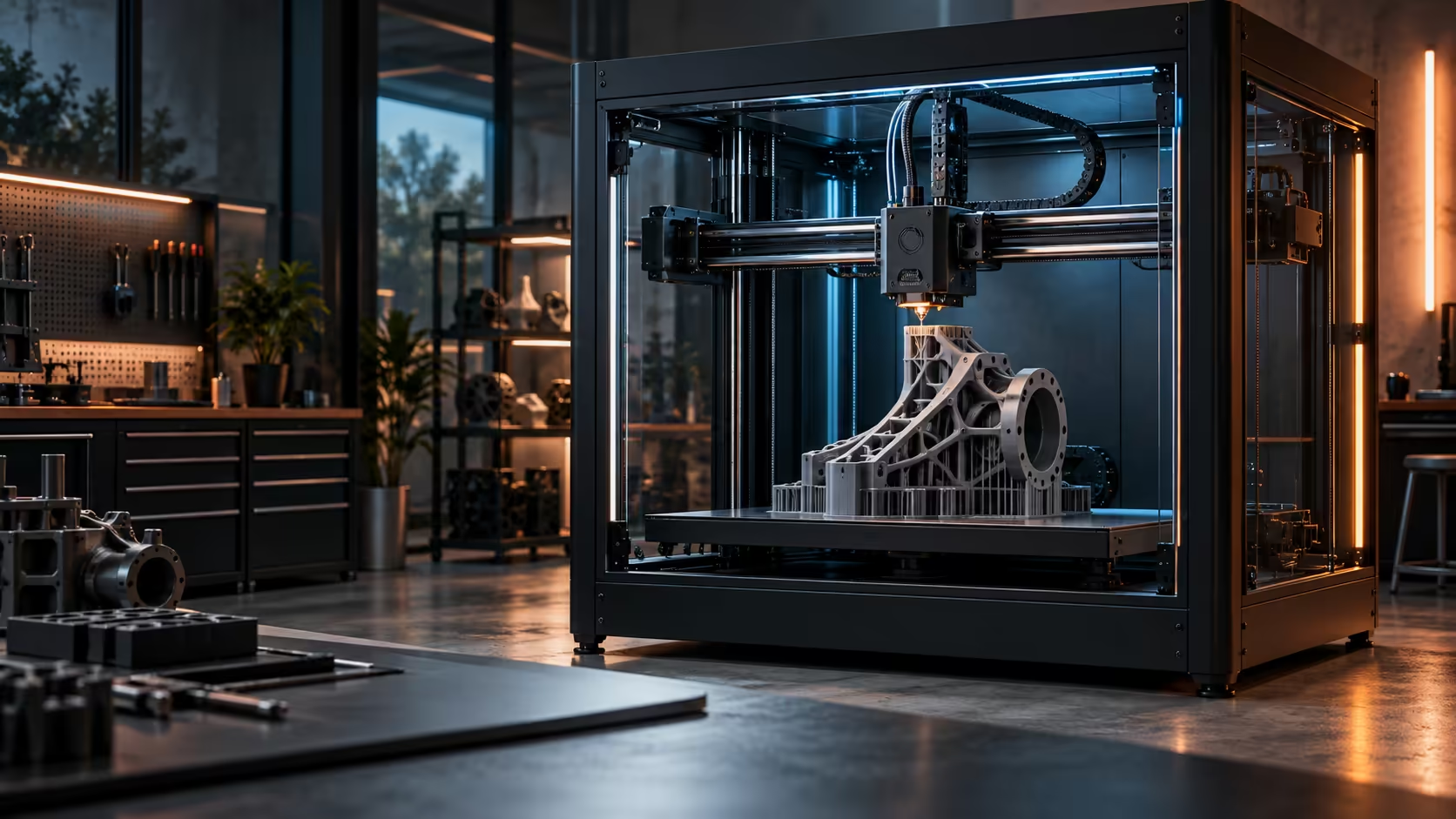
Most buying checklists assume a workshop that does not actually exist here: climate-controlled, spacious, with a second machine on standby. A 300mm CoreXY 3D printer bought for a real South African workshop needs a checklist built around dust, tight corners and no backup plan.
Quick Answer
Measure the bench and confirm a spare 230V socket before the spec sheet even enters the conversation, then work out where spare nozzles and filament will actually come from once the machine is running daily. A South African workshop usually has dust, limited floor space and no second printer sitting idle as a backup, so the R13,999 Creality K1 Max needs to arrive ready to run rather than needing weeks of setup and sourcing before it earns its keep.
📏 Bench and power, before anything on the spec sheet
A 300 x 300 x 300mm machine needs a genuinely solid bench underneath it, not just a clear corner. Measure the footprint including clearance on all sides for ventilation, and confirm the exact socket you plan to use can handle the load without sharing a circuit already carrying welding equipment or other heavy tools.
This sounds obvious until the printer arrives and the only available socket is on the far side of the workshop from the only bench sturdy enough to hold it.
🌫️ Dust is the quiet workshop hazard
Grinding, sanding and general workshop dust settles everywhere, including inside a printer's electronics and onto its rails if it is left exposed. An enclosed machine handles this considerably better than an open-frame one, since the chamber keeps the internals shielded from whatever is floating around the rest of the room.
Position the printer at least 2 to 3 metres from the dustiest station in the workshop if possible, and wipe down the plate before every print regardless of the enclosure, since dust that has already settled on the bed affects adhesion the same way oil or fingerprints do.
🔧 Spares: plan for them before you need them
A workshop running one printer with no backup cannot afford downtime while a spare nozzle or a specific spool gets sourced. Order a spare hardened nozzle and a couple of extra spools alongside the printer itself, not after the first failure forces an unplanned wait.
Check filament availability locally before committing a project to a specific exotic blend, and if bench space is the actual constraint, a sturdier desk built for load-bearing use is a cheaper fix than trying to make an unsuitable table work.
⚡ Power and wiring, checked before the printer arrives
A workshop socket shared with a welder, an angle grinder or a compressor is a common but overlooked source of print failures that never shows up as an obvious fault. A voltage dip when a heavy tool switches on can reset a printer's control board mid-job or cause a momentary heater fault, both of which look like a random, unexplained crash rather than what they actually are.
Run the printer from its own dedicated 230V circuit where the workshop wiring allows it, or at minimum confirm nothing heavy shares the same socket before committing a long, valuable print overnight. This costs nothing to check and rules out one of the more frustrating, hard-to-diagnose failure modes in a shared workshop before it wastes a whole night's filament on a job that never had a real chance to finish.
🧰 A basic parts checklist before the first print
Beyond the printer itself, a working shelf needs: a spare 0.4mm nozzle at minimum, isopropyl alcohol for the plate, a set of small tools for clearing a jam, and a dry storage box for filament. None of these cost much individually, but sourcing them for the first time during an active project delay costs far more in lost time than buying them alongside the machine ever would.
Check the wider 3D printer range for any bundled starter kits before assuming every accessory needs a separate order, since some listings already include a basic tool set that covers most of this checklist from day one.
Frequently Asked Questions
Should I buy an enclosed or open-frame printer for a dusty workshop?
Enclosed, since the chamber shields the internals and the moving parts from workshop dust considerably better than an open frame does.
How many spare nozzles should a workshop keep on hand?
At least one spare of whatever type the printer uses, more if you regularly run abrasive or high-temperature filaments that wear nozzles faster.
Does the printer need its own dedicated electrical circuit?
Not strictly required, but confirm the socket you plan to use is not already carrying heavy equipment that could cause voltage drops during a print.
What is the most commonly overlooked setup requirement?
Bench rigidity specifically for the printer's own footprint, separate from whatever general workspace is already available in the workshop.
Bringing a large printer into a real working South African workshop?
Sort the bench, the power and the spares before the machine arrives, not after.