Quick Answer
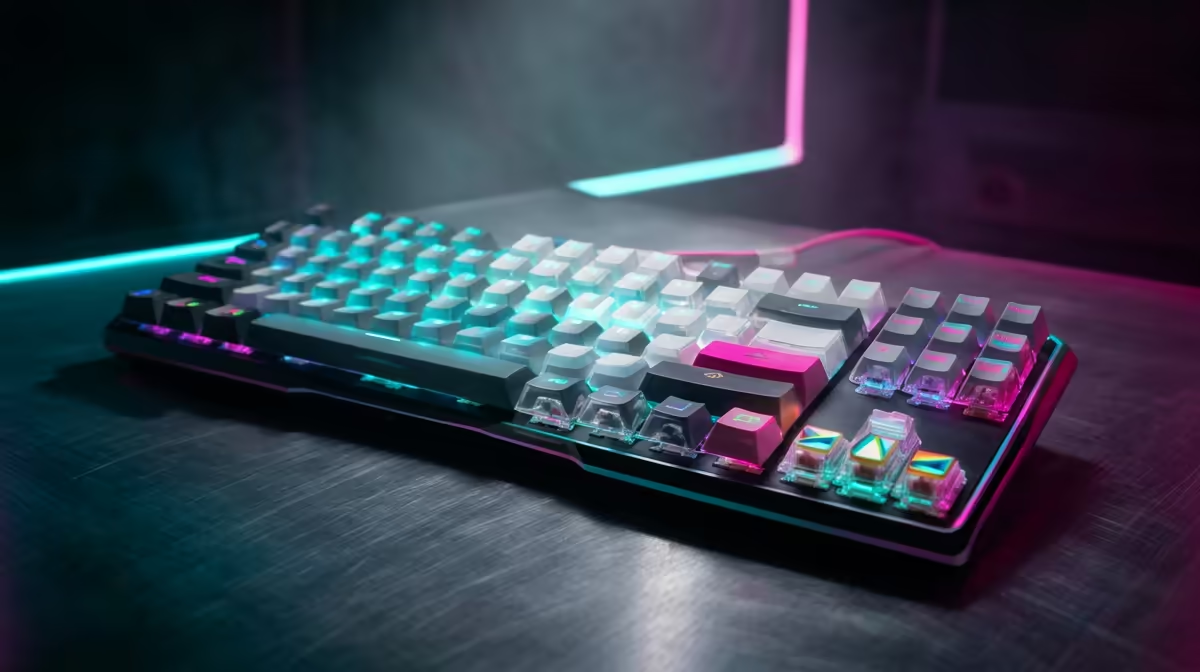
Input lag on a gaming keyboard usually comes from a wireless connection, a low polling rate, or USB power-saving - not a broken board. Plug in via USB, set the polling rate to 1,000Hz, and disable USB selective suspend in Windows, and most "laggy" keyboards respond instantly again.
Diagnose Before You Upgrade
Start with the connection. A 2.4GHz dongle in a crowded USB-3 area or a weak Bluetooth link adds noticeable delay; a wired USB connection removes it. Then check the polling rate - 1,000Hz means the board reports 1,000 times a second (1ms), while a stuck 125Hz setting feels sluggish. Set it high in the keyboard software.
Common Real Causes
Windows USB selective suspend can put the keyboard to sleep and add a wake delay; disable it in Power Options. Background macro or RGB software can also stall keystrokes. Test on another PC to rule the board out before spending on a replacement - the issue is often the host, not the keyboard.
When To Replace
If the board still lags wired, at 1,000Hz, with power-saving off and clean software, then the controller may be failing - a R700-R1,200 replacement with a known 1ms response is the fix. Until you have ruled out settings, though, replacement is premature.
FAQ
Does wireless add input lag?
It can. A weak 2.4GHz or Bluetooth link adds delay, especially near other USB-3 devices. Switching to a wired USB connection is the quickest way to remove wireless-related lag for testing.
What polling rate should I use?
Set 1,000Hz (1ms) for gaming - the keyboard reports its state a thousand times a second. A stuck low rate like 125Hz feels noticeably less responsive, so check this in the keyboard software.
Could Windows settings cause lag?
Yes. USB selective suspend can sleep the keyboard and add a wake delay. Disable it under Power Options, and close heavy RGB or macro software, before concluding the board itself is faulty.
Power Options, set USB selective suspend to Disabled and switch the plan to High Performance - that single change clears the most common cause of phantom keyboard lag.