Quick Answer
If your streaming microphone has wireless dropouts, diagnose interference and range before buying a new one — most dropouts come from a crowded 2.4GHz band, distance, or a USB-3 port near the receiver, not a faulty mic. Move the dongle to a front USB-2 port or a short extension and you often fix it; only upgrade to a wired USB condenser (about R900-R1,800 at Evetech) if interference persists.
Diagnose the dropout cause first
Wireless mic dropouts usually trace to three things: USB-3 ports and devices emit 2.4GHz noise that swamps the receiver, range and obstacles weaken the signal, and a congested Wi-Fi band adds interference. Test by moving the receiver to a front USB-2 port or onto a short USB extension closer to the mic, and away from the PC's USB-3 cluster. This resolves most dropouts without new hardware.
The fix, in order, at Evetech
- Relocate the dongle: use a front USB-2 port or a short extension nearer the mic, away from USB-3.
- Reduce distance and obstacles: keep the mic within range with a clear line to the receiver.
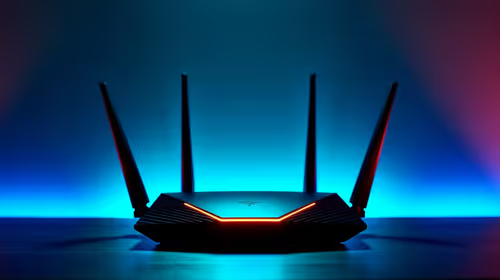
- Change Wi-Fi channel: ease 2.4GHz congestion if your router shares the band.
- Go wired: a USB condenser removes wireless entirely if interference can't be cleared.
SA buyer note
For SA streamers in busy apartment blocks where 2.4GHz is crowded, a wired USB condenser sidesteps the whole problem with zero dropouts. If you prefer wireless, relocate the receiver first; if that fails, a wired cardioid mic at Evetech guarantees stable audio.
FAQ
Why does my wireless mic keep dropping out?
Usually 2.4GHz interference from nearby USB-3 ports, distance from the receiver, or a congested Wi-Fi band. Relocating the dongle to a front USB-2 port often fixes it.
How do I stop mic dropouts without buying new gear?
Move the wireless receiver to a front USB-2 port or a short extension closer to the mic, away from the USB-3 cluster, and reduce distance and obstacles to the mic.
Should I switch to a wired mic?
If interference persists after relocating the receiver, yes. A wired USB condenser removes wireless dropouts entirely and is the reliable choice in crowded 2.4GHz areas.
mic dropouts come from USB-3 interference — move the receiver to a front USB-2 port or a short extension away from the USB-3 cluster before buying anything.