Quick Answer
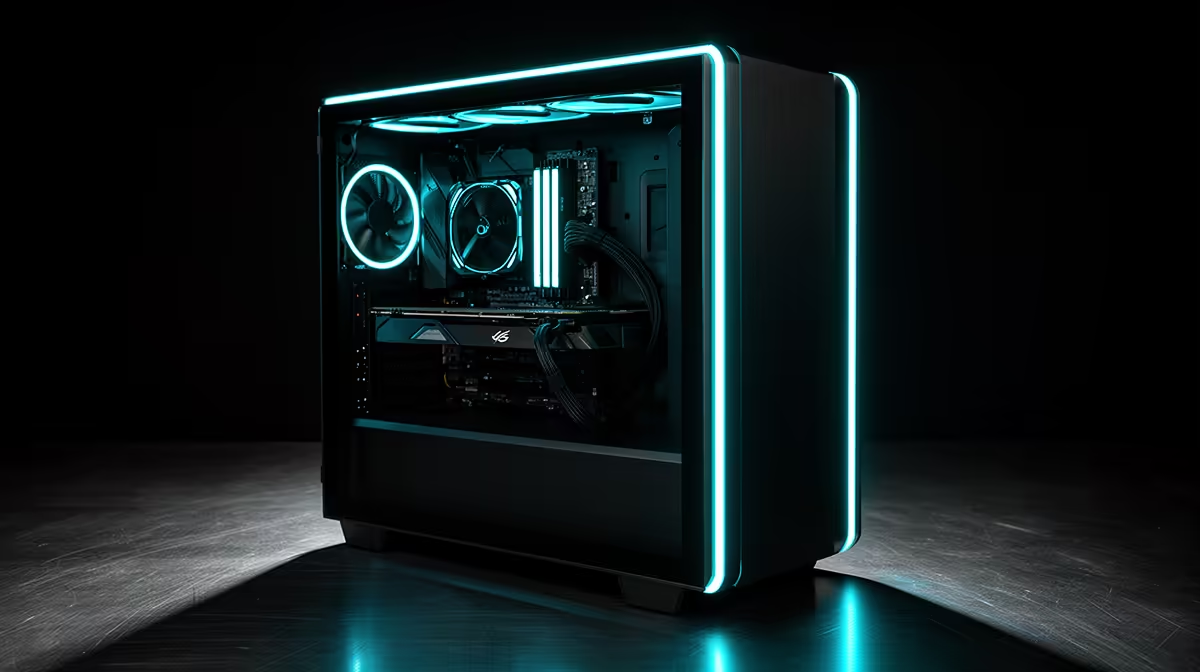
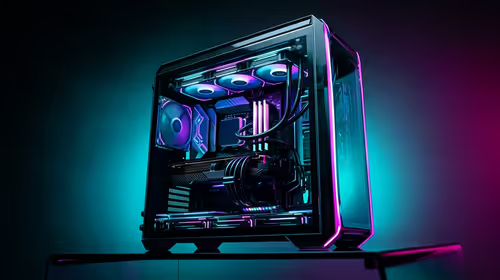
Bottom line: a Wits Actuarial Science build scales cleanly from R10,000 to R25,000. At R10,000 you get a capable APU study machine; by R25,000 you reach a Ryzen 7 7700, RTX 4070 12GB, 32GB DDR5-6000, 1TB NVMe. Match the parts to the software you run daily, not to a benchmark chart.
Where the Actuarial Science budget should go
Actuarial work is statistics and data crunching - R, Python, big Excel models and the odd SAS session. None of it touches a graphics card, so spend on cores, RAM and storage. In practice that means R and RStudio, Python with pandas, large Excel models and SAS, all of which lean on CPU single-thread speed, RAM and a fast SSD - and almost no graphics-card load.
The build at each budget
The ladder from entry to enthusiast looks like this:
- R10,000: Ryzen 5 8500G, 16GB DDR5, 500GB NVMe, B650 board.
- R15,000: Ryzen 5 7600, RTX 4060 8GB, 16GB DDR5, 1TB NVMe.
- R20,000: Ryzen 5 7600, RTX 4060 Ti 8GB, 32GB DDR5, 1TB NVMe.
- R25,000: Ryzen 7 7700, RTX 4070 12GB, 32GB DDR5-6000, 1TB NVMe.
Coursework runs happily on 16GB; 32GB is the upgrade for heavy simulation and very large datasets later on.
After-hours gaming
With an RTX 4060 you'll see 90-120 fps at 1080p High in most games and a playable 50-70 fps at 1440p. The RTX 4060 Ti is a true 1080p Ultra card and a capable 1440p one, sitting around 70-100 fps at 1440p. The study desktop doubles as a capable gaming PC once lectures wrap up.
Getting it to Bryanston
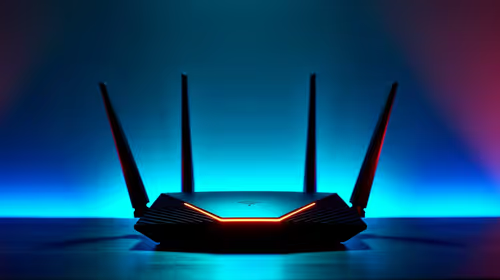
From Bryanston you're within easy reach of Braamfontein, and Evetech courier drops land next business day - so build the desktop and keep a cheap laptop for lectures. Openserve and Vumatel fibre reach most of the area; a 5G data router is a handy backup for online classes. NSFAS pays R5,200 for a device, short of the R8,000 entry laptop - plan to add to it or choose a desktop that holds value across all your study years.
FAQ
Do Actuarial Science students need a gaming graphics card?
No - Actuarial Science software barely touches the GPU. Integrated graphics handle the coursework, so any discrete card you add is purely for gaming after hours, not for study.
Is 16GB or 32GB RAM better for Actuarial Science?
16GB covers the first two years comfortably; reach for 32GB when bootstrap simulations and big joins become weekly work. DDR5 is standard on current AM5 boards.
Desktop or laptop for Actuarial Science at university?
For R10,000-R25,000, a desktop wins on power and upgradeability. Many students run a basic laptop on campus and keep the heavy lifting on a desktop at home.
Confirm the motherboard supports a future CPU upgrade before you buy - it's what lets you drop in a faster chip in third year without a full rebuild.