Quick Answer
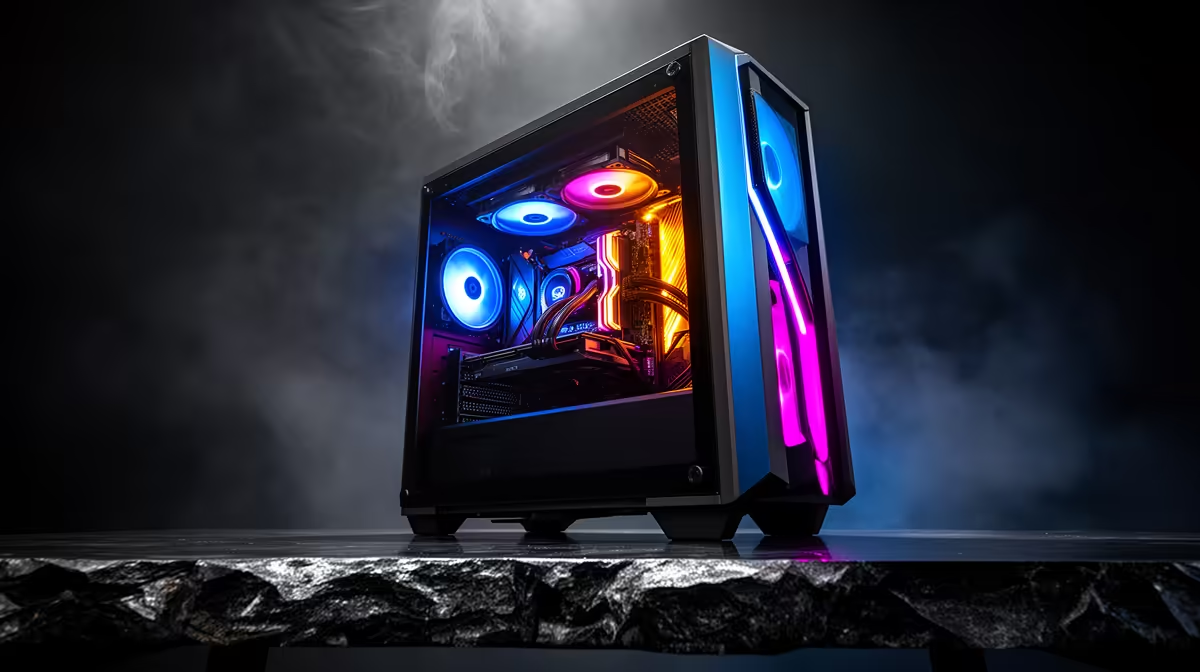
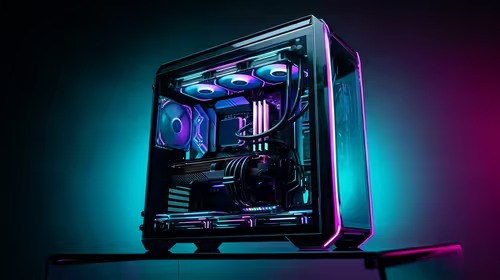
No fluff: for a Wits Actuarial Science student, the best R10,000 build is a Ryzen 5 8500G, 16GB DDR5, 500GB NVMe, B650 board. This spec puts the money where Actuarial Science coursework needs it. Let the coursework decide the parts, not the marketing.
What Actuarial Science software actually demands
Day to day, actuarial science means running models in R and Python and wrangling huge spreadsheets. The GPU sits idle through all of it, so don't pay for one you won't use. In practice that means R and RStudio, Python with pandas, large Excel models and SAS, all of which lean on CPU single-thread speed, RAM and a fast SSD - and almost no graphics-card load.
Inside the R10,000 spec
For R10,000 build around a Ryzen 5 8500G APU with 16GB DDR5 and a 500GB NVMe SSD. The on-chip Radeon graphics mean no separate card, so the whole budget goes to a snappy, quiet machine. The 16GB DDR5 keeps it responsive and the 500GB NVMe loads projects fast. Coursework runs happily on 16GB; 32GB is the upgrade for heavy simulation and very large datasets later on.
Screen, storage and the gaming question
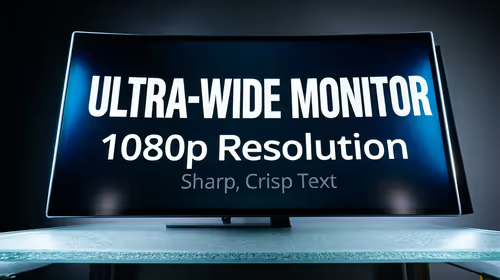
Because actuarial science doesn't need the GPU, this build runs on integrated Radeon graphics (no discrete card at this price). The 8500G's graphics handle CS2, Dota and Valorant at 1080p Low; demanding new titles will want a discrete card down the line. Go for a 24-27 inch IPS display - 1080p is plenty for study, and a higher refresh helps during long sessions.
Centurion buyer notes
Because Centurion sits in Pretoria, the realistic setup is a strong desktop at home plus a cheap laptop for the days you're on campus. Courier to Centurion is typically next working day. Fibre from Openserve or Vumatel is the norm here; a 5G router covers you until it's connected. NSFAS pays R5,200 for a device, short of the R8,000 entry laptop - plan to add to it or choose a desktop that holds value across all your study years.
FAQ
Do Actuarial Science students need a gaming graphics card?
No - Actuarial Science software barely touches the GPU. Integrated graphics handle the coursework, so any discrete card you add is purely for gaming after hours, not for study.
How much RAM should an Actuarial Science student get?
Coursework runs happily on 16GB; 32GB is the upgrade for heavy simulation and very large datasets later on. DDR5 is standard on current AM5 boards.
Should an Actuarial Science student buy a desktop or a laptop?
A desktop gives far more performance per rand at R10,000 and is easy to upgrade later. A cheap laptop for lectures plus a desktop at home is the combination most students settle on.
Check the live price and stock on the part list above at evetech.co.za, then add a 1TB NVMe if the budget stretches - storage is the upgrade you'll feel most.