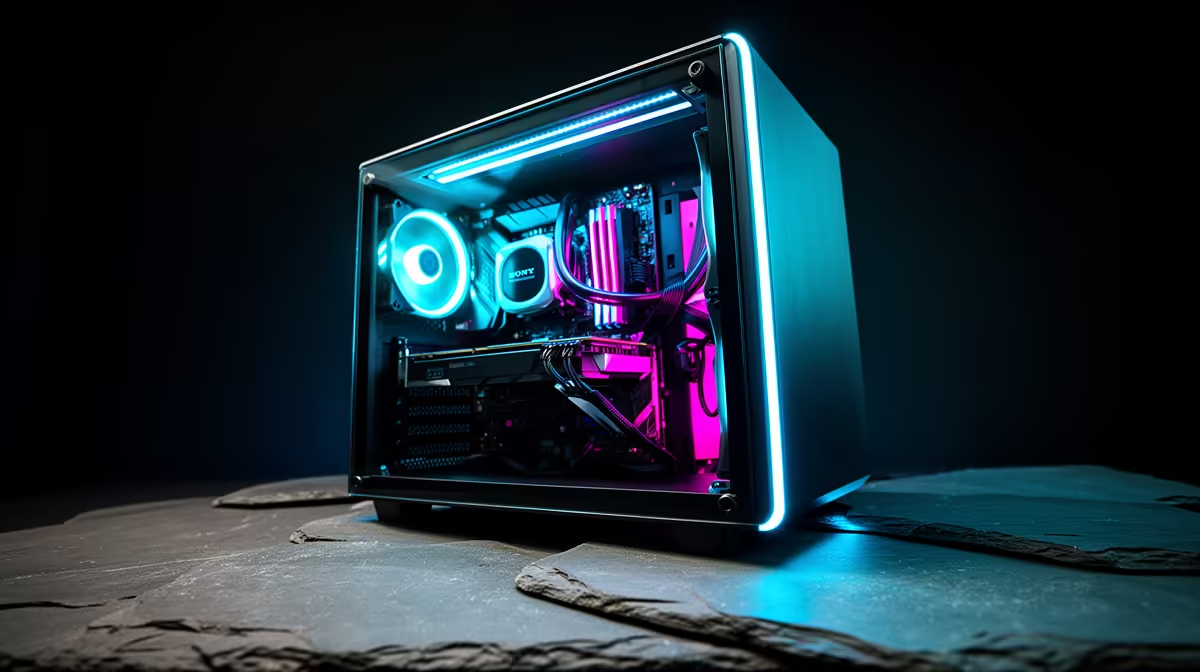
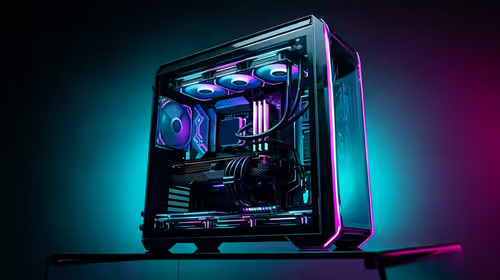
Actuarial Science at Wits is spreadsheet and statistics country: massive Excel models, R, Python and SQL crunching large datasets, where a strong multi-core CPU, generous RAM and a fast SSD beat any graphics card. Put the money into a Ryzen 5/7 or Core i5/i7, 16GB to 32GB RAM and a quick NVMe SSD so heavy Excel, R and Python jobs finish without lag. Before you compare anything, picture a typical week: the daily run into the Braamfontein campus, evenings of coursework in your digs, and the odd group project deadline. The machine that wins is the one that clears that week quietly, not the one with the biggest spec sheet.
Quick Answer
On a budget of about R20,000, the smart Wits Actuarial Science pick is a Core i7 or Ryzen 7 build, 16GB to 32GB RAM and a 1TB NVMe SSD. That setup delivers heavy modelling and large datasets handled comfortably and covers your coursework in Menlo Park without forcing an early upgrade.
Sizing the hardware to your studies
Anchor the build around 32GB RAM and a 1TB SSD. A 512GB to 1TB SSD keeps lecture recordings, datasets and project files local and instant, while a comfortable keyboard and solid battery make long library sessions bearable. Skip the discrete gaming GPU unless you genuinely game; the rands go further on memory and storage. Expect to pay in the R17,000 to R20,000 band for a Wits-ready machine that lasts the full degree.
Getting the balance right
In Menlo Park (the wider Johannesburg-Pretoria corridor), plan the practical side too. If you stay in res or digs, measure desk depth before buying a tower or a large monitor, and budget for a basic UPS-style surge protector for clean power. Evetech ships nationwide with tracked courier delivery and standard manufacturer warranties, so a Wits student in Menlo Park can order online and have the laptop arrive ready to go. Keep the original boxes for the warranty period and back up coursework to the cloud from day one.
At a glance:
- CPU: aim for a six-core Ryzen 5 or Core i5 as the floor.
- Memory: 32GB RAM and a 1TB SSD keeps Actuarial Science software responsive.
- Storage: a 1TB SSD avoids constant cleanup before exams.
- Budget guide: plan for the R17,000 to R20,000 range overall.
Living-in-digs and setup notes
Match the laptop to how you actually study in Menlo Park: 32GB RAM and a 1TB SSD is the anchor, an SSD is non-negotiable, and a GPU only matters if you also game seriously. Buy once, buy right, and you avoid a panicked upgrade mid-semester.
FAQ
What makes a good actuarial science laptop?
A six-core-plus CPU like a Ryzen 5 7600 or Core i5, 16GB RAM (32GB if you model in R or Python) and an SSD. Big actuarial spreadsheets and simulations reward cores and memory, not graphics.
Do I need a graphics card for actuarial work?
No, integrated graphics handle Excel, R, Python and SQL fine; save the GPU budget for more RAM or a faster CPU. A discrete card only helps if you also game after hours.
How much should an actuarial student spend?
A capable build lands between R10,000 and R20,000 depending on whether you want a laptop or a desktop with a monitor. Prioritise RAM and SSD speed, which you will feel in every modelling session.
Compare Wits Actuarial Science builds at Evetech.
Filter by your R17,000 to R20,000 budget and check current stock before O-Week so your laptop is set up in Menlo Park when classes start.