Quick Answer
A R10,000 build for a Wits Information Systems student works best as a study-first machine, not a gaming rig. Spend on a Ryzen 5 5600 or Core i5, 16GB of RAM and a 500GB-plus NVMe SSD, and lean on integrated graphics now so you can add a GPU later. That keeps SQL Server, Power BI, Excel models, web stacks and light data work smooth without breaking the budget.
What a Wits Information Systems degree actually demands
Students reading Information Systems spend their days in SQL Server, Power BI, Excel models, web stacks and light data work, so raw study throughput matters more than chasing one benchmark. The build for Kempton Park buyers right by OR Tambo should prioritise a balanced CPU, comfortable RAM for databases and dashboards, and an SSD that opens projects instantly. Power BI on a large model plus a local database server wants more than 16GB to stay snappy, which is why this R10,000 plan puts memory and storage ahead of flashy extras.
How to spend R10,000 sensibly
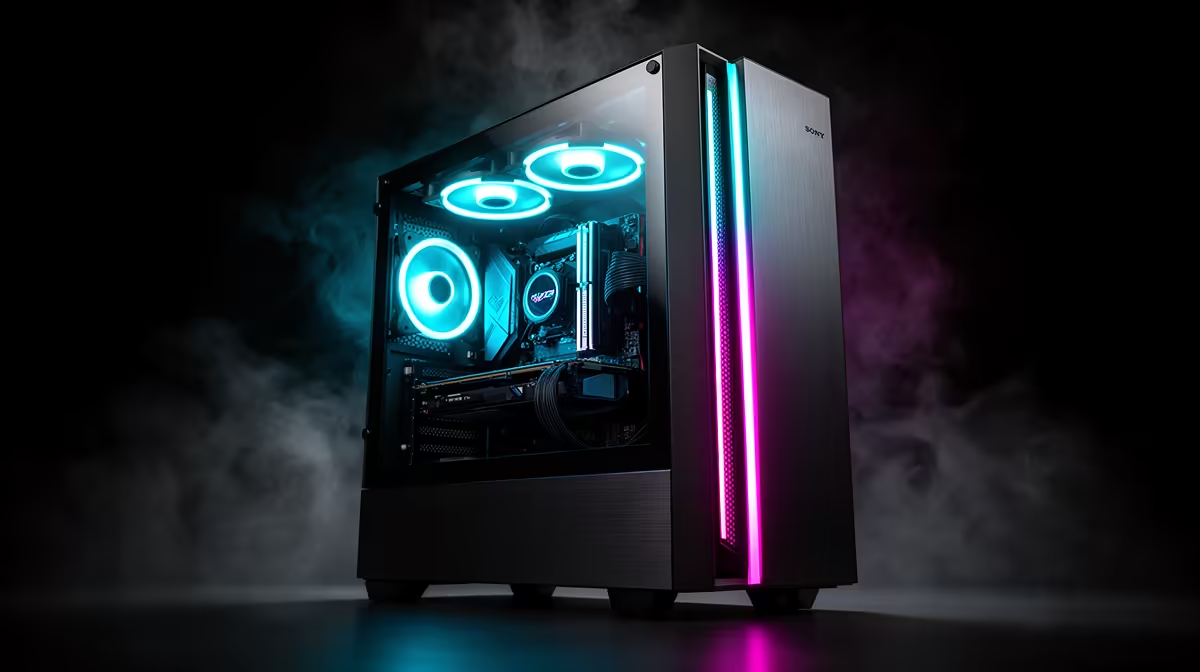
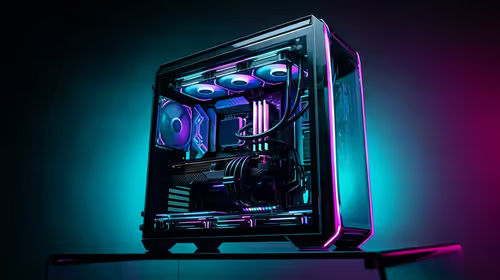
At R10,000 the smart move is a tower with a Ryzen 5 5600 or Core i5 and 16GB DDR4, then a single fast 500GB NVMe SSD so Windows and your IDEs boot in seconds. Skip a discrete GPU for now: integrated graphics handle 2D study work and light gaming, and you free up cash for a proper desk setup. When budget allows, an entry RX 6600-class card slots in without changing the rest of the build, which is why airflow and a quality power supply are worth getting right the first time.
Setup notes for Kempton Park
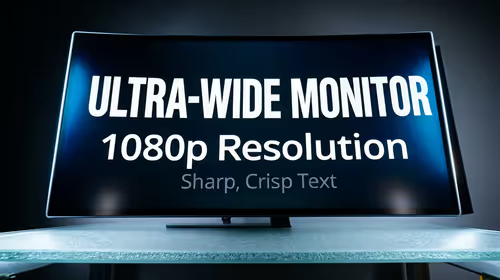
For Kempton Park buyers right by OR Tambo, two practical points beat any spec sheet. First, a a 75Hz 1080p panel gives you both crisp text for long study sessions and smooth motion for games. Second, plan cable routing and airflow so the machine stays quiet during back-to-back lectures and crit weeks. Buying as a complete desktop from a single supplier also keeps the whole system under one warranty, which saves headaches when a part needs attention.
FAQ
Is R10,000 enough for a Wits Information Systems student?
For coursework, yes. A balanced CPU, comfortable RAM for databases and dashboards, and an SSD that opens projects instantly, and 16GB-plus of RAM with a fast SSD keeps daily work smooth. The only trade-off at the lower end is gaming performance, which you can lift later with a GPU upgrade.
Can I upgrade this build later?
Yes. Choosing a quality power supply, a roomy case and a current-socket motherboard now means you can drop in a stronger GPU or extra RAM down the line. That upgrade path is the main reason to buy a desktop over a sealed laptop.
Do Information Systems students need a powerful graphics card?
Graphics demand is light, so spend the GPU budget only if you also game after hours. If you also game after hours, a mid-range card earns its keep; if not, redirect that money toward RAM, storage and a better monitor.
Student buying tip
Before you commit, list the three heaviest apps you run for Information Systems and confirm the build clears them with 30% headroom. Buying the whole desktop from Evetech under one warranty keeps support simple if anything needs a swap.