Quick Answer
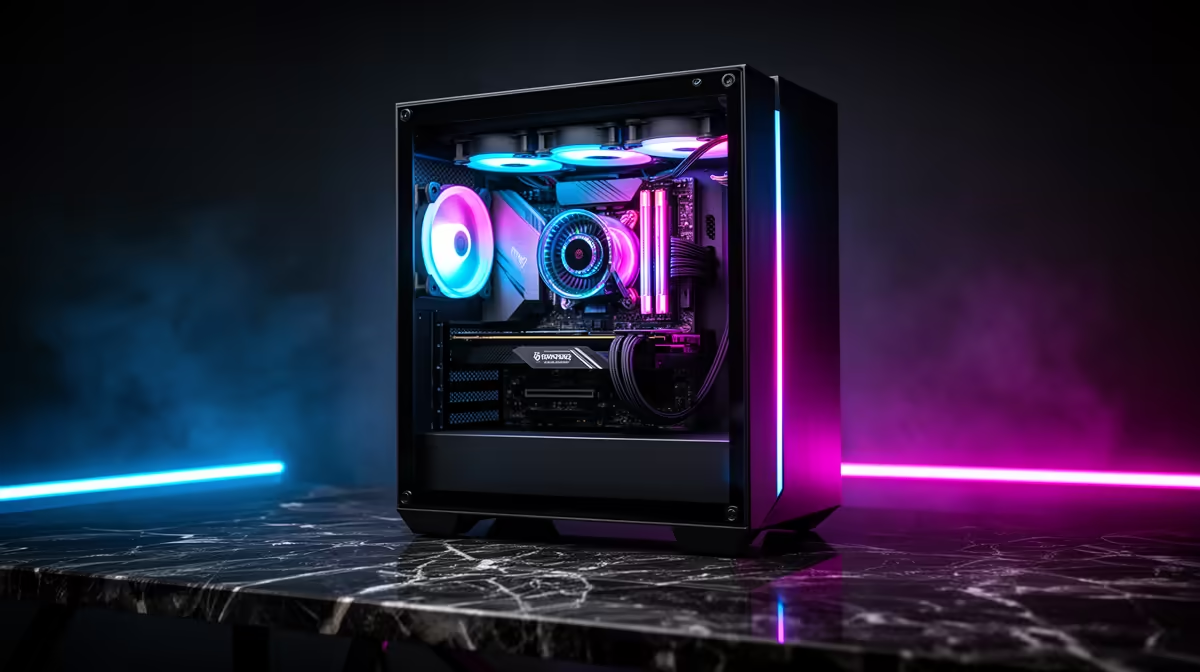
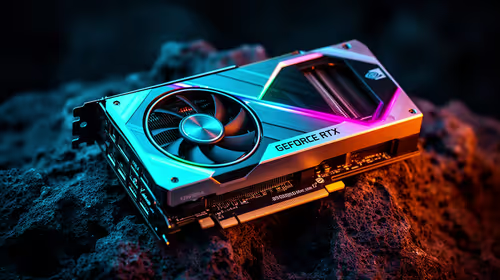
Yes, a R20,000 build comfortably handles Wits Medicine coursework and after-hours gaming. Aim for a Ryzen 5 7600 or Core i5-13400F, 16-32GB DDR5 of RAM and 1TB Gen4 NVMe SSD, paired with an RTX 4060 / RX 7600-class GPU for 100fps-plus at 1080p high. That covers anatomy atlases, lecture recordings, large PDF sets, Anki decks and reference apps today and still has room to grow.
What a Wits Medicine degree actually demands
Med students spend their days in anatomy atlases, lecture recordings, large PDF sets, Anki decks and reference apps, so raw study throughput matters more than chasing one benchmark. The build for Bedfordview residents near the OR Tambo corridor should prioritise a reliable everyday CPU, lots of RAM for dozens of tabs and PDFs, and fast storage for huge lecture libraries. Med students live in browsers with endless tabs plus PDF viewers, and RAM is what keeps that smooth, which is why this R20,000 plan puts memory and storage ahead of flashy extras.
How to spend R20,000 sensibly
With R20,000 on the table, split it roughly as a balanced CPU and GPU pairing, then back it with 16-32GB DDR5 and 1TB Gen4 NVMe SSD. For Medicine the an RTX 4060 / RX 7600-class GPU delivers 100fps-plus at 1080p high while leaving the CPU free for compiles, renders or simulation. Med students live in browsers with endless tabs plus PDF viewers, and RAM is what keeps that smooth, so do not skimp on memory even if it means a slightly cheaper graphics card. You rarely need a strong GPU for med work, so put that money into storage and a better screen.
Setup notes for Bedfordview
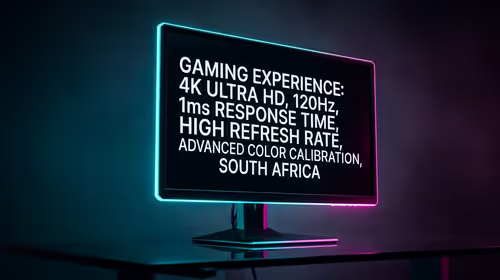
For Bedfordview residents near the OR Tambo corridor, two practical points beat any spec sheet. First, a a 144Hz 1080p panel gives you both crisp text for long study sessions and smooth motion for games. Second, plan cable routing and airflow so the machine stays quiet during back-to-back lectures and crit weeks. Buying as a complete desktop from a single supplier also keeps the whole system under one warranty, which saves headaches when a part needs attention.
FAQ
Is R20,000 enough for a Wits Medicine student?
For coursework, yes. A balanced CPU and GPU at this budget cover both study and gaming, and 16GB-plus of RAM with a fast SSD keeps daily work smooth. The only trade-off at the lower end is gaming performance, which you can lift later with a GPU upgrade.
Can I upgrade this build later?
Yes. Choosing a quality power supply, a roomy case and a current-socket motherboard now means you can drop in a stronger GPU or extra RAM down the line. That upgrade path is the main reason to buy a desktop over a sealed laptop.
Do Medicine need a powerful graphics card?
You rarely need a strong GPU for med work, so put that money into storage and a better screen. If you also game after hours, a mid-range card earns its keep; if not, redirect that money toward RAM, storage and a better monitor.
Student buying tip
Before you commit, list the three heaviest apps you run for Medicine and confirm the build clears them with 30% headroom. Buying the whole desktop from Evetech under one warranty keeps support simple if anything needs a swap.